



Victorian Library Shelving Unit
A victorian library shelving unit brings practical display and deep timber tones to a room, offering open access to volumes gathered over a lifetime.
Victorian Library Shelving Unit
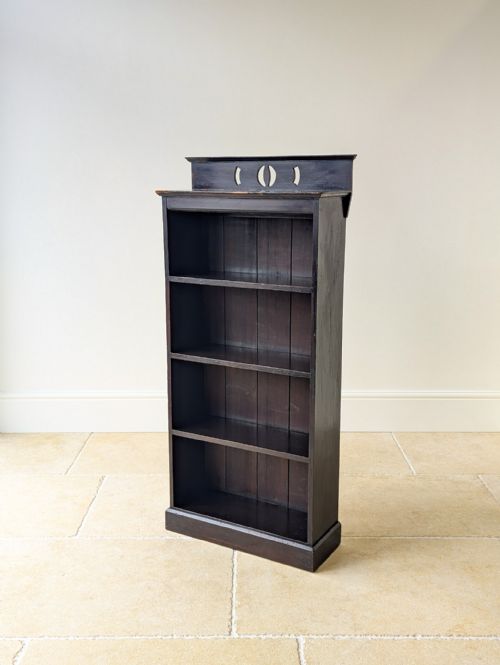
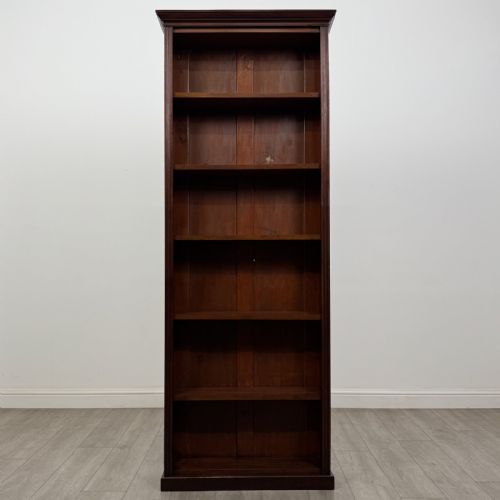
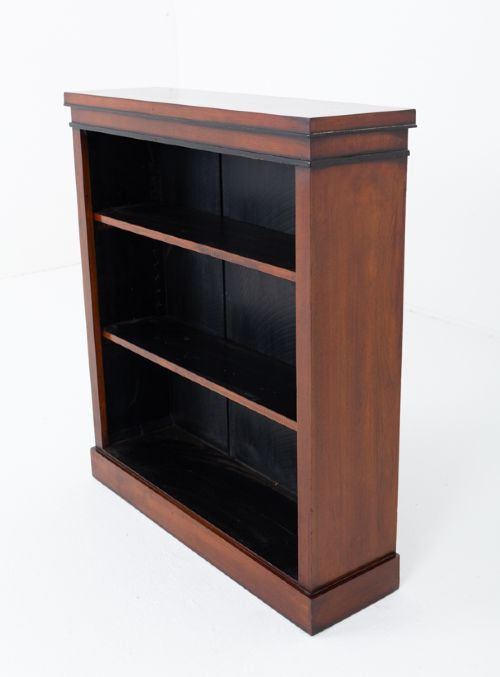
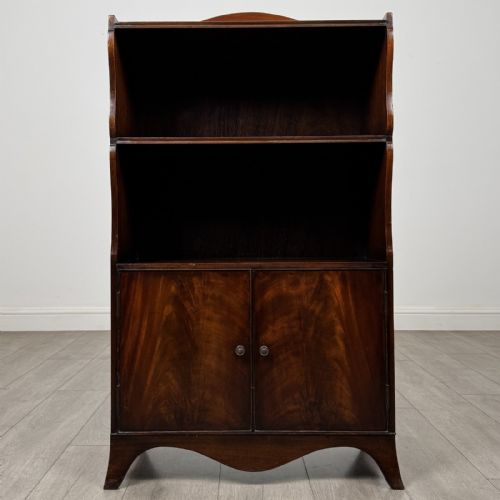
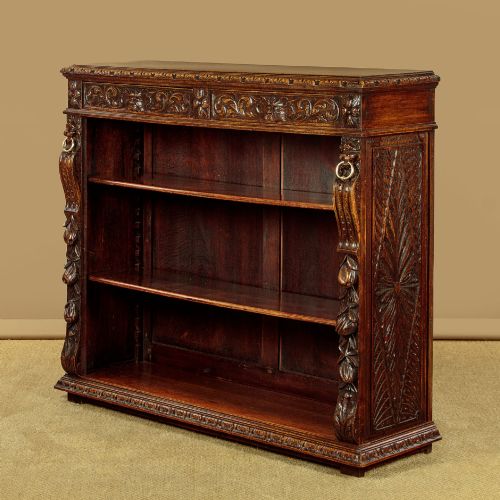
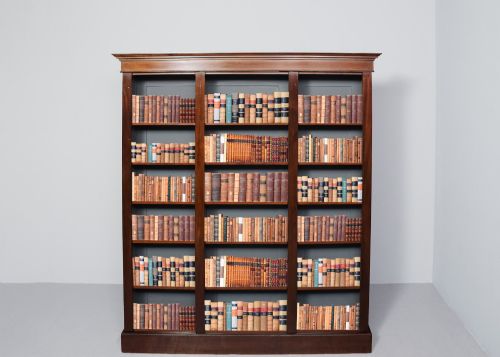
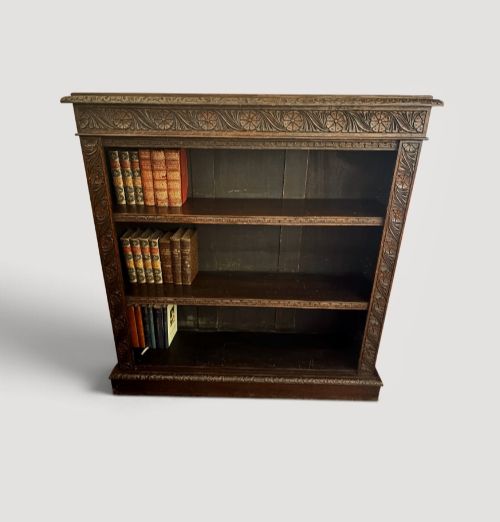
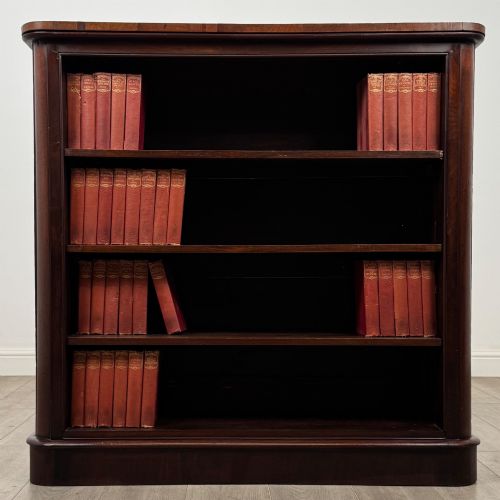
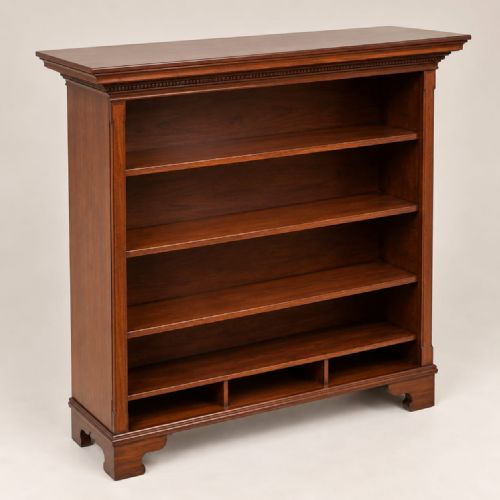
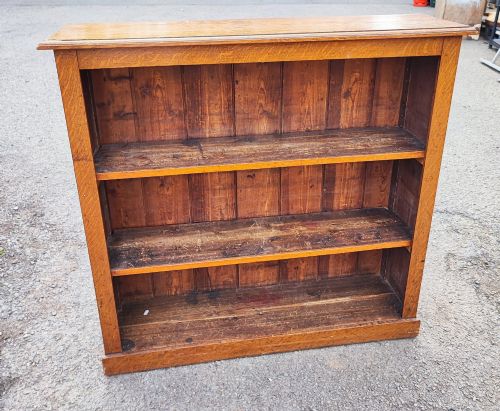
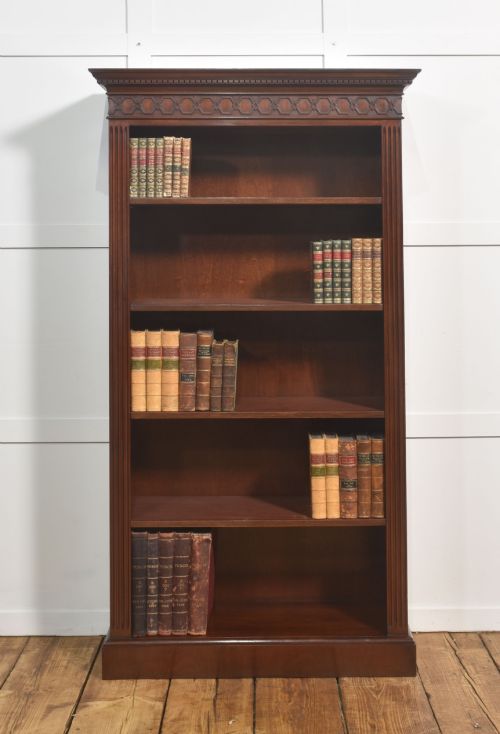
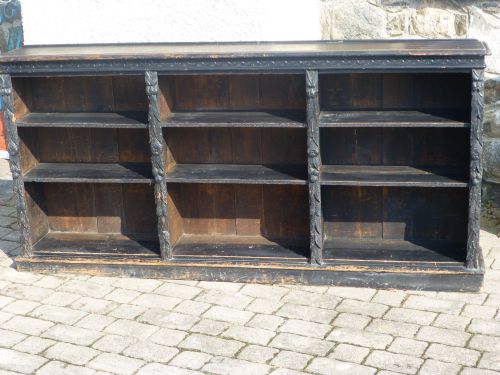
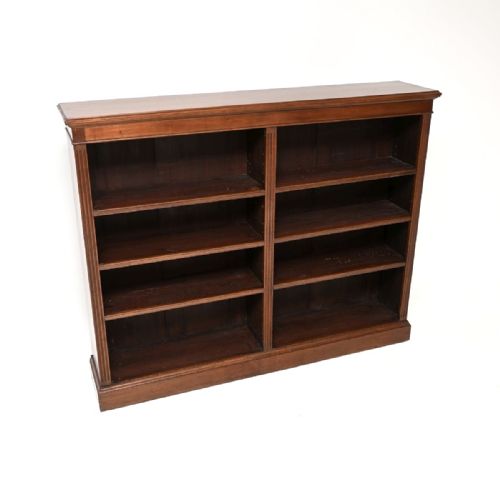
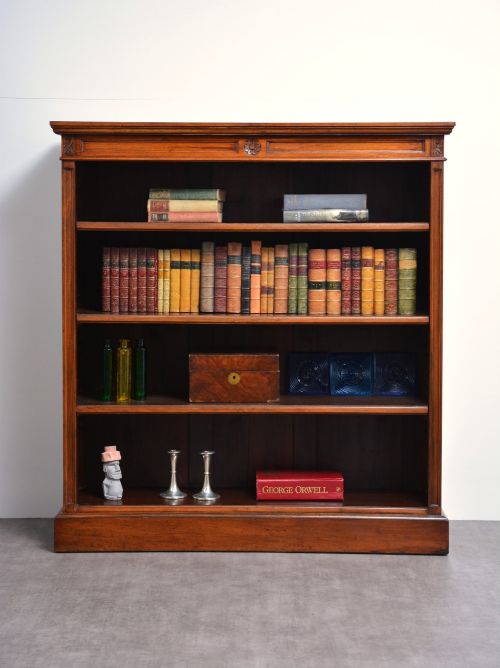
A victorian library shelving unit generally appears as an open bookcase designed to hold rows of books without glazed doors. These pieces emerge from the nineteenth century in various forms, from low dwarf shelving to large breakfront configurations.
Mahogany and oak dominate the pieces found on this page, alongside walnut, burr walnut, and rosewood. The listings show examples spanning the Victorian era, William IV period, Edwardian years, and Aesthetic Movement.
Many variants feature adjustable shelves, allowing buyers to accommodate volumes of differing heights. Pieces range from simple upright pine shelving to grand three-section breakfront walnut bookcases with intricate carving.
How they were made
Cabinetmakers utilised solid timbers such as oak, mahogany, and rosewood, alongside decorative veneers like burr walnut. Timber preparation involved careful seasoning to ensure stability across wide open shelving spans.
Hardware details such as brass fittings and ormolu mounts appear on select examples, while ebonised finishes and carved elements reflect distinct stylistic movements. Adjustable shelf mechanisms rely on traditional wooden racks or brass studs set into the interior uprights.
Victorian Library Shelving Unit Retail Price Guide 2026
Typical asking prices for victorian library shelving unit among the pieces listed under this phrase on Sellingantiques today, from the lower quarter to the upper quarter. They describe what is for sale here now, not the wider market.
Current listings span the nineteenth century, featuring woods from plain pine and oak to figured burr walnut.
What varies in quality
The refinement of the timber selection dictates much of the visual weight, particularly where figured burr walnut or rich rosewood veneers are employed. Finer pieces demonstrate superior control in carving, especially on Aesthetic Movement or Gothic-influenced mouldings.
Construction depth also separates standard shelving from major library pieces, notably in breakfront three-section formats with substantial proportions. The presence of functional, well-engineered adjustable shelving mechanisms adds practicality to the craftsmanship.
The Victorian Library Shelving Unit Glossary
- Open bookcase
- A shelving unit without doors, designed for immediate access to books. This form allows the bindings to contribute colour and texture to the room.
- Breakfront
- A piece of furniture where the central section projects forward from the flanking wings. This architectural arrangement creates depth and formal presence.
- Adjustable shelves
- Shelves that can be moved vertically using internal slots or peg supports. This system accommodates books of varying heights.
- Dwarf bookcase
- A low shelving unit designed to sit below window height or against a modest wall space. These pieces maintain sightlines across a room.
- Ebonised
- Timber treated to resemble ebony through staining or painting. This dark finish was favoured in specific Victorian stylistic periods.
Victorian Library Shelving Unit: Frequently Asked Questions
Where were these bookcases placed?
These units stood primarily in private libraries, studies, and drawing rooms of nineteenth-century homes.
Their open format allowed household members to reach frequently read volumes without opening glass doors.
How do I adjust the shelves?
Most nineteenth-century examples utilise a system of wooden ratchets, brass studs, or vertical slots.
Shelves lift out entirely so the supporting pegs or brackets can be repositioned at the desired height.
What woods were commonly used?
Oak and mahogany appear most frequently, offering durable support for heavy rows of bound books.
Walnut, burr walnut, and rosewood were selected for formal rooms where rich grain patterns mattered.