




Nineteenth Century Japanese Metalwork
Nineteenth century japanese metalwork brings sculptural presence and meticulous technique into a room, spanning bronze, copper, and cloisonne enamel.
Nineteenth Century Japanese Metalwork
Nineteenth century japanese metalwork encompasses sculptural forms, vessels, and decorative surfaces produced during the Meiji period. Buyers encounter substantial bronze vases, censers, and bowls alongside cloisonne enamel chargers, square trays, and decorative bowls.
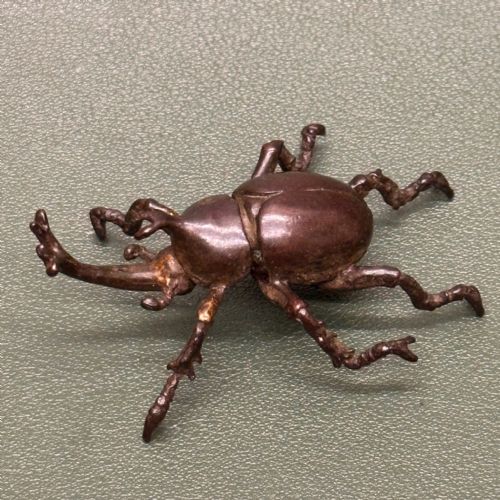
The objects frequently depict natural subjects, featuring sculptural models of animals such as a French bulldog, a rhinoceros beetle, or a goshawk. Other pieces showcase elaborate scenery including owls and Mount Fuji or peony decoration.
Vessels range from large weighted jardinieres and tsubo vases to pairs of monumental bronze vases. These pieces reflect the intricate metalworking traditions flourishing through the eighteen-eighties and eighteen-nineties.
How nineteenth century japanese metalwork was made
Artisans utilised bronze, copper, brass, and silvered bronze to cast sculptural models and substantial vessels. Patination techniques were applied to bronze surfaces to achieve deep, varied colouration across animal figures and vase bodies.
Cloisonne enamel pieces incorporated fine wire work to create cellular compartments on copper or brass bases. These cells were filled with enamel pastes and fired repeatedly to produce detailed pictorial scenes and floral motifs.
Nineteenth Century Japanese Metalwork Retail Price Guide 2026
Typical asking prices for nineteenth century japanese metalwork among the pieces listed under this phrase on Sellingantiques today, from the lower quarter to the upper quarter. They describe what is for sale here now, not the wider market.
A tiny bronze rhinoceros beetle shares shelf space with eight-kilogram bronze vases.
What varies in quality in nineteenth century japanese metalwork
The refinement of the enamelling work distinguishes finer cloisonne pieces, where wire alignment and colour graduation demand high technical mastery. Weight and scale also differentiate the range, from heavy cast bronze jardinieres to delicate enamel trays.
The Nineteenth Century Japanese Metalwork Glossary
- Meiji Period
- The era in Japanese history spanning from eighteen sixty-eight to nineteen twelve, noted for opening trade and extraordinary metalcraft. Much of the sculptural work and cloisonne enamel seen today originates from this dynamic period.
- Cloisonne Enamel
- A technique where thin metal wires form compartments on a base, which are then filled with coloured enamel. This method creates intricate pictorial compositions such as owls, dragons, and floral scenes.
- Patinated Bronze
- Bronze treated with chemical solutions to produce a specific surface colour and finish. This process accentuates the depth and texture of sculptural figures and vessel bodies.
- Censer
- A vessel designed for burning incense, often featuring a pierced lid and decorative body. These items in nineteenth century metalwork combine sculptural form with functional design.
- Charger
- A large ornamental decorative plate meant for display rather than dining. They often feature elaborate enamel or engraved pictorial subjects.
Nineteenth Century Japanese Metalwork: Frequently Asked Questions
What is nineteenth century japanese metalwork?
Nineteenth century japanese metalwork includes bronze sculptures, vases, censers, and cloisonne enamel pieces produced during the Meiji period. These items range from realistic animal figures to large decorative vessels.
Craftsmen utilised various alloys and enamelling techniques to create objects that combined traditional aesthetics with technical precision.
How do I identify Meiji period pieces?
Meiji period pieces typically date between eighteen sixty-eight and nineteen twelve, aligning with the evidence from eighteen-eighty and eighteen-ninety items. Look for characteristic artistic motifs such as Mount Fuji, peonies, and naturalistic animal subjects.
Materials commonly involve patinated bronze, silvered bronze, and intricate cloisonne enamel applied to copper or brass bases.
How were bronze vases and jardinieres used?
Large bronze vases and jardinieres served as prominent decorative elements within interiors, often displayed in pairs or as standalone centrepieces. Their substantial weight and scale suited them for holding arrangements or standing independently.
Craftsmen cast these vessels to showcase advanced patination and surface decoration.
What subjects appear in these metalworks?
Natural subjects dominate nineteenth century japanese metalwork, including birds of prey like goshawks, insects, and domestic animals like French bulldogs. Landscape and botanical themes also feature prominently, such as owls with Mount Fuji and detailed peony arrangements.
Enamel chargers and trays frequently display dragons and pictorial scenes alongside geometric borders.