


Nineteenth Century Gold Pendant
These nineteenth century gold pendant pieces combine period craftsmanship with enduring precious metal work, offering collectors wearable history.
Nineteenth Century Gold Pendant
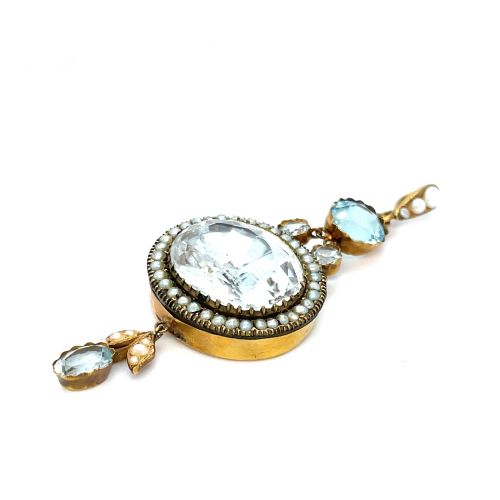
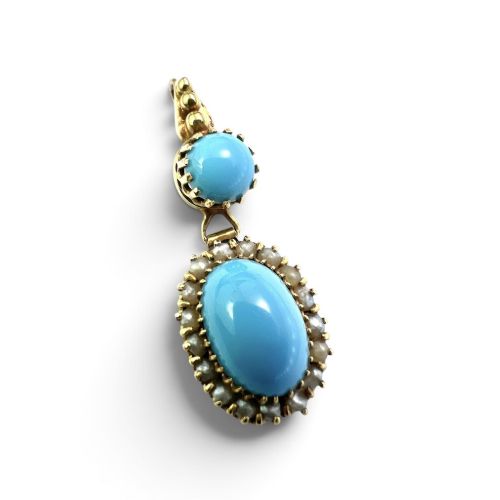
A nineteenth century gold pendant brings together the distinct aesthetics of the Victorian and Georgian eras, often taking the form of wearable jewels or convertible brooch designs. The selection on this page shows pieces rendered in both standard gold and 9ct gold, frequently housing gemstones or serving dual purposes as brooches.
Buyers meet variations spanning simple gold settings to elaborate cluster forms featuring central gems. The materials range from foundational gold to decorative embellishments like diamonds, pearls, amethyst, and tigers eye, reflecting the varied design impulses of the period.
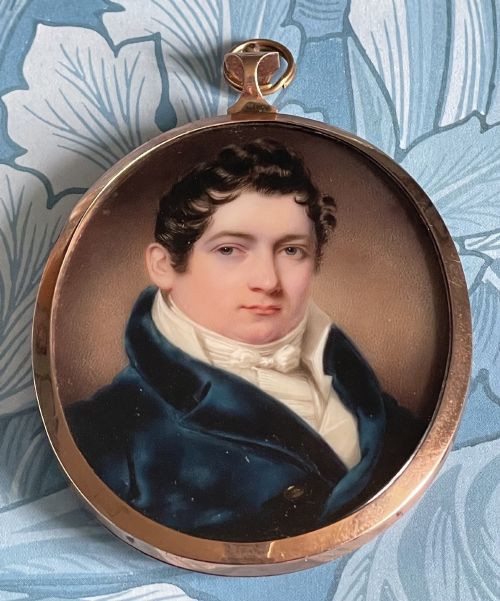
Many items survive from the Victorian period, showcasing the era's preference for sentimental and symbolic jewellery. These forms include starburst configurations and halo arrangements that sit alongside portrait miniatures framed in precious metals.
Materials and Construction
The construction relies heavily on gold and 9ct gold as the primary metal medium for shaping bezels, chains, and convertible brooch frames. These metallic elements provide the structural support needed to secure intricate stone settings.
Gems such as diamonds, pearls, amethyst, and tigers eye are integrated directly into the metalwork, often supported by foil back techniques or secure claw settings. This combination of precious metals and assorted minerals defines the physical build of the jewellery.
Some items double as secret portrait holders, letting wearers keep miniature likenesses close to their hearts.
Quality and Craftsmanship
Quality rests in the precision of the metalwork and the integration of secondary elements like pearls and diamonds within the gold structure. Finer pieces demonstrate careful attention to the security of stone settings and the harmonious balance of design motifs.
The execution of convertible elements, such as mechanisms that shift a piece from a brooch to a pendant, separates standard items from more accomplished works. Superior examples maintain structural integrity while offering versatile wearability.
John C D Engleheart·Henry Bone ARA
The Nineteenth Century Gold Pendant Glossary
- Victorian
- Pertaining to the reign of Queen Victoria, a period characterised by sentimentality and diverse revival styles in jewellery. Pieces from this time often incorporate rich symbolism and varied gemstone clusters.
- Pendant
- A piece of jewellery designed to hang from a necklace or chain around the neck. These ornaments range from simple lockets to complex gemstone and metal assemblies.
- Brooch
- An ornamental pin designed to be fastened to clothing, with many nineteenth-century examples engineered to convert into pendants. This duality allows a single item to serve multiple styling functions.
Nineteenth Century Gold Pendant: Frequently Asked Questions
How do I wear a convertible pendant?
Convertible pieces feature hidden loops or removable pin mechanisms that allow the item to transition between a breast ornament and a neck jewel. You simply attach a chain for neck wear or secure the pin fastening for clothing.
This adaptability was a popular feature among nineteenth-century makers aiming to maximise the utility of valuable jewellery.
How are different periods identified?
Period identification relies on observing the specific mounting styles, metal purity marks, and gemstone cut characteristics associated with Victorian or Georgian workmanship.
Comparing the structural technique and design motifs against documented historical examples helps clarify the era of manufacture.
What stones are typically found?
Common embellishments include diamonds, pearls, amethyst, tigers eye, and rock crystal, often paired with gold or 9ct gold settings.
These materials were selected by period artisans to create contrast and visual depth within the primary metal framework.