


Antique Paste Drop Necklace
An antique paste drop necklace brings centuries-old brilliance to the collarbone using hand-cut glass and precious metals.
Antique Paste Drop Necklace
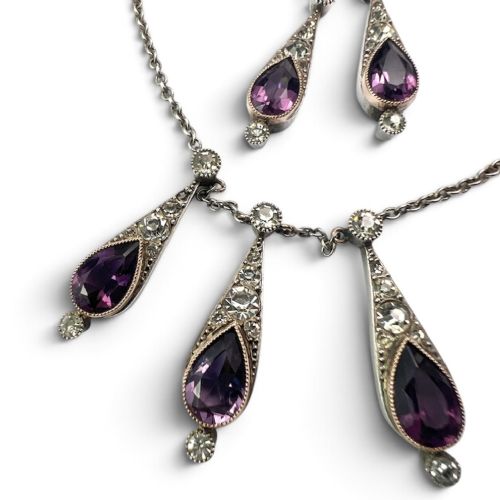
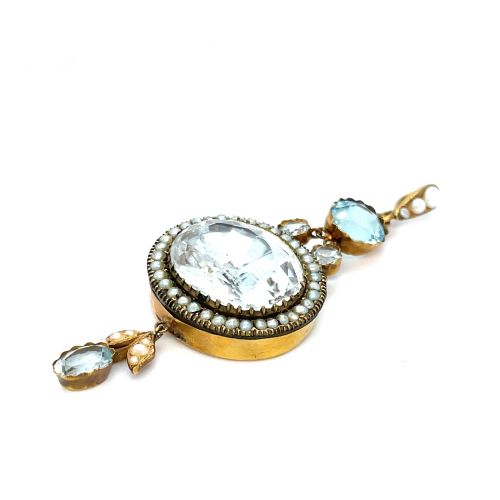
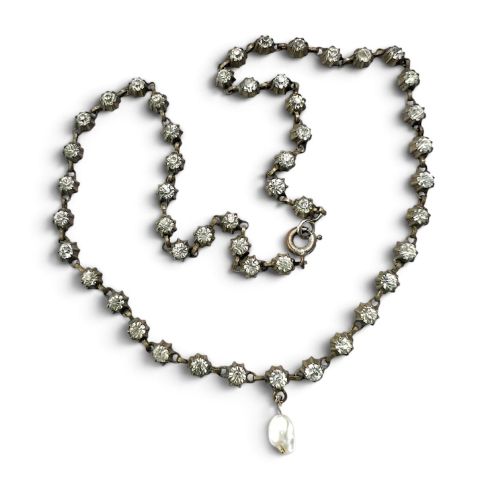
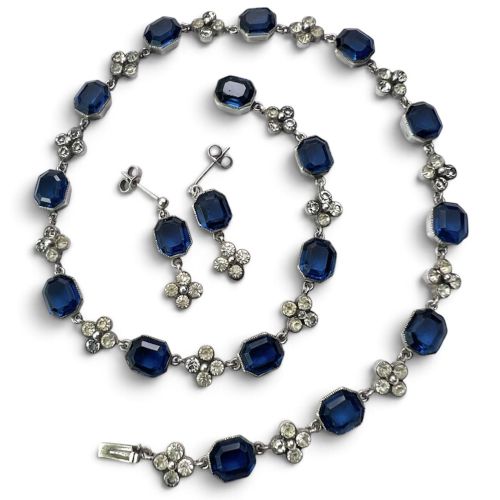
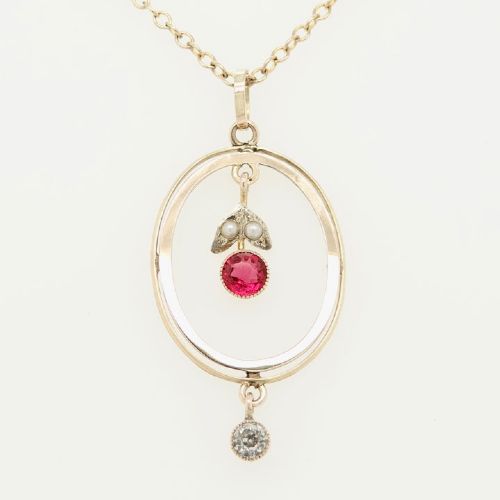
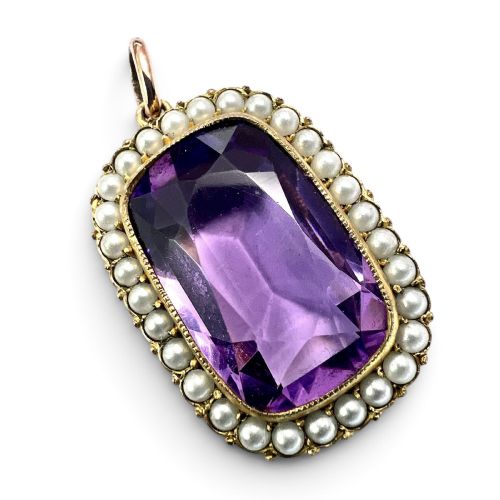
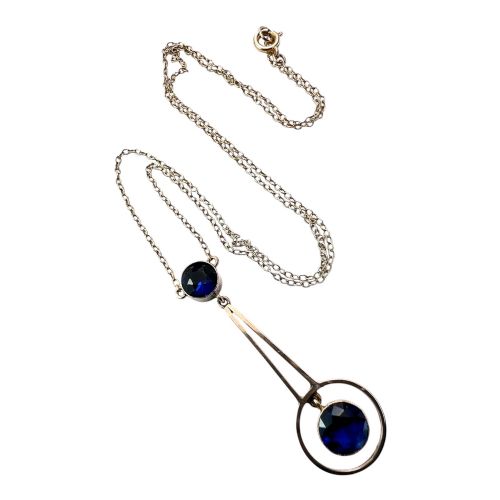
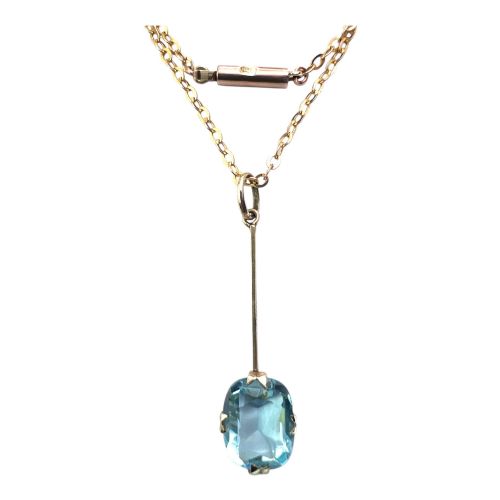
When you search for an antique paste drop necklace, you encounter pendant designs suspended from chains, often featuring gemstone-mimicking glass stones. The examples on this page span the Victorian, Edwardian, and Art Deco periods, alongside 19th Century and 1920s creations. The most common version you will meet here is a silver or 9ct gold drop necklace incorporating paste glass alongside pearls, aquamarine, or amethyst.
The objects take several forms, including lavalier pendants, floral clusters, and complete jewellery sets featuring matching earrings. Victorian and Edwardian iterations dominate the selection, showing distinct progression from elaborate foil-backed stones to crisp geometric Art Deco arrangements. Each piece relies on a central hanging element that draws the eye downward along the neckline.
Materials and construction
The metals utilised in these necklaces include sterling silver, 9ct gold, and occasionally 15ct gold, providing sturdy settings for fragile glass. Craftsmen secured the hand-cut paste stones using claw settings or closed-back foils designed to maximise light reflection. Natural accents such as seed pearls, rock crystal, and genuine aquamarine frequently accompany the glass components.
Techniques range from Victorian wirework and halo clusters to Edwardian floral lavalier construction and Art Deco geometric articulation. The paste glass itself is meticulously faceted by hand, mimicking the optical properties of mined gemstones such as emerald, sapphire, and amethyst.
The listings span Victorian, Edwardian, and Art Deco periods, utilising silver, 9ct gold, and 15ct gold alongside paste glass.
Assessing quality and execution
The distinction between ordinary and superior pieces rests on the precision of the stone cutting and the integrity of the metalwork. Finer necklaces display hand-faceted paste with sharp edges and minimal abrasion, whereas lesser examples show softened facets and dull glass. The presence of original matching chains and secure stone settings elevates the execution.
Design complexity also dictates the tier of the piece, moving from simple single-stone drops to intricate Austro-Hungarian or floral lavalier settings. Superior items integrate complementary materials like seed pearls and rock crystal with balanced proportions and robust construction.
The Antique Paste Drop Necklace Glossary
- Paste
- Highly transparent hand-cut glass used to imitate diamonds and coloured gemstones in historic jewellery. It was faceted and polished by hand to achieve maximum brilliance.
- Lavalier
- A pendant necklace featuring a central drop stone suspended below the main decorative cluster or chain. This style gained immense popularity during the Edwardian era.
- Foil-backed
- A manufacturing technique where a thin sheet of reflective metal foil is placed behind a transparent stone to enhance its colour and sparkle. It requires sealed settings to prevent moisture damage.
- Old cut
- A precursor to modern diamond cuts characterised by a small table, high crown, and open culet. Historic paste stones were frequently cut using these traditional gemstone geometries.
- Seed pearl
- Very small natural or saltwater pearls historically used as delicate accents in clusters and borders. They provide a soft, creamy contrast to bright metal and faceted glass.
Antique Paste Drop Necklace: Frequently Asked Questions
What is paste glass?
Paste is a heavy, high-lead glass that artisans faceted and polished by hand to imitate precious gems like diamonds, emeralds, and amethysts.
Historic paste differs from modern plastic or cheap glass imitations because each stone was individually cut and set into precious metal by hand.
How do I date my necklace?
Dating relies on examining the metal hallmarks, setting styles, and overall design motifs characteristic of specific historical eras.
Victorian pieces often feature heavy closed-back foils and organic motifs, while Edwardian versions favour lighter platinum-topped silver work and geometric floral drops.
Can I wear these daily?
Wearing antique paste requires care because glass is softer than diamond and susceptible to scratching or impact damage.
Victorian and Edwardian settings were built for durability, but the delicate foils behind some stones mean necklaces should be kept away from water.
Are the chains original?
Many historic necklaces survive with their period-appropriate chains, though some have been paired with later replacements over the decades.
Inspecting the link construction and metal colour helps determine whether the chain shares the same period of origin as the pendant drop.