

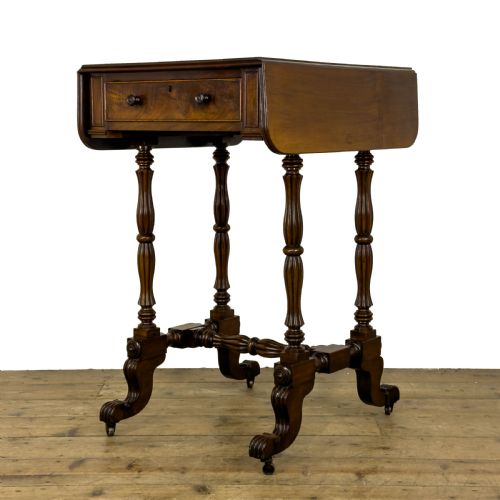
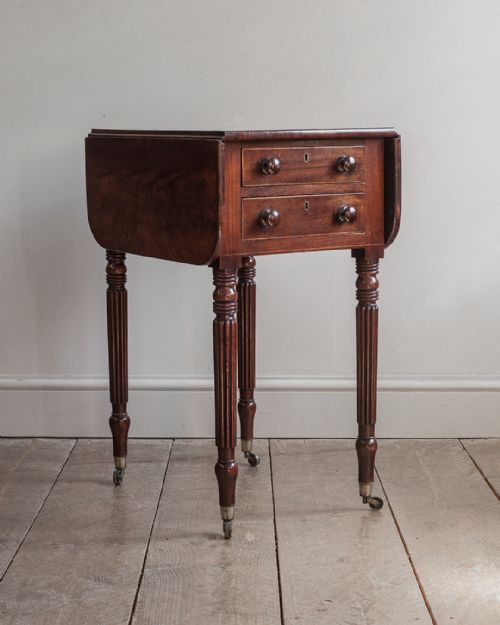


Nineteenth Century Drop Leaf Table
A nineteenth century drop leaf table offers folding flaps for adaptable surface space, combining period timber with practical domestic engineering.
Nineteenth Century Drop Leaf Table
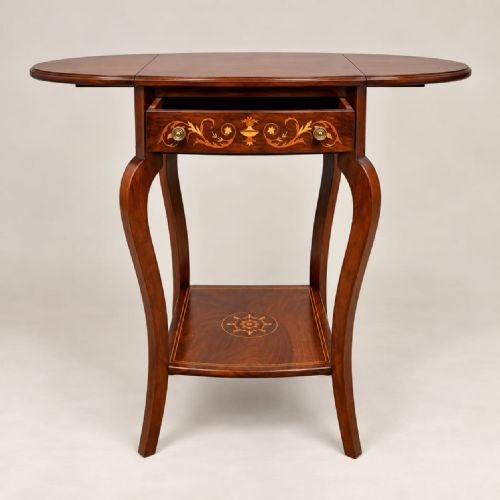
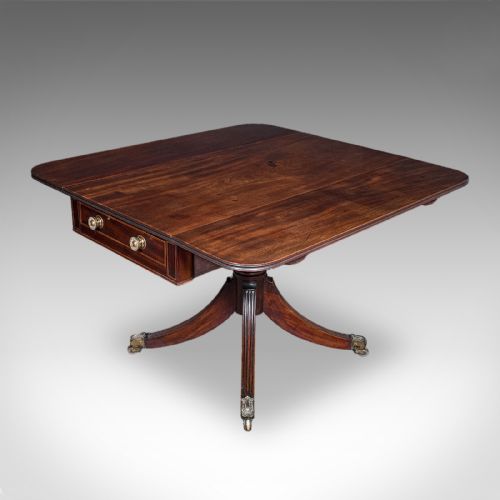
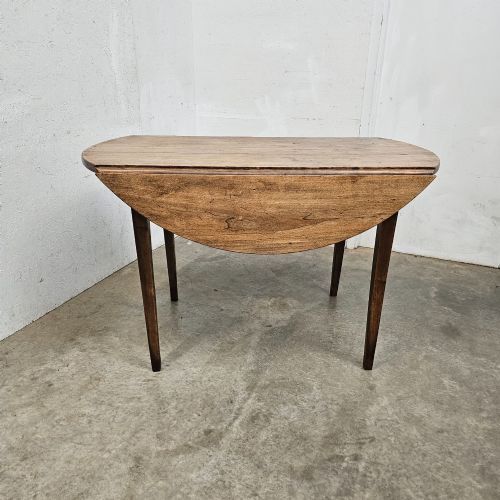
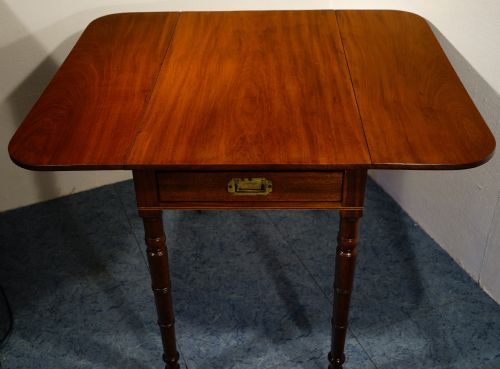
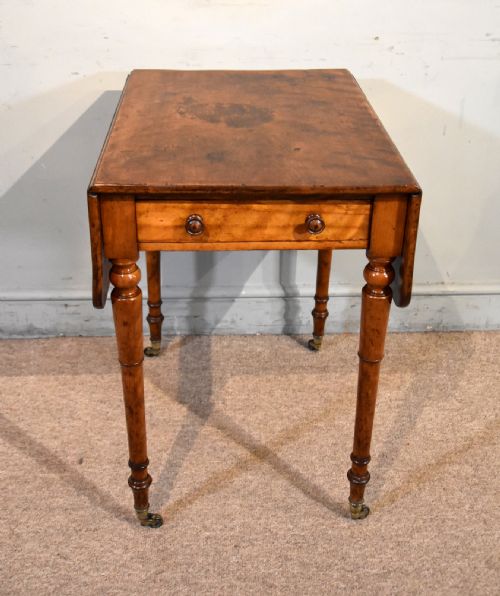
When you examine a nineteenth century drop leaf table, you encounter a versatile form designed to expand when needed and fold away compactly against a wall. The selections available encompass Pembroke tables, sofa tables, Sutherland tables, and occasional variants intended for specific domestic tasks.
Mahogany and rosewood dominate the examples present on this page, alongside walnut, satin birch, and pine. These pieces originate from English, French, Swedish, and Scottish workshops spanning the Regency, Georgian, and Victorian eras.
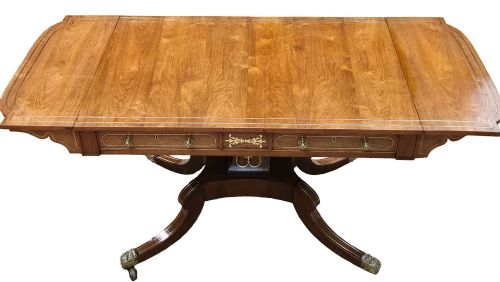
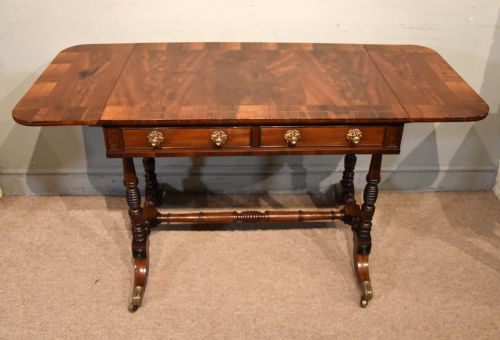
The version you are most likely to meet is a mahogany or rosewood sofa table or Pembroke table resting on slender legs or pedestal supports. These practical tables served for writing, sewing, and light dining in nineteenth century drawing rooms.
Materials and construction
Cabinet makers utilised dense tropical hardwoods like mahogany and rosewood, frequently selecting figured veneers and flame grains to cover primary surfaces. Crossbanding in contrasting timbers and parcel gilding added decorative definition to drawer fronts and table edges.
Brass mounts, casters, and fabric elements appear on sophisticated sofa tables and work tables from the Regency period. Structural stability relied upon hinged leaves supported by swing brackets, gatelegs, or drop flaps.
Pine and oak served for regional utility tables, while ebonised finishes and burr walnut characterised later Victorian Sutherland tables.
Listings feature eighteenth century, Regency, George IV, and Victorian periods utilising mahogany, rosewood, walnut, satin birch, and pine.
Factors of quality
Quality rests upon the selection of timber, particularly the depth of figure in flame mahogany or rosewood and the precision of crossbanding. Superior items display meticulous timber matching across the flaps and top.
The sophistication of the undercarriage distinguishes standard utility tables from high cabinet work. Lyre ends, brass inlay, ormolu mounts, and finely turned pedestal supports elevate the standing of a piece.
Original brass castors, functioning drawer mechanisms with matching secondary woods, and intact hinge systems indicate careful retention of original parts.
Johnstone and Jeanes·James Mein·Jenks and Woods
The Nineteenth Century Drop Leaf Table Glossary
- Pembroke table
- A small rectangular table with two hinged drop leaves on opposing sides, commonly fitted with a single drawer. Thomas Sheraton attributed the name to the Countess of Pembroke.
- Sofa table
- A long, narrow table designed to stand in front of a sofa, featuring drop leaves at the short ends and typically two small drawers. Regency examples frequently incorporate pedestal or lyre supports.
- Sutherland table
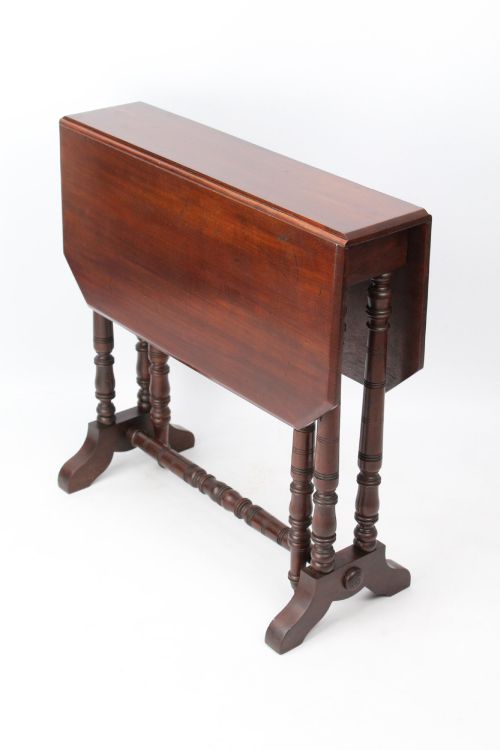
- A narrow table with exceptionally wide drop leaves that fold down almost vertically, supported by a swinging leg gate system. Victorian households utilised these for tea and sewing.
- Crossbanding
- A decorative border of veneer laid around the perimeter of a tabletop so that the grain runs at right angles to the central panel. This technique frames the primary timber.
- Flame mahogany
- A veneer cut from the branch junction of a mahogany tree, producing a distinctive rippled flame pattern. Cabinet makers reserved this timber for principal show surfaces.
Nineteenth Century Drop Leaf Table: Frequently Asked Questions
Where did people use these tables?
Nineteenth century households placed these tables in drawing rooms, parlours, and dining spaces where floor space required flexible arrangements. Drop leaves allowed owners to expand surface areas for dining or writing before folding them back down.
Sofa tables sat directly behind couches, while Pembroke and work tables stood beside seating for needlework and correspondence.
What is a Sutherland table?
A Sutherland table is a specific variation characterised by a very narrow central top and exceptionally wide drop leaves. When folded down, the leaves hang almost vertically, allowing the table to occupy minimal floor space.
They rely on a complex gateleg action where swinging legs pivot outward to support the broad flaps.
How do I care for nineteenth century timber?
Maintain polished mahogany and rosewood surfaces by keeping them away from direct sunlight and sudden temperature shifts. Dust regularly with a soft, dry cloth rather than applying silicone sprays.
Apply a traditional beeswax polish sparingly to nourish the grain and preserve the finish without building up greasy residue.