
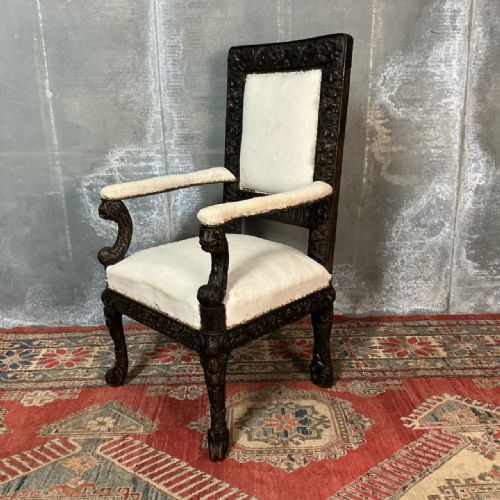
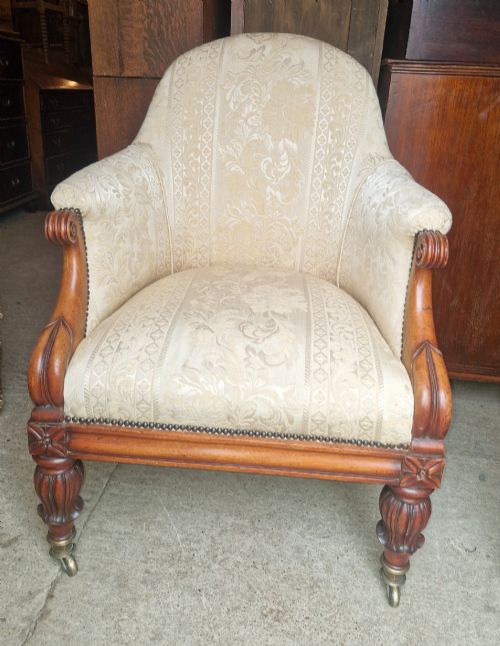
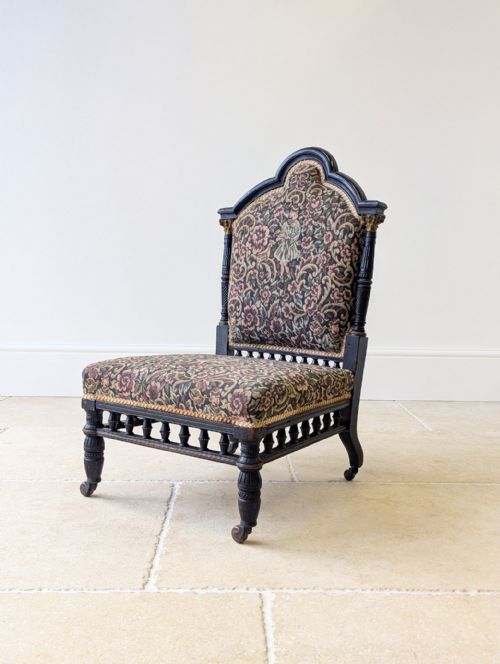
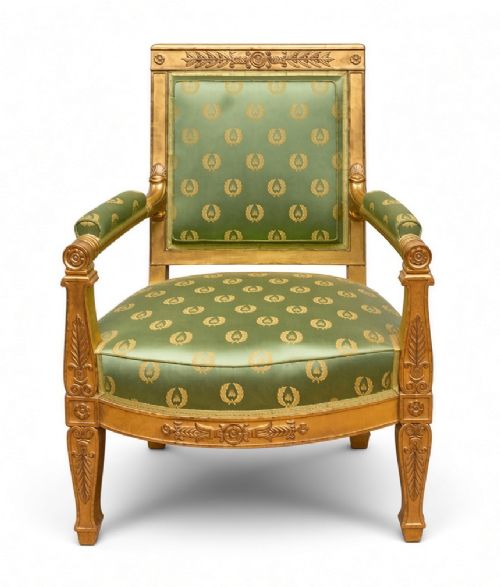
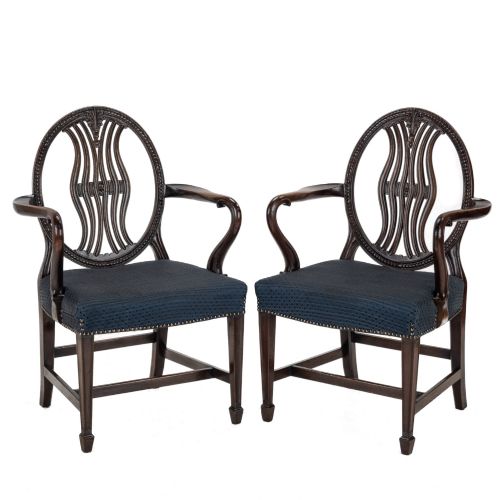


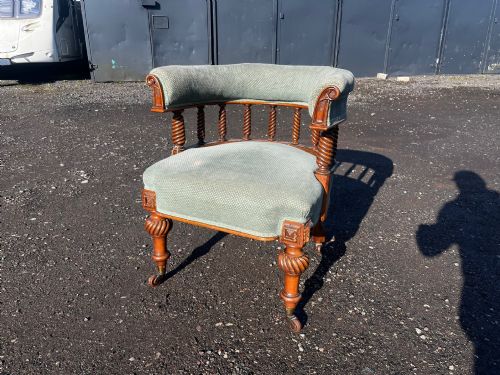


Nineteenth Century Carved Armchairs
Nineteenth century carved armchairs bring substance and distinct period design to a room, ranging from robust oak library seating to giltwood French salon pieces.
Nineteenth Century Carved Armchairs
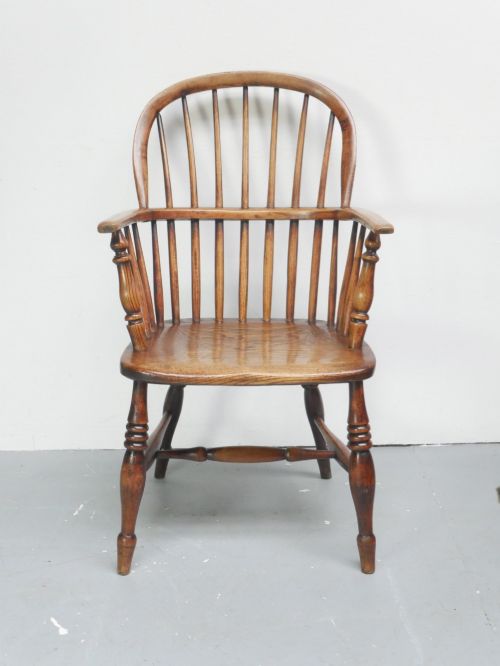
Nineteenth century carved armchairs encompass a wide variety of seating forms designed for parlours, libraries, and studies throughout the eighteen-hundreds. Buyers searching this phrase encounter everything from sturdy Windsor and captain's chairs in elm and yew to formal rosewood and mahogany library armchairs.
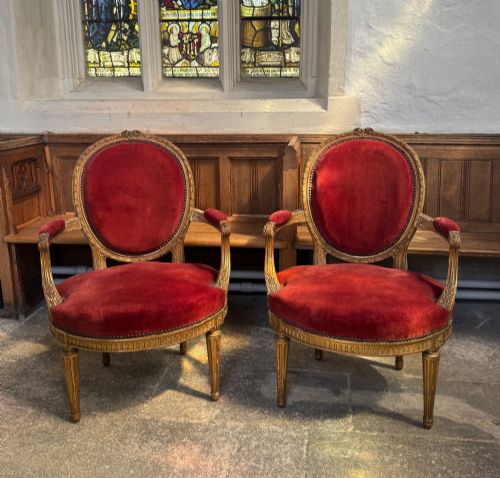
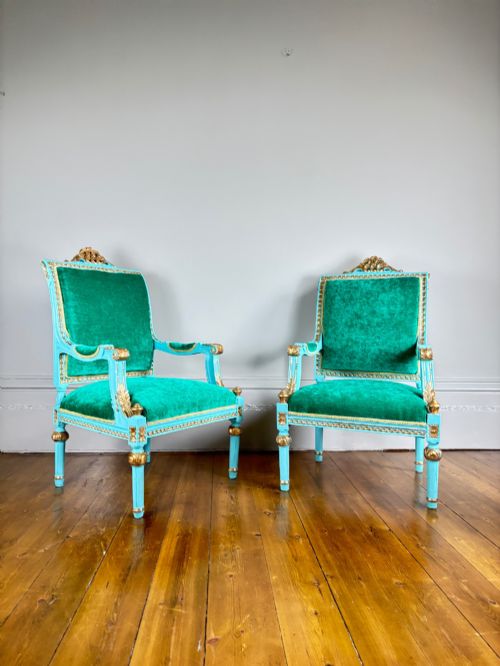
The selection on this page relies heavily on Victorian and Regency periods, alongside specific revival aesthetics such as Gothic, Chippendale, and Louis styles. Forms stretch from simple corner and desk chairs to pairs of French giltwood fauteuils and salon suites.
Origin plays a strong role in character, with English mahogany and oak pieces sitting alongside French giltwood creations and Scottish vernacular designs. Buyers most frequently meet mahogany library pieces and oak hall or Glastonbury chairs bearing carved details characteristic of the era.
How They Were Made
Cabinetmakers of the period utilised timber selected for grain and strength, predominantly mahogany, oak, walnut, rosewood, and elm. Frames were joined using traditional woodworking techniques, often augmented by turned supports and intricate hand-carved ornamentation.
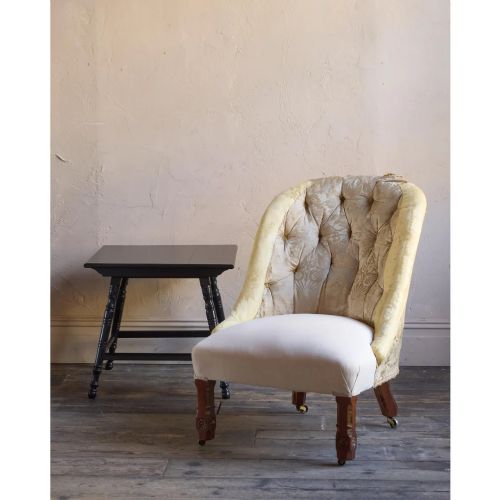
Upholstered versions combined webbing and horsehair stuffing beneath layers of fabric, leather, or brass detailing. Giltwood pieces involved applying thin gold leaf over a prepared gesso base on carved wooden frames.
Listings feature woods spanning mahogany, oak, walnut, rosewood, elm, yew, and pitch pine across English, French, and Scottish origins.
What Varies in Quality
The distinction between ordinary and exceptional nineteenth century carved armchairs rests in the depth and crispness of the hand-carved detail. Superior examples display sharp relief work on arms and crest rails, whereas lesser pieces show softer, shallower execution.
Timber selection and structural integrity define the upper tier of the range. Master workshops utilised dense, well-figured woods with tight joinery that endured decades of daily use without losing stability.
Jacob-Desmalter·Liberty and Co·George Bullock·Henry Thomas Peters of Genoa
The Nineteenth Century Carved Armchairs Glossary
- Fauteuil
- An open-framed armchair with upholstered back and seat, typically originating from French design traditions. These chairs feature exposed wooden arms and carved rails.
- Giltwood
- Timber coated with gold leaf over a prepared surface. This finish appears frequently on formal nineteenth century salon chairs.
- Bergère
- An enclosed armchair with upholstered sides and back set into a wooden frame. It often includes a loose seat cushion.
- Mashrabiya
- An architectural wooden lattice screenwork. Some late nineteenth century corner chairs incorporate these panels.
- Spoonback
- A chair back curved in three dimensions to resemble the bowl of a spoon. This upholstered form provides ergonomic support during the Victorian era.
Nineteenth Century Carved Armchairs: Frequently Asked Questions
How do I identify a Regency armchair?
Regency armchairs reflect classical influences, often featuring saber legs, reeded mahogany frames, and restrained carved details inspired by ancient Greece and Rome. They date roughly from the early eighteen-hundreds up to the eighteen-thirties.
Look for clean lines and dark, dense mahogany timber. Many examples include brass inlay or subtle turned arm supports rather than heavy Victorian ornamentation.
Are these chairs suitable for daily use?
Most nineteenth century carved armchairs were built to withstand heavy daily use by skilled cabinetmakers using solid hardwoods. Sturdy frames in oak, mahogany, or elm remain robust today.
Upholstered components may require professional restoration or modern webbing to ensure comfort, but the underlying wooden structures are exceptionally durable.
How do I spot a revival style?
Revival styles borrow decorative motifs from earlier eras, such as eighteenth-century Chippendale or seventeenth-century Baroque. Makers during the Victorian period frequently reinterpreted these historical designs with greater mass and machine assistance.
Examining the internal construction and tool marks helps differentiate a true period piece from a later nineteenth-century revival interpretation.