


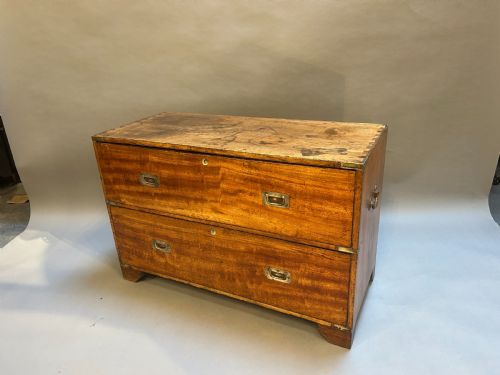


Nineteenth Century Campaign Furniture
Nineteenth century campaign furniture is portable equipment built for travel, offering clever folding designs and sturdy brass-bound timbers that suit modern homes.
Nineteenth Century Campaign Furniture
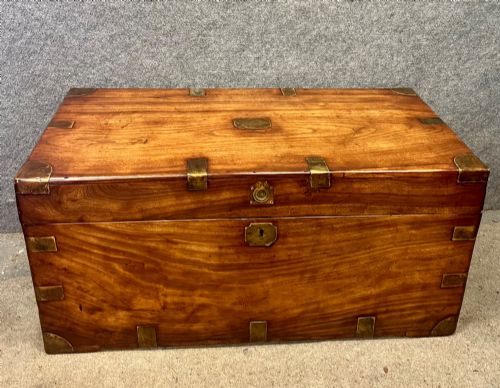
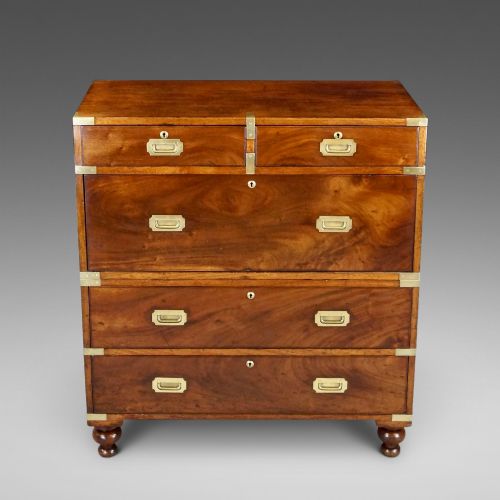
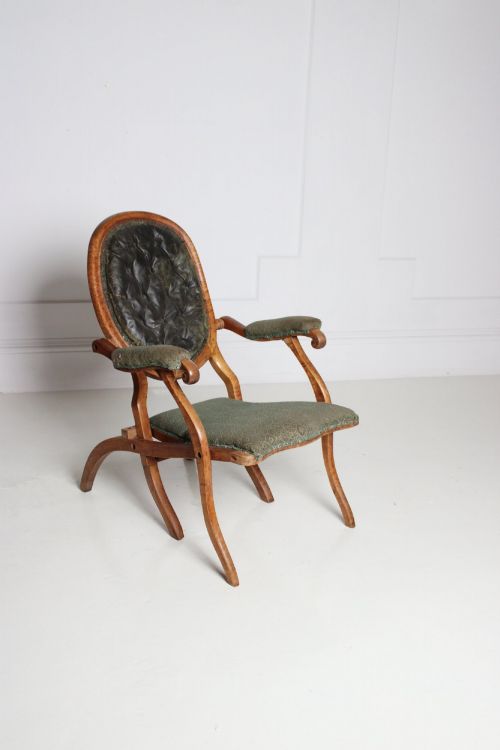
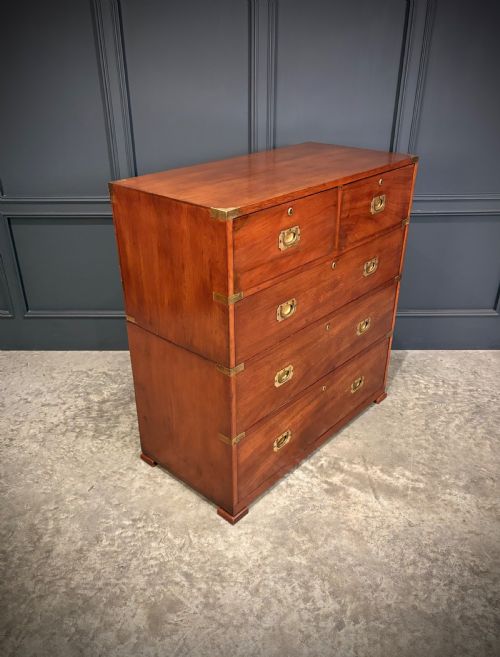
Nineteenth century campaign furniture comprises portable pieces designed for officers and travellers on the move, spanning sturdy chests of drawers, desks, trunks, writing slopes, washstands and folding chairs. You will frequently encounter mahogany and teak chests of drawers alongside folding chairs and writing slopes originating from the Victorian period.
These items were constructed to dismantle or fold efficiently for transport across colonies and military routes. The selection often includes Anglo-Indian and colonial variants alongside standard British military forms.
Makers such as Ross & Co. addressed the practical demands of relocation while maintaining domestic standards of comfort and utility. Buyers find these items appreciated for their modular engineering and rich timber surfaces.
Materials and Construction
Craftsmen utilised dense hardwoods such as mahogany, teak, padauk, rosewood, oak and walnut to withstand harsh climates and frequent transit. Brass corners, recessed handles and bound edges protected vulnerable joints from heavy impacts during long journeys.
Clever mechanical solutions allowed chests to split into separate sections and chairs to fold flat. Drawers often featured secure internal locking mechanisms to keep contents safe while in motion.
Current listings feature nineteenth century campaign furniture in teak, mahogany, walnut, oak and padauk wood, spanning desks, chests and folding chairs.
Assessing Quality
Quality rests in the precision of the brass hardware, the snugness of the joints when assembled, and the choice of timber grain. Superior examples retain original flush-fitting handles and maker stamps that confirm their provenance.
The integrity of the folding mechanisms and the crispness of the timber mouldings distinguish standard utility pieces from finer commissioned officers' quarters.
Ross & Co.
The Nineteenth Century Campaign Furniture Glossary
- Campaign chest
- A modular chest of drawers built in two or more sections with recessed brass handles and corner brackets to facilitate stacking and transport.
- Writing slope
- A portable slant-topped box that opens to reveal a slanted writing surface, inkwells and small compartments for stationery.
- Secretaire chest
- A chest of drawers featuring a dedicated fall-front top drawer fitted with small inner drawers and writing spaces.
- Boot jack
- A small V-shaped device used for pulling off boots without touching the mud or leather directly.
- Recessed brass
- Hardware let flush into the timber surface so it does not catch on ropes or packing crates during transit.
Nineteenth Century Campaign Furniture: Frequently Asked Questions
What is campaign furniture?
Nineteenth century campaign furniture refers to portable tables, desks, chairs and chests built for military officers, diplomats and travellers on active service.
These pieces were constructed to break down, fold or stack compactly for transport by ship, wagon or pack animal.
How do I spot a true nineteenth century piece?
Authentic pieces from this era typically feature dense timbers like mahogany, teak or camphor wood, paired with solid brass corners and recessed carrying handles.
Look for modular construction, such as chests that separate into stacking halves, and evidence of period hand-joinery.
Were these pieces used in actual military campaigns?
Many items were commissioned by or for officers serving in the British Army and colonial administrations across distant territories.
They allowed officers to maintain a degree of domestic comfort and order while stationed in temporary quarters or tents.
How do I care for campaign furniture at home?
Keep wooden surfaces nourished with appropriate wax and protect them from direct sunlight and sudden temperature shifts.
Check brass fittings periodically and handle folding mechanisms with care to preserve their original joints.