




Brass Corner Drawers
Brass corner drawers denote the robust, metal-reinforced campaign chests and writing slopes built for travel in the eighteenth, nineteenth, and twentieth centuries.
Brass Corner Drawers
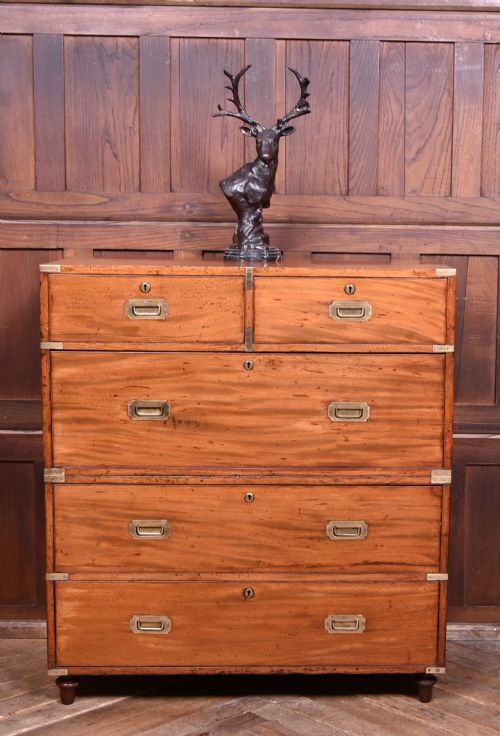
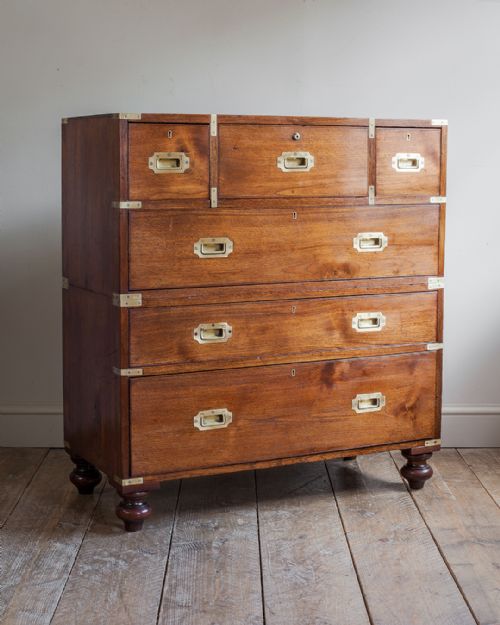
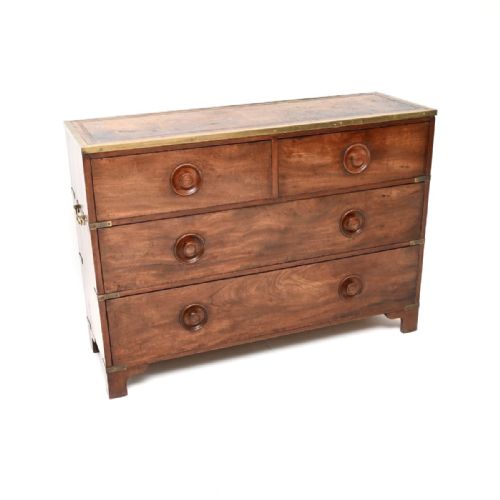
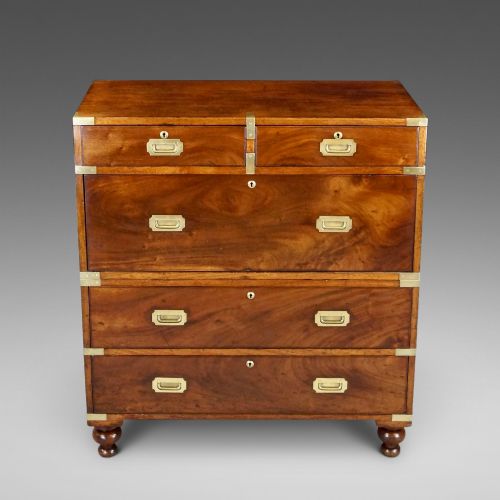
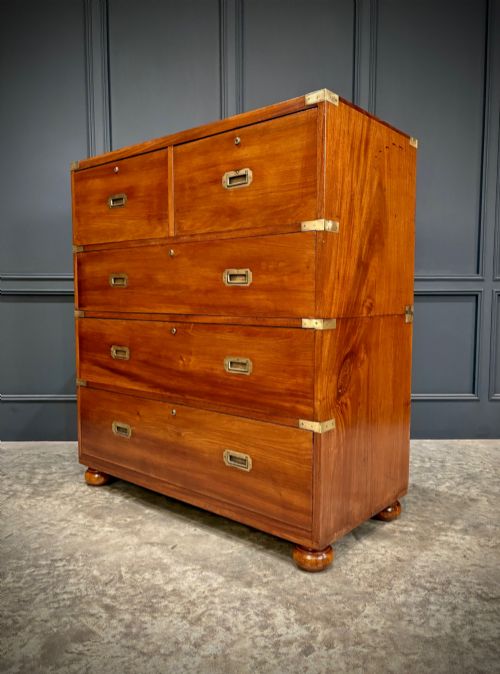
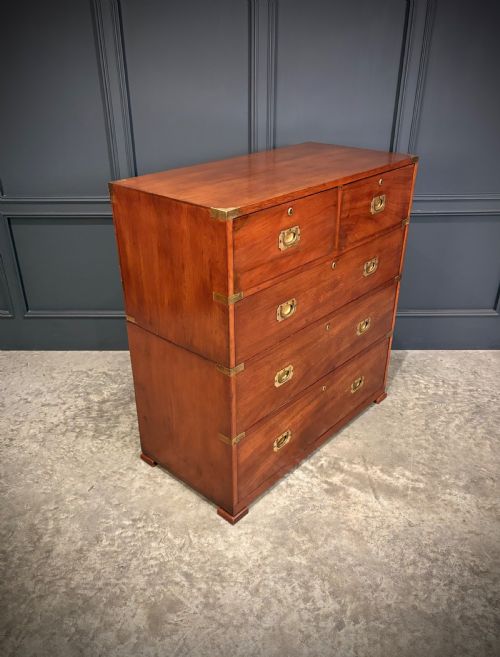
Brass corner drawers primarily appear as military campaign chests, writing slopes, and occasional chests designed for transport during the eighteenth, nineteenth, and early twentieth centuries. These sturdy pieces include modular two-piece chests and smaller desk forms built to withstand the rigours of transit.
Mahogany and teak dominate the pieces seen here, alongside camphor wood, walnut, yew, and elm. Makers integrated brass corners and strapwork to protect vulnerable wooden edges from impact while on the move.
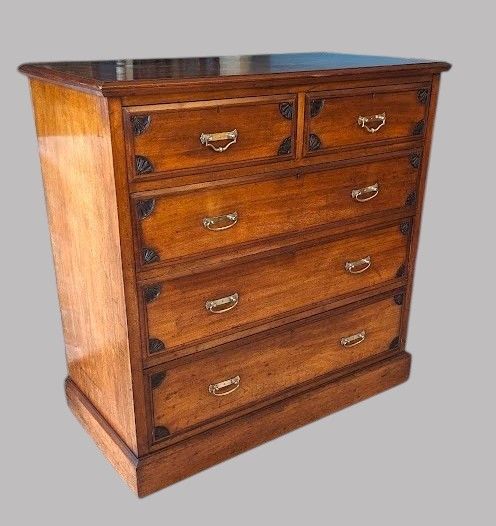
The aesthetic bridges utilitarian military requirements with refined domestic joinery, spanning Georgian, Regency, and Victorian periods. Buyers encounter standard chests of drawers alongside secretaire variants containing fitted writing compartments and secret drawers.
Materials and construction
Dense timbers such as mahogany, teak, and camphor wood provide the structural integrity required for travel, paired with secondary woods like cedar and oak. These heavy hardwoods resist warping and damage in varied climates.
Heavy brass fittings, including corner braces, flush drawer pulls, and strapwork, are screwed into the timber to reinforce joints and protect edges. Recessed hardware prevents catches during loading and stacking.
Modular construction splits large chests into two distinct stacking sections fitted with carrying handles on the sides, allowing officers and travellers to move heavy furniture in manageable pieces.
Many campaign chests hide secret compartments behind dummy drawers, designed to keep an officer's private correspondence safe from prying eyes.
Judging quality in campaign furniture
Quality rests in the precision of the brass work and the integration of hardware into the timber. Superior pieces feature brass countersunk flush with the wood surface rather than simply surface-mounted.
The choice of timber and the stability of the carcass dictate the grade of the piece, with dense figured hardwoods and solid secondary woods marking better workshops. Original matching sections and functional secretaire interiors elevate an example above standard utility items.
Ross & Co.·Army & Navy
The Brass Corner Drawers Glossary
- Campaign chest
- A modular chest of drawers built in sections with recessed brass hardware and carrying handles for military transport.
- Secretaire chest
- A chest of drawers featuring a pull-out writing drawer fitted with small drawers and pigeonholes.
- Flush pull
- A drawer handle set into the face of the wood so it does not project beyond the surface.
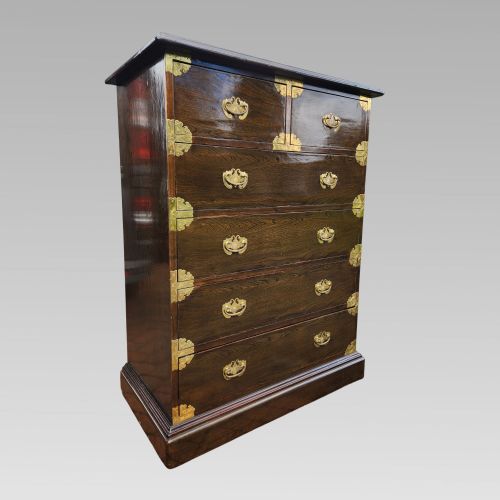
- Bandaji
- A traditional chest originating from Korea, often constructed with elm veneer and prominent metal corner mounts.
Brass Corner Drawers: Frequently Asked Questions
Why do these chests separate into two parts?
Modular construction allowed military officers and travellers to pack, load, and transport heavy furniture easily on ships, trains, and wagons.
Splitting the carcass into upper and lower stacking sections reduced the weight and awkwardness of each individual load during long journeys.
What timber is best for campaign furniture?
Dense tropical hardwoods like teak and mahogany offer exceptional durability and resistance to splitting in difficult climates.
Camphor wood also appears frequently, prized for its natural insect-repellent properties as well as its pleasing grain and distinctive aroma.
How do I identify a secretaire chest?
A secretaire chest includes a middle drawer that drops open on hinges to reveal a fitted writing surface and small pigeonholes.
This built-in desk compartment allowed officers to handle paperwork and correspondence without needing a separate writing table.
Are brass corner drawers strictly Victorian?
While Victorian examples are common, the style spans the Georgian and Regency periods through to the early twentieth century.
Earlier pieces often display simpler lines in mahogany, whereas later Victorian and Edwardian items frequently utilise teak and elaborate brass strapwork.