

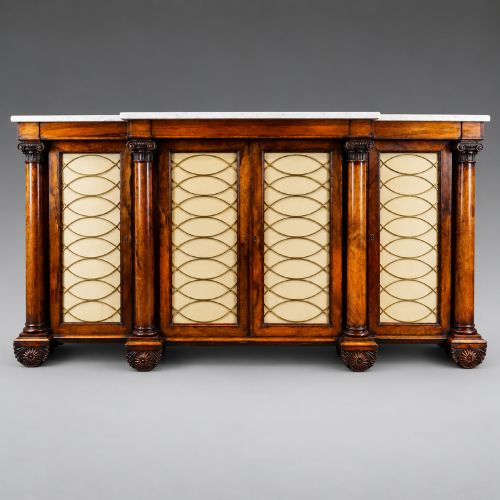
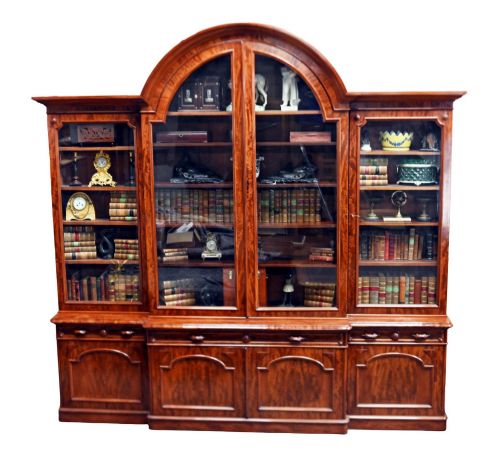
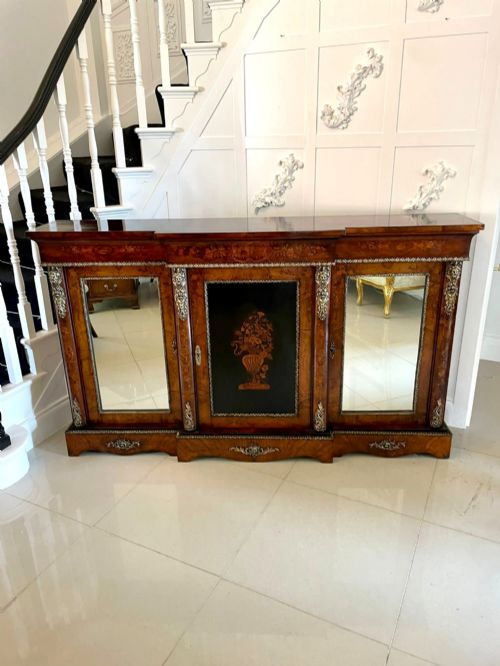
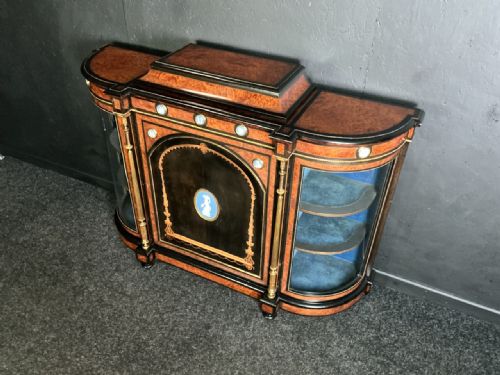
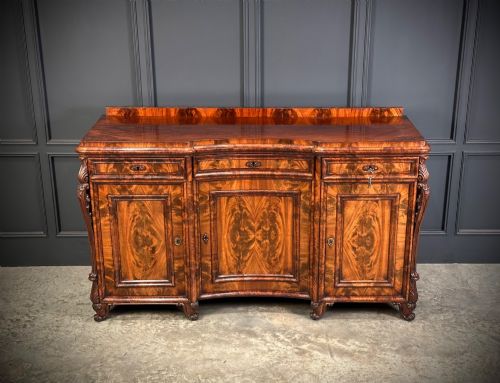
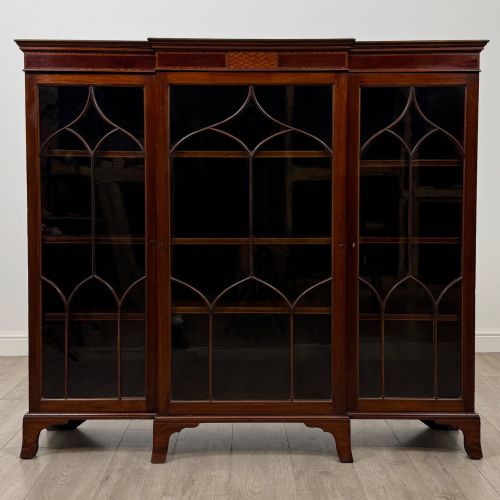
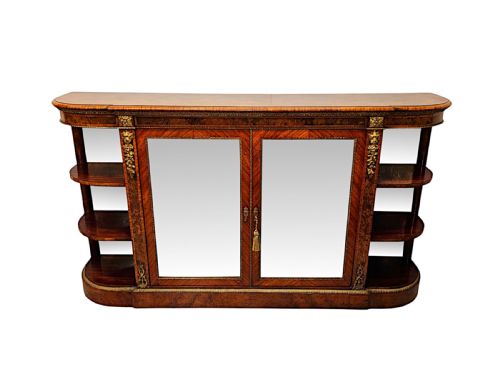
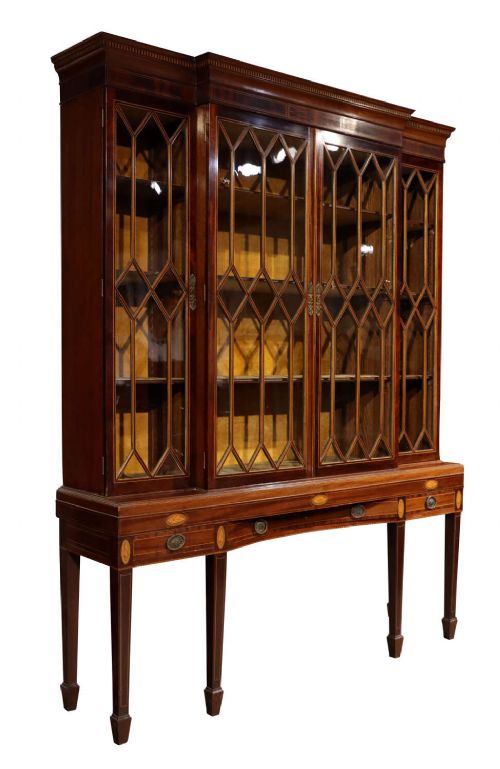
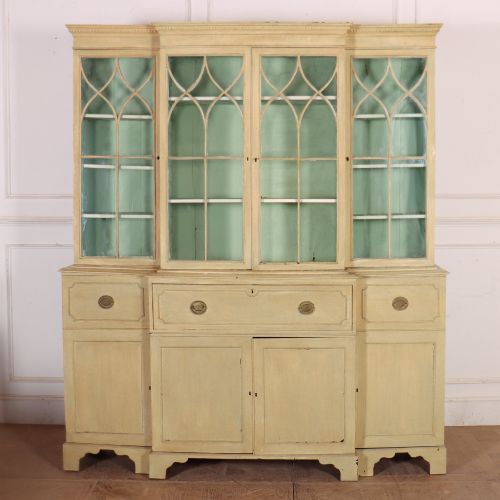


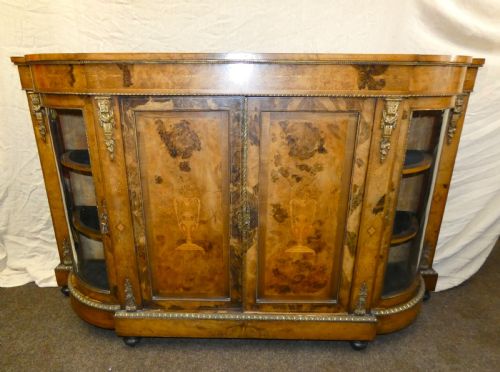


Nineteenth Century Breakfront Cabinet
A nineteenth century breakfront cabinet organises a room with architectural presence, offering generous display and storage through its characteristic projecting centre section.
Nineteenth Century Breakfront Cabinet
A nineteenth century breakfront cabinet presents a distinctive tiered façade where the central section projects forward from the flanking wings, creating a commanding silhouette in any library, dining room or principal reception space. These grand pieces frequently take the form of extensive bookcases, credenzas, display cabinets and sideboards designed to house fine volumes and decorative porcelain.
Makers of the period worked within diverse stylistic movements, producing examples that range from the clean lines of Regency mahogany to ornate Victorian burr walnut, Aesthetic Movement designs, and imposing Gothic Revival oak. Pieces from the eighteen-eighties often display sophisticated marquetry and rich timber figuring, whilst earlier Regency iterations favour restrained brass inlay and classical proportions.
Buyers seeking a nineteenth century breakfront cabinet encounter varied internal configurations, including adjustable shelving, enclosed cupboards, glazed display doors and specialised fitted desk drawers known as secretaires. The proportions span from modest domestic side cabinets to monumental library bookcases stretching several metres in length.
Materials and Construction
Cabinet makers relied upon dense primary timbers such as mahogany, rosewood, oak and walnut, frequently applying highly figured burr walnut, amboyna, coromandel or padauk veneers to the primary display surfaces. Carved mouldings, brass stringing and gilt ormolu mounts provide decorative contrast against the dark wood grains.
Glazing bars on display sections require precise joinery to form delicate arched or geometric panes, whilst heavy library bookcases employ robust carcases of solid oak or mahogany to support substantial rows of bound volumes. Internal carcases and drawer linings standardly utilise secondary woods like pine or oak, joined with traditional dovetailing.
Nineteenth Century Breakfront Cabinet Retail Price Guide 2026
Typical asking prices for nineteenth century breakfront cabinet among the pieces listed under this phrase on Sellingantiques today, from the lower quarter to the upper quarter. They describe what is for sale here now, not the wider market.
Assessing Quality
Superior quality rests in the selection of timber veneers, where grain patterns mirror symmetrically across doors and drawer fronts rather than appearing mismatched or patched. The crispness of hand-carved ornamentation and the integration of fine brass inlay distinguish standard production from exceptional exhibition pieces.
Structural integrity reveals itself in the weight and thickness of the timber used for internal shelving and backboards, alongside the smooth operation of large panelled doors and fitted secretaire drawers. The presence of documented workshop attribution or stamped maker signatures elevates a piece within the historical record.
Jas Shoolbred·Collinson & Lock·Gillows·Holland & Sons·Lamb of Manchester
The Nineteenth Century Breakfront Cabinet Glossary
- Breakfront
- A cabinet design featuring a central section that projects forward from the two flanking side sections. This architectural arrangement creates depth and shadow across the front elevation.
- Credenza
- A low cabinet, frequently fitted with doors and curved glass ends, popular during the Victorian period for displaying porcelain and decorative objects. It traditionally lacks the towering height of a bookcase.
- Marquetry
- The art of applying decorative patterns to a wooden carcase using thin pieces of veneer in contrasting timbers, metals or shells. It defines much of the ornamentation on high-status nineteenth century furniture.
- Ormolu
- Gilt bronze mounts applied to furniture for decorative enrichment, providing a bright metallic contrast against dark woods like rosewood and mahogany. This technique requires expert casting and fire-gilding.
- Secretaire
- A desk drawer or compartment fitted with a drop-front writing surface, pigeonholes and small drawers. It hides functional workspace behind the formal exterior of a bookcase or cabinet.
Nineteenth Century Breakfront Cabinet: Frequently Asked Questions
How do I style a large breakfront bookcase?
Balance heavy leather-bound volumes with varied decorative objects, plates and porcelain on adjustable shelves to prevent the large glazed sections from feeling heavy.
Allow negative space within certain bays so the figured timber interior and backboards remain visible behind the displays.
What is the difference between a sideboard and a credenza?
Sideboards generally feature greater height and robust proportions suited to dining rooms, often incorporating central drawers flanked by deep cupboards for servingware.
Credenzas sit lower to the ground with glazed display compartments designed primarily for formal reception rooms and drawing rooms.
How do I identify Regency pieces from Victorian ones?
Regency cabinets dating from the early nineteenth century favour classical architectural restraint, geometric brass inlay and architectural mahogany or rosewood surfaces.
Victorian pieces emerging after eighteen thirty-seven introduce heavier carving, elaborate walnut veneers, marquetry and diverse revival styles including Gothic and Elizabethan influences.
Can adjustable shelves hold heavy books?
Solid mahogany and oak library bookcases utilise heavy timber shelving designed specifically to bear the substantial weight of large collections of historical volumes without sagging.
Check the thickness of individual shelves and the reliability of the traditional wooden support ratchets or metal pins before loading extensive libraries.