
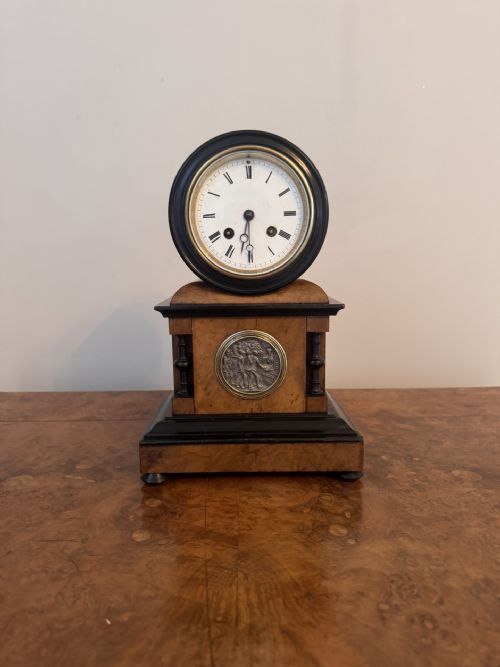
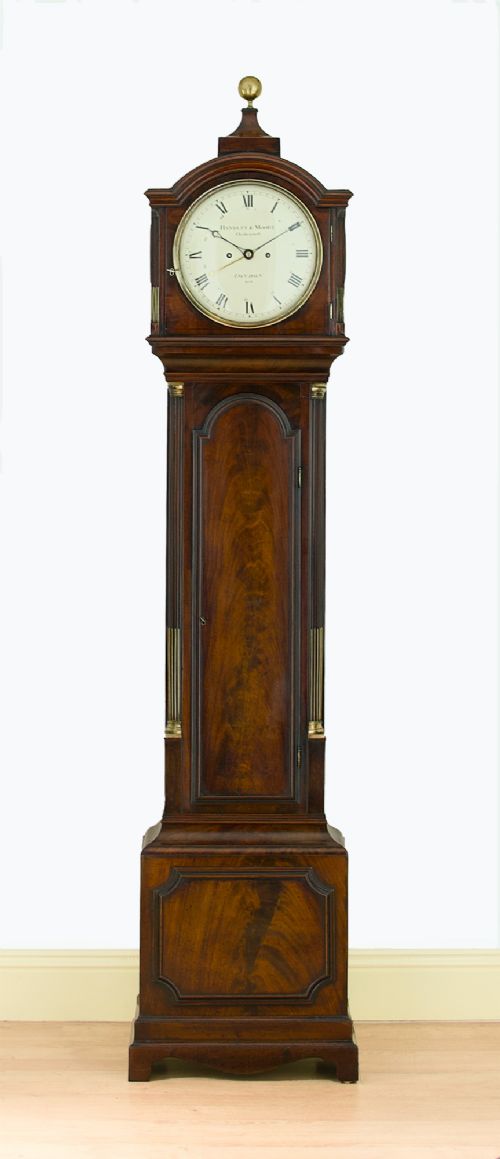
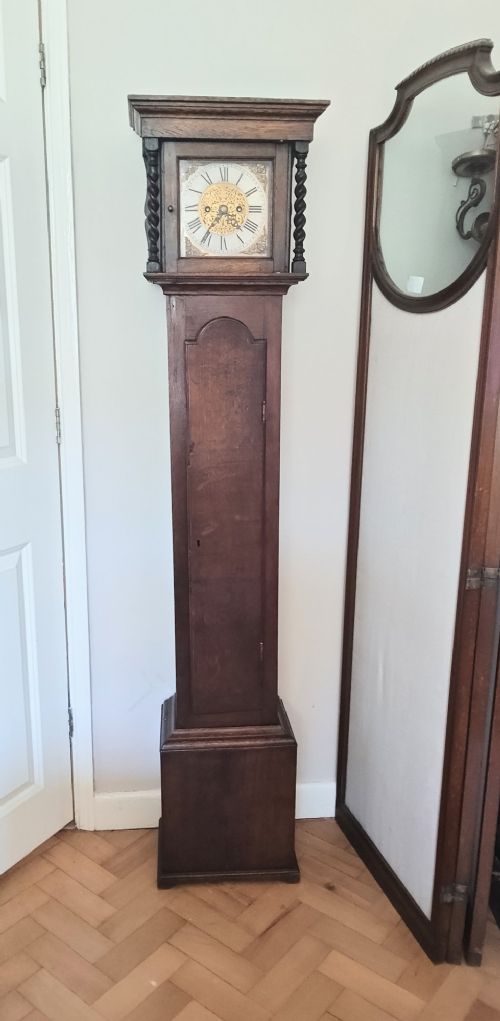
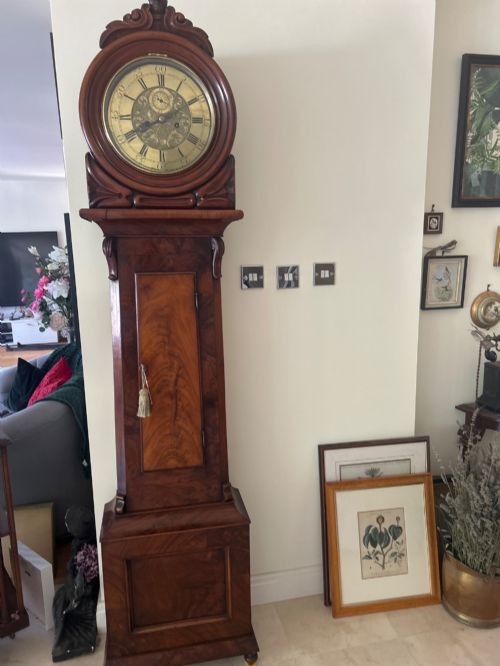

Nineteenth Century Brass Clock
A nineteenth century brass clock brings mechanical precision and heavy metallic presence to a room, ranging from small travelling pieces to grand architectural mantel designs.
Nineteenth Century Brass Clock
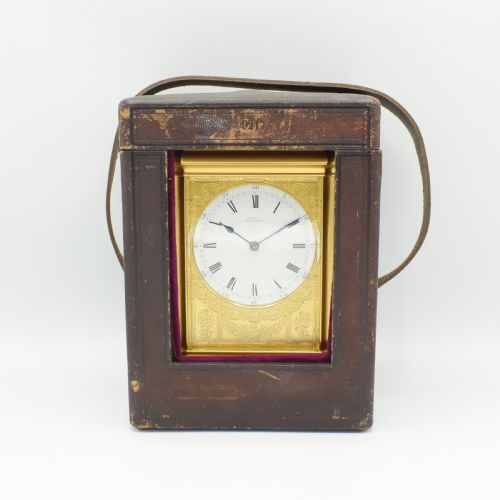
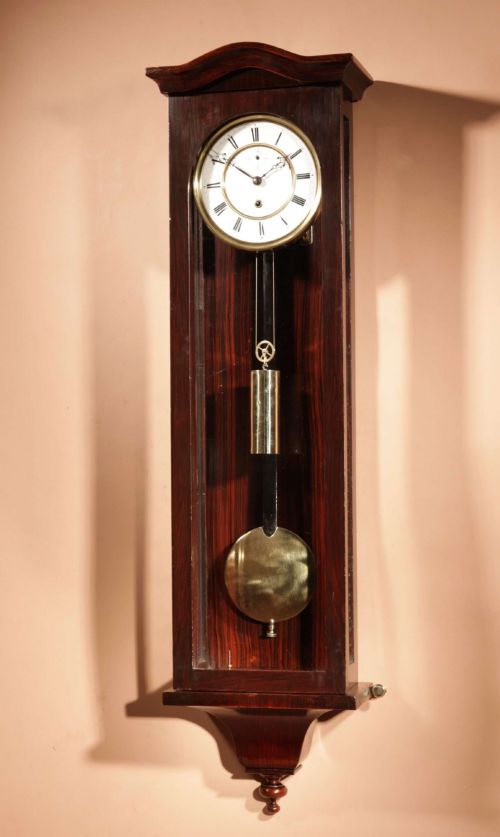
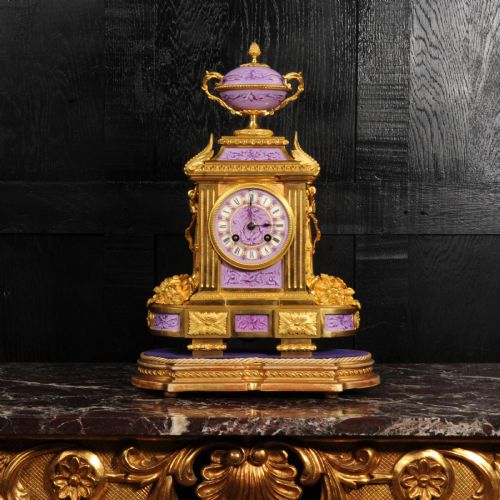
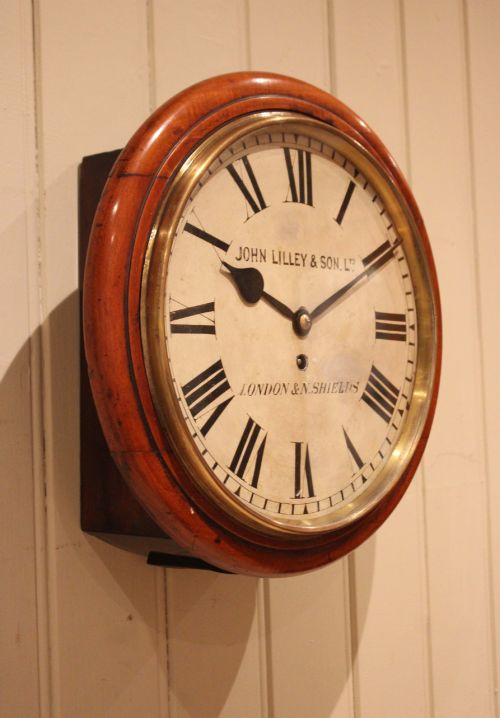
When you search for a nineteenth century brass clock, you encounter a wide array of functional objects spanning mantel clocks, carriage clocks, wall clocks, and longcase movements. The selection draws heavily from Victorian, Regency, and Georgian periods, alongside French styles such as Rococo Revival, Louis XVI Revival, and Napoleon III.
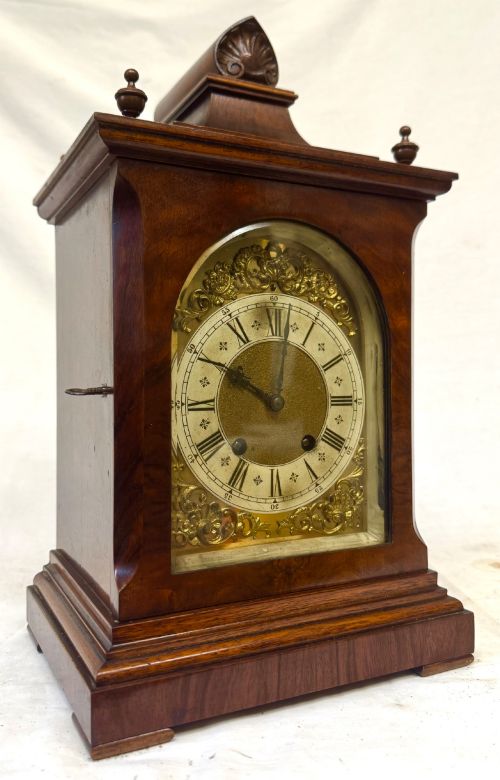
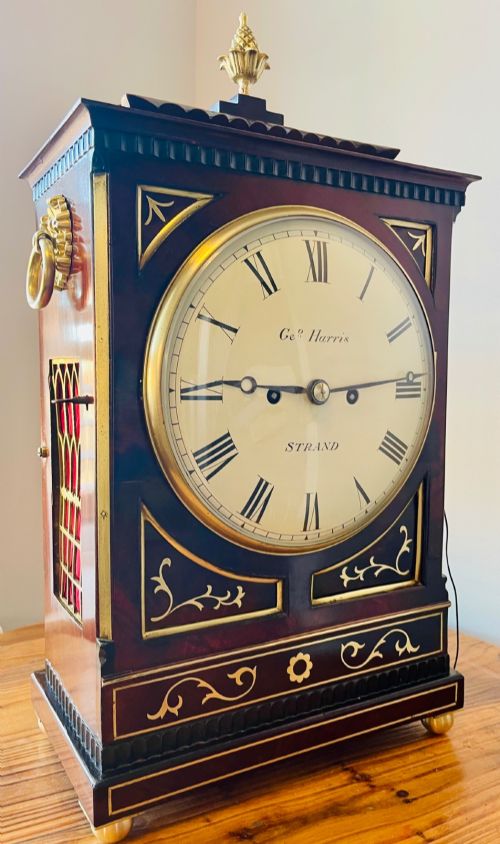
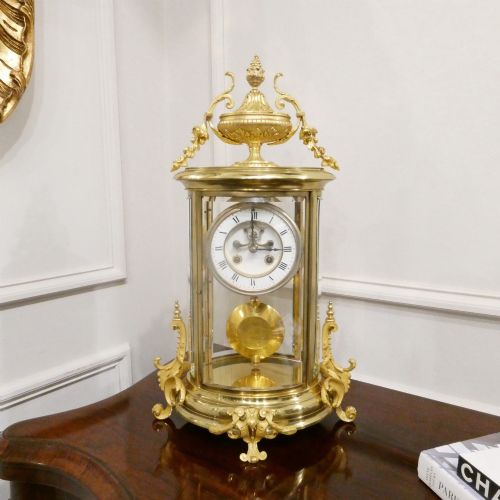
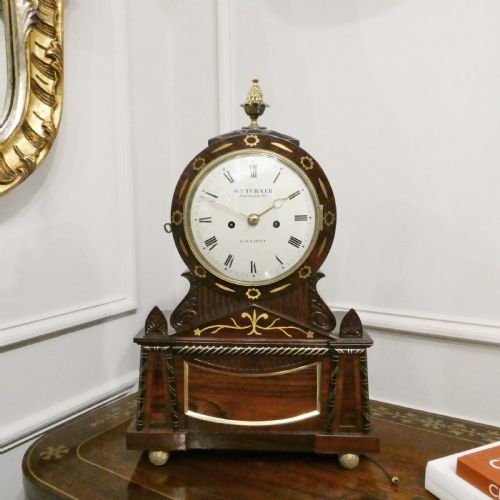
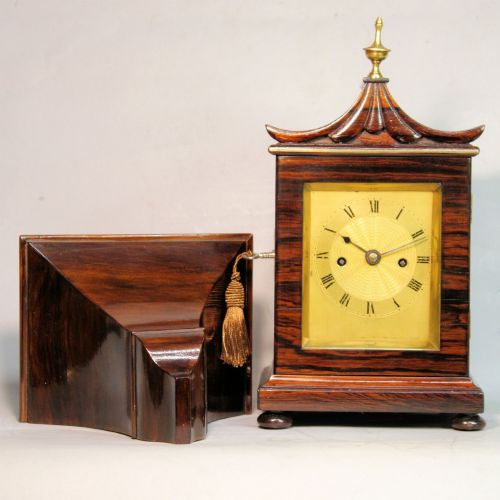
Mantel clocks and carriage clocks dominate the offerings, often incorporating glass panels, porcelain dials, or gilt bronze mounts. Buyers frequently find smaller portable travel timepieces alongside substantial domestic regulators and bracket clocks housed in mahogany or rosewood cases.
English and French workshops account for the vast majority of pieces, demonstrating diverse regional aesthetics from London fusee bracket clocks to ornate Parisian portico and four-glass models.
Materials and construction
The primary construction relies on brass for movements, bezels, and cast decorative mounts, frequently paired with secondary materials like mahogany, rosewood, white marble, and porcelain. Ormolu and gilt bronze surface treatments provide rich golden finishes on French architectural and figural cases.
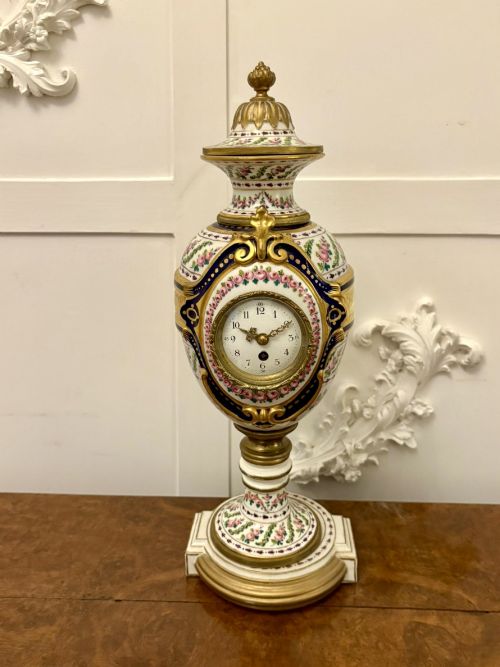
Movements utilise intricate brass gear trains, often driven by fusee mechanisms in English pieces or spring barrels in French designs. Dials combine white enamel with painted numerals, protected behind heavy bevelled glass or housed within hand-painted porcelain urns and plaques.
Listings feature 19th-century timepieces incorporating brass, glass, enamel, mahogany, gilt bronze, rosewood, porcelain, and ormolu.
Evaluating craftsmanship and execution
Quality separates simple mass-produced timepieces from exceptional horological works through the crispness of brass casting, the depth of gilding, and the complexity of the internal movement. Finer examples feature signed backplates, intricate engravings, and high-spec escapements such as platform cylinders or bimetallic compensation curbs.
Case materials and secondary embellishments further distinguish the tier of a piece, with solid figured mahogany, fine rosewood veneers, and hand-painted Sèvres porcelain plates indicating superior workshop output compared to simpler stained woods and plain dials.
Achille Brocot·Samuel Marti·Handley & Moore·Desbois & Wheeler·Etienne Lenoir·Delettrez·Antoine Redier·Japy Freres·Tiffany·Gontard & Bolviller Paris·Howell & James
The Nineteenth Century Brass Clock Glossary
- Fusee
- A conical pulley used in clock movements to maintain an even pull as the mainspring unwinds. This mechanism ensures more consistent timekeeping throughout the duration of the wind.
- Ormolu
- Gilded bronze produced by applying a mercury and gold amalgam to a bronze base and heating it. This technique creates a durable, rich golden surface typical of French decorative pieces.
- Carriage clock
- A small, portable spring-driven timepiece designed for travel, typically fitted with a carrying handle and glass panels on all sides to reveal the internal movement.
- Escapement
- The mechanical linkage that controls the release of power from the gear train to the pendulum or balance wheel. It delivers regular impulses to keep the timekeeper oscillating accurately.
- Garniture
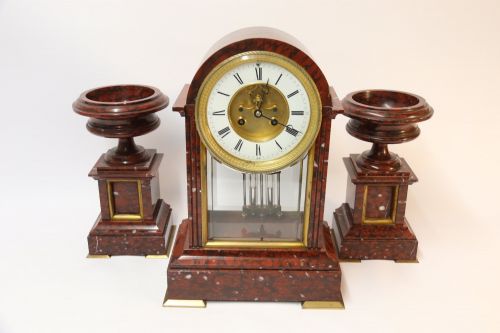
- A set of matching decorative mantel objects consisting of a central clock flanked by matching urns, vases, or candelabras. These decorative suites were popular in grand Victorian and French interiors.
Nineteenth Century Brass Clock: Frequently Asked Questions
What is a fusee movement?
A fusee movement uses a conical drum and a cord or chain to regulate the pull of the mainspring. This clever mechanical device equalises the diminishing power of the spring as it unwinds.
Clocks with fusee movements tend to maintain more reliable timekeeping across their running cycle. They are characteristic of better-quality English clockmaking from the period.
Where should I place a heavy brass clock?
Heavy brass and marble clocks require a sturdy, level surface such as a mantelpiece, heavy sideboard, or dedicated wall bracket. Stability prevents vibrations from interfering with the delicate pendulum or balance wheel.
Keep mechanical timepieces away from direct sunlight, damp areas, and temperature extremes that can affect wood cases and oil viscosity.
How do I tell English and French clocks apart?
English clocks often feature heavy mahogany or rosewood cases, silvered brass dials, and fusee movements designed for understated elegance. They frequently carry signatures from London or provincial makers directly on the dial.
French pieces typically showcase gilt bronze, ormolu, marble, or porcelain garnitures, frequently utilising platform escapements or striking mechanisms. Their movements often bear foundry stamps or maker medals on the backplate.