





Decorative Brass Table Timepiece
A decorative brass table timepiece brings period weight and precise brasswork to a desk or mantel.
Decorative Brass Table Timepiece
The selections span the Victorian and Edwardian eras alongside late 19th-century French production, capturing periods of ornate revivalism and precise mechanical output. Buyers encounter both domestic British fusee movements and elaborate French repeating mechanisms housed within heavy metal and glass cases.
Materials and Construction
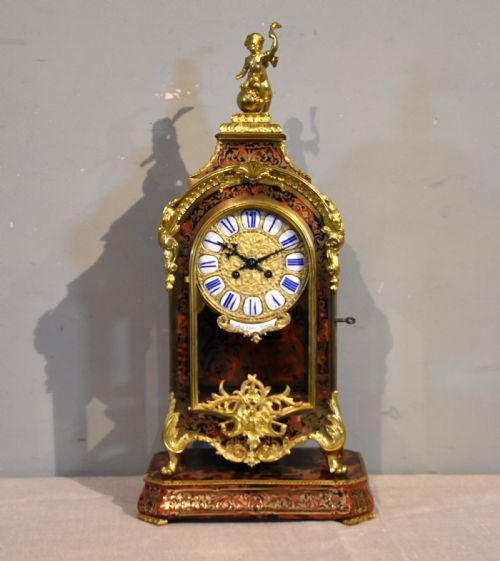
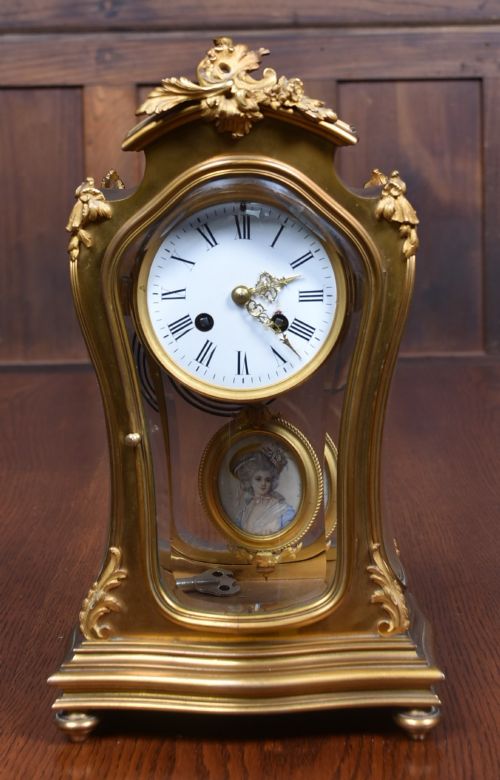
The primary structural material is brass, frequently embellished with fire gilding, ormolu, or gilt bronze to create a lustrous surface finish. Cases often incorporate bevelled glass panels, marble plinths, and ebonised wood elements to support the weight of the internal brass gear trains.
Dials and bezels frequently utilise hand-painted enamel, champleve enamel, or cloisonne work, sometimes featuring signed miniatures or delicate chapter rings. Mechanical construction relies on brass plates, steel pivots, and occasionally fusee or repeating escapements built by skilled workshops.
Listings feature brass, gilt bronze, and marble materials across Victorian and Edwardian mantel and carriage clock forms.
Distinctions in Quality
Quality rests upon the crispness of the cast brass or ormolu ornament and the fidelity of the gilding, where sharp relief and clean chasing separate superior examples from softer castings. The presence of signed movements, hand-painted enamel details, and original glass components elevates a piece significantly.
The complexity of the mechanism also determines standing, with repeating complications, platform escapements, and skeletonised plates representing higher tiers of horological achievement. Original casework integrity and matching signature details across the dial and movement confirm a higher grade of production.
Rodier·Le Roy·Tiffany·Hessen Paris·Henri Jacot·John Bennett Cheapside London·Barwise London
The Decorative Brass Table Timepiece Glossary
- Carriage clock
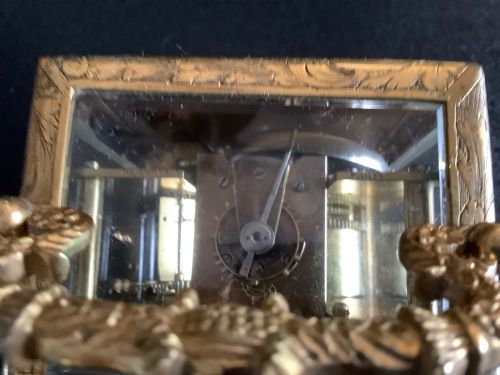
- A portable spring-driven timepiece originally designed for travelling, typically featuring a brass frame with glass panels and a swing handle. They often include platform escapements visible through the top glass.
- Ormolu
- Finely ground high-carat gold mercury-gilded onto a bronze or brass object. This technique imparts a deep, warm metallic sheen characteristic of French decorative arts.
- Fusée
- A conical pulley used in clock movements to maintain equal driving force as the mainspring unwinds. This mechanism ensures more accurate timekeeping throughout the power reserve.
- Champlevé
- An enamelling technique where troughs or cells are hollowed out of the metal surface and filled with vitreous enamel before firing. The resulting flush design displays rich coloured patterns alongside polished brass borders.
- Four-glass clock
- A mantel timepiece housed in a brass-framed case with bevelled glass on the front, back, and both sides. This style allows light to pass through and exposes the movement.
Decorative Brass Table Timepiece: Frequently Asked Questions
What is a repeater mechanism?
A repeating movement sounds the last hours and quarters on demand when a lever or button on the case is activated. This function allowed owners to check the time in the dark.
Such complications require careful handling and professional servicing to maintain the timing of the strike train.
How should I clean a brass case?
Dust the brass and glass surfaces regularly with a soft, dry cloth to prevent grime accumulation. Avoid liquid polishes, which can strip thin gilt or ormolu layers and damage enamel dials.
Professional horological cleaning is recommended if the metalwork requires deeper intervention.
Are these clocks suitable for daily use?
These timepieces function well in domestic settings when placed on stable, level surfaces away from direct sunlight and draughts. Mechanical clocks require periodic professional oiling and adjustment to run accurately.
Treating them as precise historical instruments ensures reliable timekeeping for years.