


Nineteenth Century Blanket Box
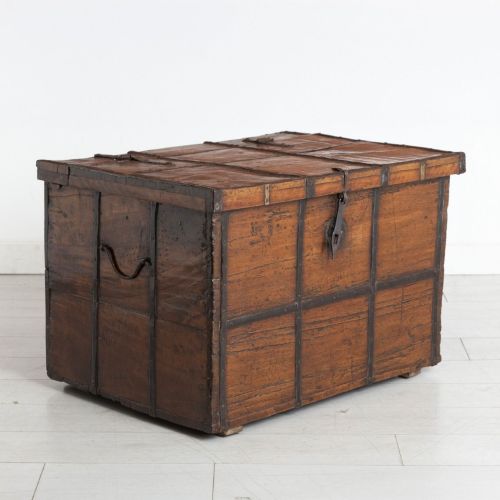
A nineteenth century blanket box brings robust storage and deep timber grain to a room, built to travel or hold domestic textiles.
Nineteenth Century Blanket Box
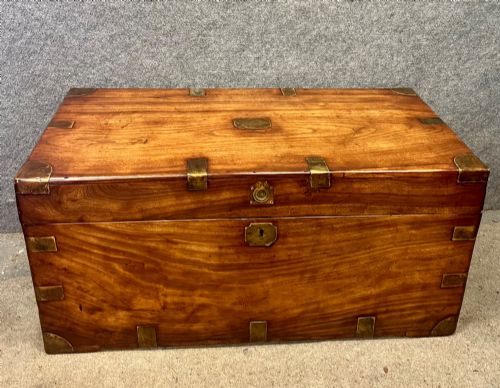
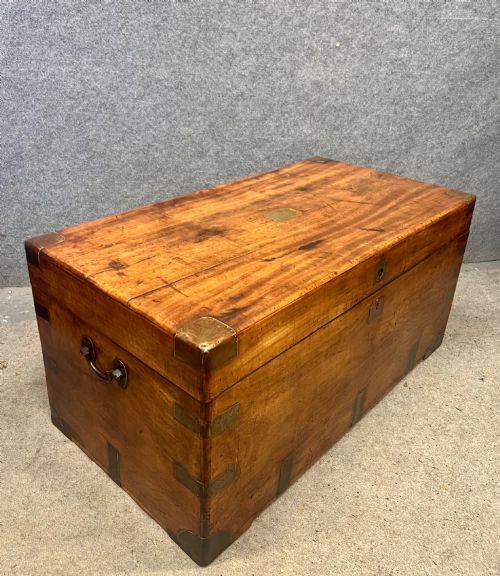
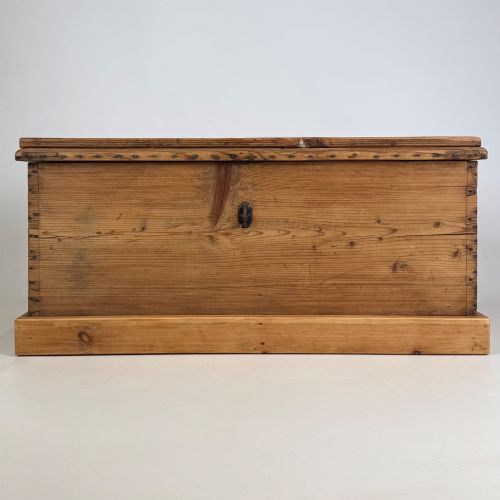
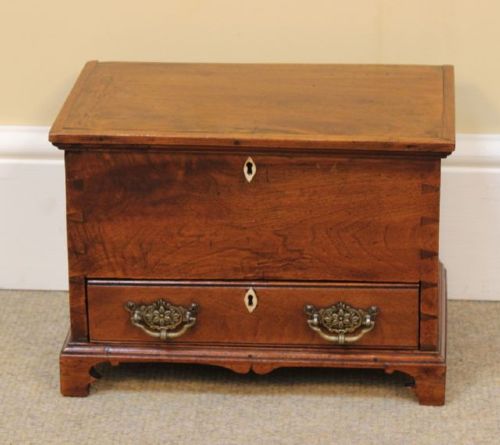
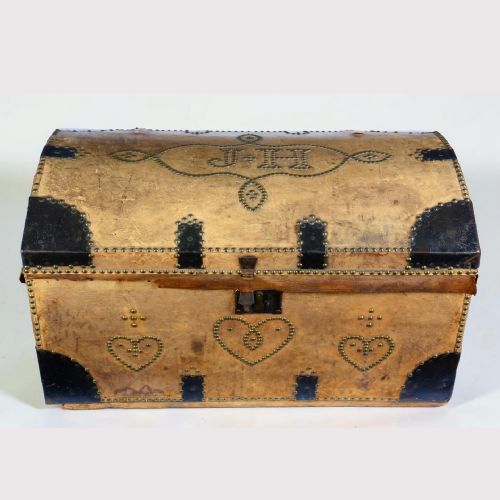
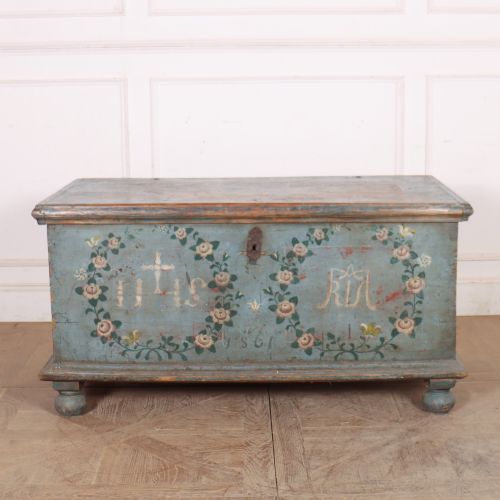
A nineteenth century blanket box serves as a practical repository for woollens and linens, appearing in forms from plain pine storage boxes to brass-bound campaign trunks. You will encounter utilitarian pine and painted country pieces alongside travelled camphorwood and mahogany examples built for officers or long voyages.
Makers shaped these chests for different spheres of life, ranging from country house utility and Scandinavian folk art to colonial service and naval deployment. The selection spans straightforward domestic boxes, apprentice pieces, and heavy silver chests with iron or brass mounts.
How they were made
Cabinet makers and joiners utilised solid timbers such as mahogany, pine, oak, and camphorwood, often selecting the latter for its insect-repellent properties in tropical climates. Construction relied on sturdy joints, dovetailed corners, and sturdy hinges designed to endure heavy use.
Metalwork played a structural and protective role, with brass corners, iron bands, and studwork reinforcing the edges against rough handling during travel. Surfaces were finished in various ways, from clear polish on hardwoods to grained paint, scumble, or leather upholstery.
One seaman's chest arrives bearing the spirited painted inscription Emblem of Liberty.
What varies in quality
Quality rests in the choice of timber and the integrity of the original mounts, hinges, and locks rather than mere decorative flourish. Superior examples display thoughtful grain selection in the wood, precise dovetailing, and heavy brass or iron hardware that remains intact.
The degree of original surface finish also distinguishes pieces, with untouched painted decoration, scumble work, or polished hardwood holding more integrity than heavily restored or altered surfaces. Interiors fitted with original till boxes or trays command greater interest from collectors.
Arthur Wannop·Seabrook of St Pauls London
The Nineteenth Century Blanket Box Glossary
- Campaign trunk
- A chest designed for military or travel use, typically featuring recessed brass handles, reinforced corners, and durable timbers like camphorwood or mahogany. These boxes split or transport easily for officers on the move.
- Scumble
- A decorative painting technique involving a translucent top layer dragged or combed over a lighter base colour to simulate richer wood grain. Victorian makers frequently applied this finish to humble pine boxes.
- Till box
- A small internal lidded compartment built inside a trunk or chest to hold documents, small valuables, or personal items. Surviving till boxes add utility and completeness to the interior.
- Hide bound
- Covered or edged in animal skin, usually leather, and secured with metal tacks or studwork. This method provided extra weather resistance for travelling luggage.
Nineteenth Century Blanket Box: Frequently Asked Questions
What were nineteenth century blanket boxes used for?
These chests primarily stored household blankets, woollens, and bulky textiles to protect them from dust and moths in domestic rooms.
Many variants also served as travelling luggage for officers, sailors, and colonial travellers who needed secure transport for uniforms and personal possessions.
How do I identify a campaign trunk?
Campaign trunks feature recessed brass carrying handles, reinforced metal corners, and robust timbers like camphorwood or mahogany designed for harsh travel.
They often break down into sections or include fitted interiors suited for life on the move.
Where should I place a blanket box at home?
A blanket box works well at the foot of a bed for spare linens or in a hallway to hold shoes and winter accessories.
Solid timber and painted versions also function effectively as low coffee tables or window seats in living spaces.
How do I care for antique camphorwood?
Camphorwood requires minimal maintenance, needing only a soft dry cloth to remove dust and preserve the natural oils in the timber.
Avoid placing the box near direct heat sources or strong sunlight to prevent the wood from drying out and splitting.