



Nineteenth Century Bedside Cabinets
These nineteenth century bedside cabinets bring architectural form and rich timber to the bedroom, offering practical storage disguised as fine antique furniture.
Nineteenth Century Bedside Cabinets
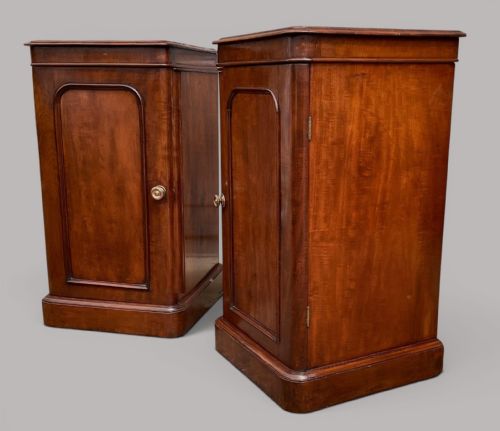
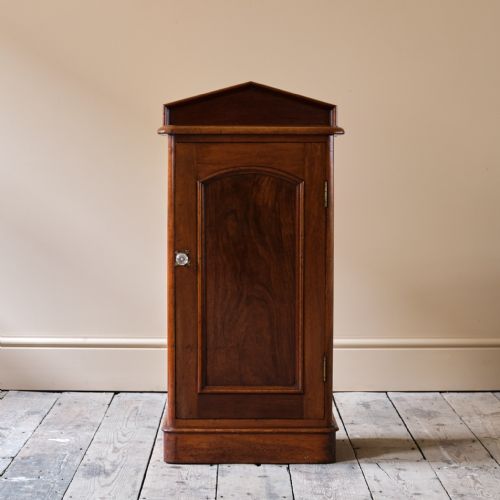
Nineteenth century bedside cabinets encompass a varied group of pedestal cupboards, pot cupboards and commodes that served the upper-class bedroom. You will frequently encounter mahogany and satin birch versions, often taking architectural column forms or simple enclosed shapes.
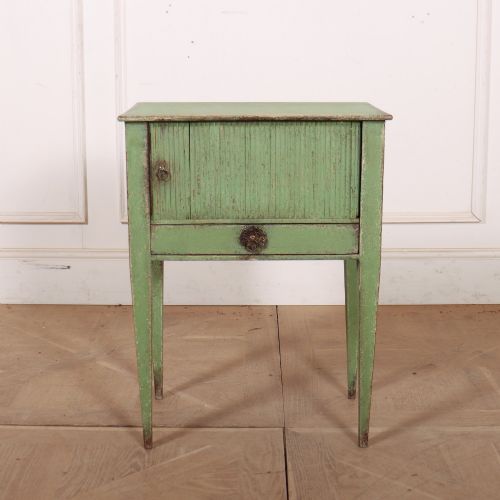
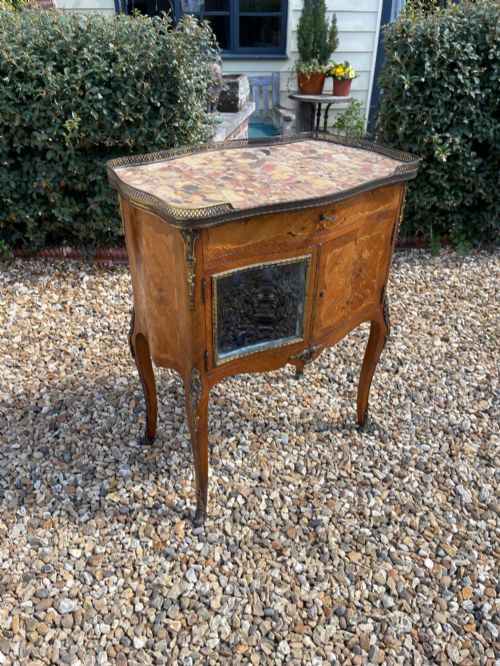
Makers produced these pieces in single examples and balanced pairs, spanning styles from Regency and William IV to Victorian and Biedermeier. Continental examples also appear, bringing painted surfaces, marble tops and intricate marquetry into the mix.
Materials and construction
Cabinetmakers utilised dense timbers such as mahogany, walnut and satin birch, frequently selecting figured flame veneers to cover carcases of solid oak or pine. Selected pieces incorporate contrasting inlay, ormolu mounts and inset marble slabs.
Joinery relied on traditional dovetailed drawer construction and framed panel doors designed to house ceramic liners or shelves. Carved columns, turned legs and moulded cornices shaped the distinct profiles of the period.
The selection includes regional variations ranging from Dutch painted surfaces to Danish and French Biedermeier pedestals.
Standards of craftsmanship
Quality rests upon the choice of timber and the precision of the veneer work, where superior examples display continuous grain matching across drawers and doors. The crispness of carved architectural details and original brass or ormolu mounts further separates standard utilitarian pieces from high-workshop production.
Internal construction reveals the maker's hand through secondary woods, drawer linings and the survival of original marble tops or glass elements. Well-balanced proportions and harmonious pairs command greater interest than mismatched survivors.
Holland and Sons·Howard and Sons·Gillows of Lancaster·Charles Topino
The Nineteenth Century Bedside Cabinets Glossary
- Pot cupboard
- A small enclosed bedside cabinet originally designed to house a chamber pot behind a single door. These compact pieces often feature a marble or enclosed top surface.
- Pedestal cabinet
- A tall, narrow cupboard built on a single column or plinth base. This form frequently echoes classical architectural orders.
- Marquetry
- The art of applying small pieces of veneer to form decorative pictures or geometric patterns. Makers utilised contrasting timbers to achieve pictorial depth.
- Ormolu
- Gilded bronze mounts applied to furniture for decorative accent. This technique appears predominantly on continental pieces.
- Biedermeier
- A central European style emphasising clean lines and minimal ornamentation over heavy revivalism. Walnut and mahogany timbers dominate this aesthetic.
Nineteenth Century Bedside Cabinets: Frequently Asked Questions
What is a pot cupboard?
A pot cupboard is an enclosed bedside cabinet designed in the nineteenth century to conceal a chamber pot. These practical items kept bedroom essentials out of sight behind a panelled door.
Over time, many of these cabinets lost their original interior fittings and transitioned into general bedside storage or lamp tables.
How do I spot a pair?
Genuine pairs share identical timber grain patterns, dimensions, and hardware configurations rather than simply matching in style. Cabinetmakers built them to mirror one another for either side of the bed.
Close inspection of the interior construction and timber ageing helps confirm whether two individual cabinets originated together from the same workshop.
Are marble tops original?
Marble tops on nineteenth century bedside cabinets were frequently specified to provide a durable, wipe-clean surface for water jugs and washing bowls. Belgian Sainte-Anne marble appears on select continental pieces.
Replacement marble slabs do occur, so check the underside for edge matching and signs of historic seating within the wooden frame.
Where were these used?
These cabinets stood beside grand beds in townhouses and country estates to hold chamber pots, candles and personal items. Their compact footprints suited the intimate proportions of period sleeping chambers.
Today, they adapt easily to modern bedrooms as functional nightstands or act as occasional tables in sitting rooms.