





Nineteenth Century Animal Artwork
Nineteenth century animal artwork brings together paintings, drawings and prints that capture beasts, from prize bulls and spaniels to lions, rendered with the keen observation of the era.
Nineteenth Century Animal Artwork
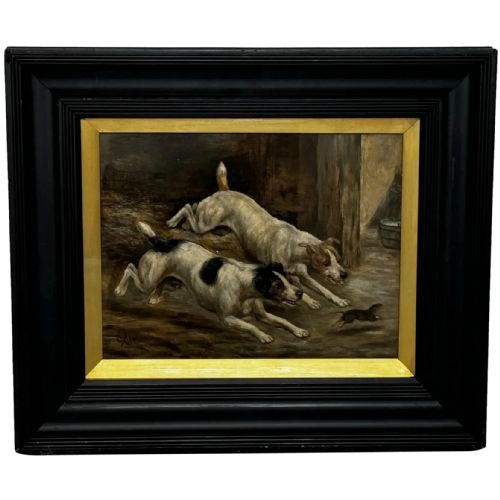
Nineteenth century animal artwork encompasses oil paintings, charcoal drawings and framed prints depicting domestic pets, farm livestock and exotic creatures. These pieces range from intimate portraits of individual dogs like King Charles spaniels and Jack Russell terriers to broader pastoral scenes with calves, ducks and sheep.
The selection on this page leans heavily towards British and French schools, reflecting a period when portraiture of animals reached a high peak of popularity. Buyers will encounter both original canvases signed by listed artists and detailed prints after prominent painters.
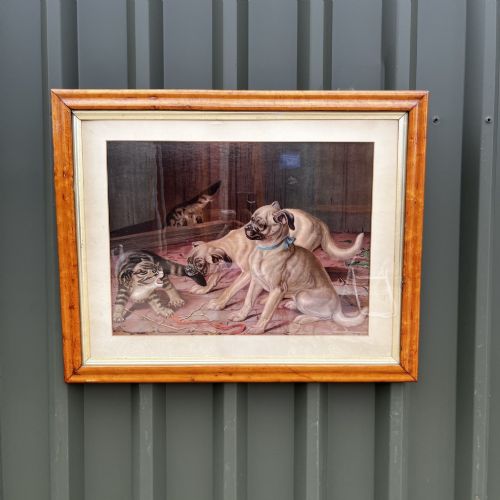
Subjects stretch from the domesticated farmyard to the wild, featuring hunting dogs, pugs, cats and even large fine art depictions of leopards. Most examples arrive preserved in period frames, often of giltwood or wood.
How they were made
Artists of this era relied primarily on oil paint applied to canvas or wood panels, building up rich layers of colour and texture to render fur, feathers and light. Many works demonstrate the techniques of Victorian realism, capturing anatomical precision and character.
Works on paper utilised charcoal or chromolithography, a method that produced vibrant multi-coloured prints popular for framing. Some pieces incorporated unusual details such as metal embellishments applied directly to clothing in printed works.
Listings span the nineteenth century into the early twentieth, featuring oil on canvas, paper, wood, and giltwood frames.
What varies in quality
Quality in nineteenth century animal artwork rests upon the artist's command of anatomy, expression and the handling of light across fur or fleece. Works by established practitioners show a distinct ability to convey the individual personality and movement of the subject.
The integrity of the original canvas, panel or paper support, alongside the condition of the accompanying giltwood or wood frame, distinguishes finer pieces from ordinary examples.
Edgar Hunt·Horatio Henry Couldrey·William Barraud·Sir Edwin Landseer·Jules Chardigny·Claude Cardon·Geza Vastagh·Louis Marie Dominique Robbe·Cuthbert Edmund Swan
The Nineteenth Century Animal Artwork Glossary
- Oil on Canvas
- Pigment mixed with drying oil applied to a stretched cloth support. This was the primary medium for serious animal portraiture throughout the period.
- Chromolithography
- A planographic colour printing technique used to produce multi-coloured reproductions of art. It allowed popular imagery to reach domestic interiors.
- Giltwood
- Timber carved and coated with gold leaf or a gold-coloured finish. These frames frequently complement the oil paintings of the era.
- Victorian Realism
- An artistic approach focusing on accurate, unidealised representation of subjects. In animal art, this meant true-to-life rendering of muscle, coat and gaze.
Nineteenth Century Animal Artwork: Frequently Asked Questions
What animals appear most often?
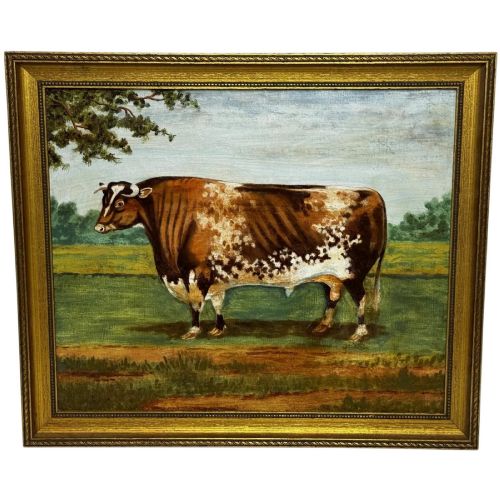
Canines dominate the selection, ranging from hunting dogs and terriers to spaniels and pugs. Farm animals such as sheep, calves, ducks and prize shorthorn bulls also feature prominently.
More exotic beasts, including lions and leopards, appear in works by artists who studied larger predators.
Are these works original paintings or prints?
The page includes both original oil paintings on canvas or panel and works on paper such as charcoal drawings. Chromolithographs and framed prints also represent the period.
Each listing specifies the exact medium and whether the piece is an original composition or after another artist.
How should I frame these pieces?
Many works retain their period frames, particularly moulded wood and giltwood surrounds that complement nineteenth-century aesthetics. Preserving these original housings maintains the historic character of the artwork.
If framing an unframed print or drawing, select period-appropriate timber to match the Victorian style.
How do I identify the period?
Dating relies on stylistic markers of Victorian realism, artist signatures, and framing materials typical of the nineteenth century. Subject matter often reflects the era's fascination with domestic pets and agricultural prize stock.
Specific dates or active years for the artists, such as those working around eighteen-ten to nineteen-thirty, help narrow the timeframe.