



Nesting Tea Tables
Nesting tea tables are clever sets of graduated tables that slide neatly inside one another, offering versatile surface space without crowding a room.
Nesting Tea Tables
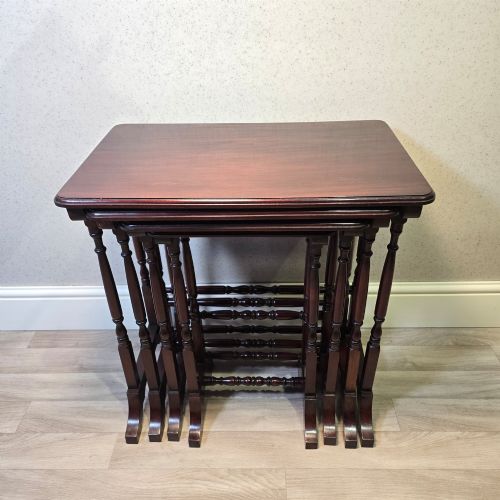
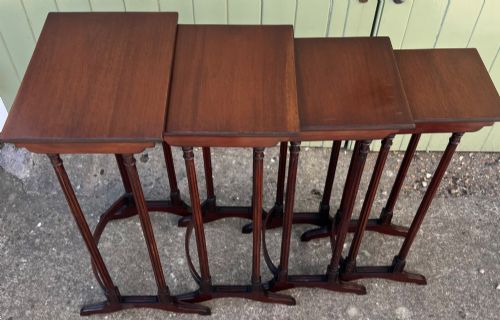
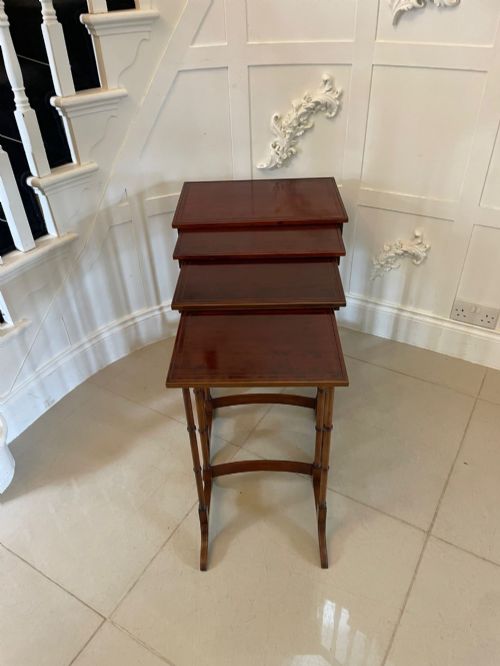
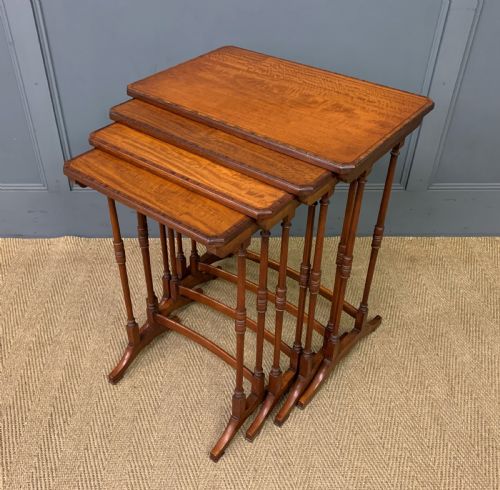
Nesting tea tables appear in several distinct periods, with Edwardian and nineteenth-century examples forming the core of the selection here. These sets typically include three or four tables, known historically as quartetto sets, designed to be stacked together when floor space is needed.
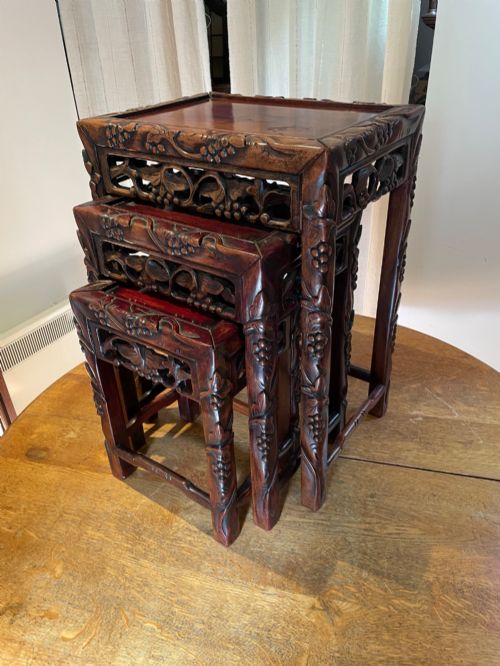
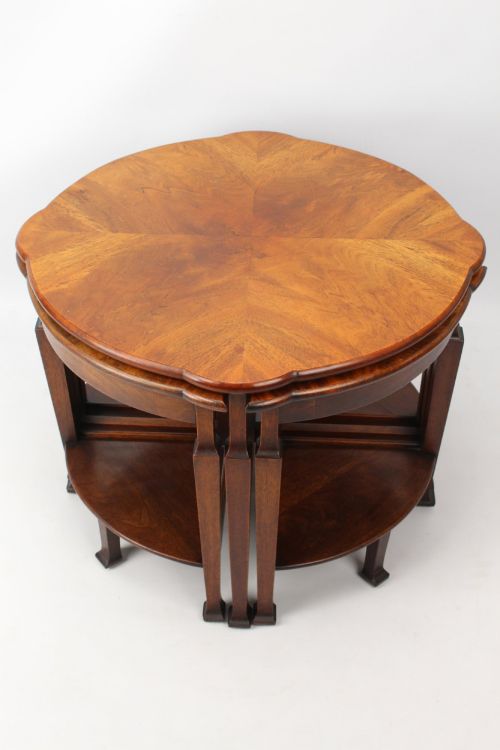
The forms range from traditional rectangular nests to circular Edwardian designs and occasional tables influenced by Chinese export styles. Buyers frequently encounter Edwardian mahogany pieces alongside exotic hardwood sets originating from the late nineteenth century and the Art Deco era.
How they were made
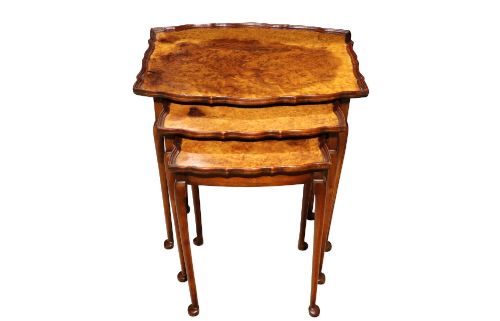
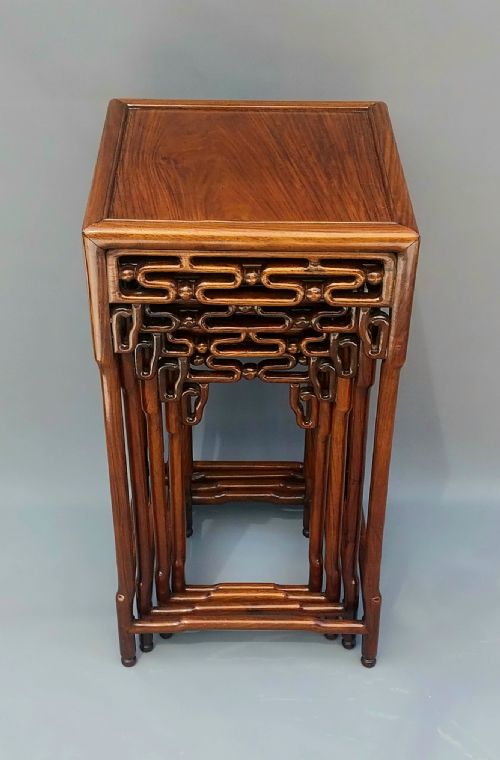
Makers utilised a variety of timbers, relying heavily on mahogany, burr walnut, and dense oriental hardwoods such as Hongmu and rosewood. Construction often involved precise joinery to ensure the smaller tables fit smoothly beneath the larger frames without friction.
Surface ornamentation ranges from subtle boxwood inlay and satinwood banding to intricate carving and Chinoiserie lacquer decoration. Veneers were applied carefully to tabletops, particularly on burr walnut and satinwood pieces, creating distinct visual patterns.
Nesting Tea Tables Retail Price Guide 2026
Typical asking prices for nesting tea tables among the pieces listed under this phrase on Sellingantiques today, from the lower quarter to the upper quarter. They describe what is for sale here now, not the wider market.
Brass trolley tables manage to nest too, proving that even wheels cannot curb the Victorian appetite for stacking furniture.
What varies in quality
Quality rests primarily on the choice of timber and the crispness of any inlay, carving, or lacquer work applied to the surfaces. Sets featuring figured burr walnut, finely cut satinwood, or heavy Hongmu represent a higher standard of craftsmanship than simpler utility versions.
The structural integrity of the joints and the precision with which the smaller tables slide into the main frame distinguish finer sets. A well-constructed nest maintains stability across all individual tables while preserving a compact profile when stacked.
Maison Baguès
The Nesting Tea Tables Glossary
- Quartetto
- A set of four tables designed to nest inside one another. This term appears frequently in nineteenth-century and Edwardian furniture descriptions.
- Hongmu
- A traditional Chinese term for dense hardwoods, often translated as red wood. These heavy timbers were frequently utilised for carved nesting sets.
- Chinoiserie
- European artistic styles reflecting Chinese motifs and techniques. Lacquer decoration in this style often adorns nineteenth-century tables.
- Banding
- A narrow strip of contrasting timber inlaid around the border of a tabletop. Satinwood and boxwood were common choices for this decorative border.
Nesting Tea Tables: Frequently Asked Questions
How do nesting tea tables work?
These pieces consist of graduated tables built in decreasing sizes so that each smaller table slides neatly beneath the next. They provide extra surface area for tea or hospitality and stack into the footprint of a single table when cleared away.
Historically called quartetto sets when numbering four, they offer a practical solution for entertaining guests in smaller sitting rooms without cluttering the floor.
Where do Chinese export nesting tables fit?
Chinese export and Qing Dynasty sets made from Hongmu or carved hardwoods arrived in Europe during the nineteenth century. They bring intricate relief carving and dense, dark timbers to traditional interior settings.
These pieces contrast with lighter Edwardian mahogany or satinwood versions while serving the exact same space-saving function in a room.
Can I use nesting tables daily?
These tables adapt easily to modern living rooms as flexible side surfaces for drinks, books, or lamps. Pulling out the individual tables allows multiple people to use the surface space simultaneously.
When not in use, sliding them back together restores floor space while displaying the wood grain or inlay of the top table.
How do I identify an Edwardian set?
Edwardian examples often feature lighter mahogany frames, sometimes enhanced with boxwood inlay, satinwood details, or circular tops. They tend to be slender and refined, reflecting the lighter furniture tastes of the early twentieth century.
Comparing the timber finish and leg style helps distinguish these Edwardian pieces from heavier Victorian or nineteenth-century alternatives.