

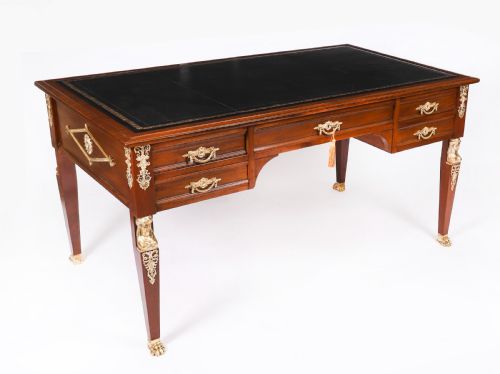


Neoclassical Writing Bureau
A neoclassical writing bureau brings refined proportion and considered timber to a study, offering a disciplined surface for correspondence.
Neoclassical Writing Bureau
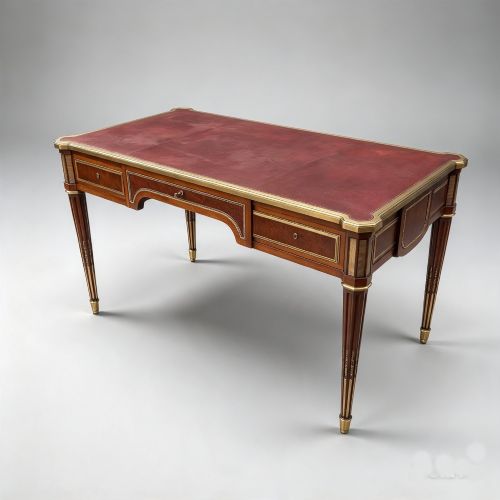
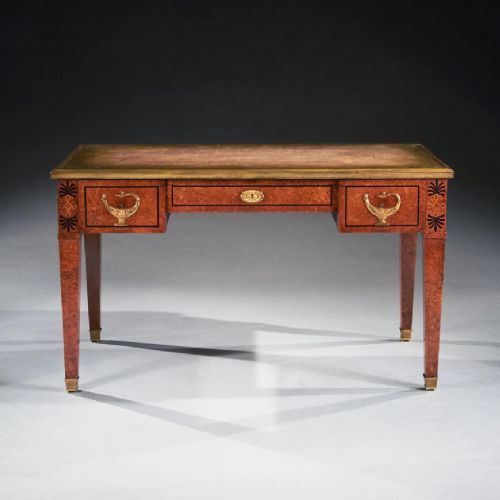
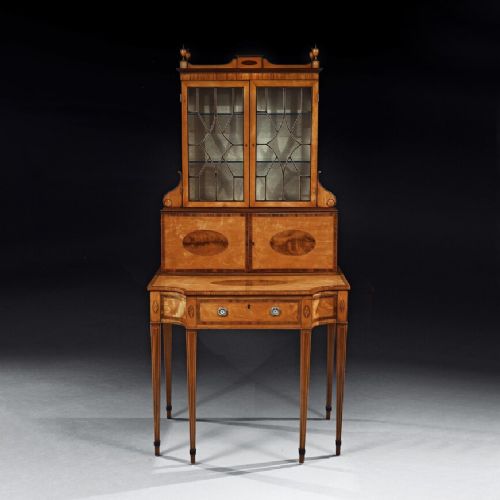
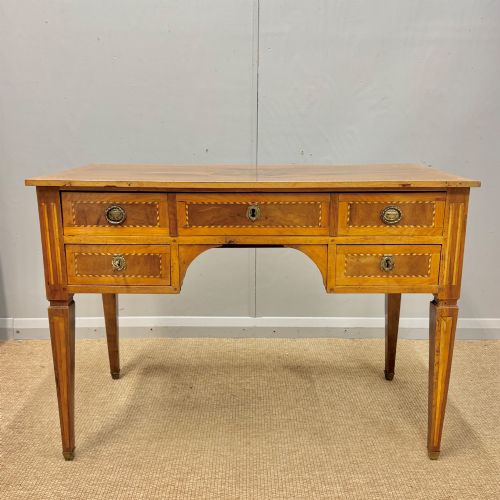
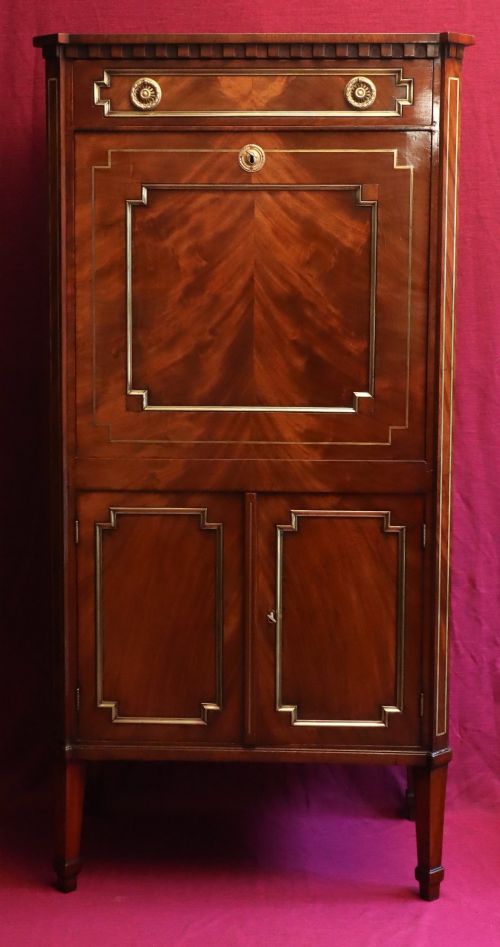
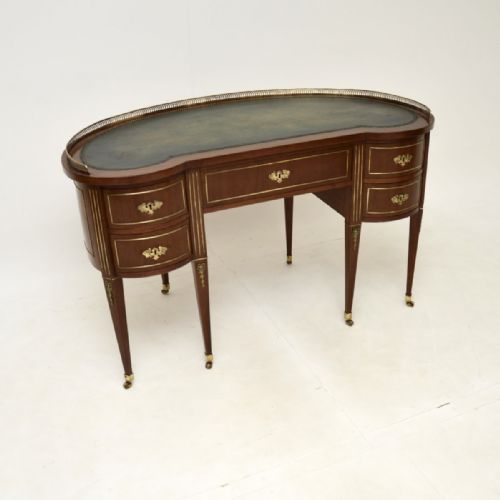
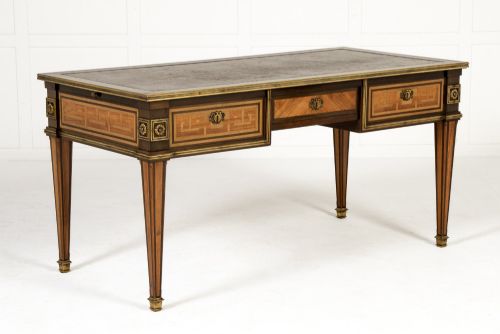
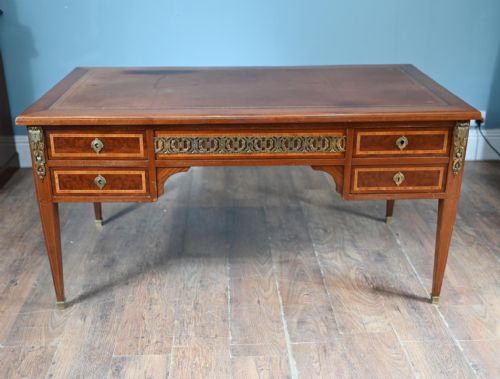
A neoclassical writing bureau combines architectural restraint with dedicated writing surfaces, appearing across eighteenth and nineteenth century European traditions. These pieces include bureau plats, cylinder desks, and secretaire cabinets originating from English, French, and Swedish workshops. The most frequent examples on this page are French writing tables and nineteenth century revival pieces executed in mahogany or satinwood.
Form follows classical symmetry, often supported by tapering legs and restrained mounts rather than heavy carving. English interpretations frequently follow Sheraton designs, whilst continental pieces lean towards Louis XVI styles or Empire proportions. Each variation serves the fundamental purpose of private correspondence and storage within a domestic interior.
Materials and Construction
Cabinetmakers utilised dense hardwoods such as mahogany, satinwood, and kingwood, frequently laid as veneers over sturdy secondary timbers. Ormolu and gilt bronze mounts were cast and chased to highlight structural junctions, while brass fittings secured drawers and writing flaps. Leather inserts provided a durable writing surface, sometimes tooled in gold.
Marquetry and parquetry added geometric or floral patterns to the carcase, contrasting different wood grains for visual depth. Tambour doors and cylinder fronts required precise woodworking to slide smoothly along grooved tracks. Structural integrity relied on traditional joinery, ensuring that freestanding desks remained rigid without excessive bulk.
Neoclassical Writing Bureau Retail Price Guide 2026
Typical asking prices for neoclassical writing bureau among the pieces listed under this phrase on Sellingantiques today, from the lower quarter to the upper quarter. They describe what is for sale here now, not the wider market.
Some cylinder desks conceal secret compartments behind miniature pigeonholes, designed for private letters and hidden fortunes.
Judging Quality and Execution
Quality rests upon the crispness of the bronze or ormolu mounts and the precision of the timber matching across visible surfaces. Superior examples demonstrate continuous grain patterns on drawer fronts and flawless execution of marquetry. The weight and finish of the hardware reveal the original maker's investment in materials.
Internal secondary woods and the smoothness of drawer action distinguish workshop standards. Finer pieces maintain structural refinement in unseen areas, such as secondary drawer linings and hidden compartments. The integration of bronze mounts directly into the timber frame rather than superficial application marks elevated production.
Henry Dasson·Francoise Linke·Jean Werner·Diehl Paris·Paul Sormani
The Neoclassical Writing Bureau Glossary
- Ormolu
- Gilt bronze ornamentation applied to furniture, cast and hand-chased to create sharp architectural details. It defines the luxury aesthetic of French neoclassical pieces.
- Satinwood
- A lustrous tropical hardwood with a golden sheen, heavily utilised by English cabinetmakers during the Sheraton period. It accepts fine inlay and polishing exceptionally well.
- Secretaire
- A cabinet or desk incorporating a drop-front writing flap that conceals pigeonholes and small drawers. These pieces merge storage capacity with a dedicated writing surface.
- Tambour
- A sliding surface constructed from narrow strips of wood glued to a canvas backing, allowing flexible covers for cylinder desks and roll-top compartments.
Neoclassical Writing Bureau: Frequently Asked Questions
Where do I place a neoclassical writing bureau?
Freestanding bureau plats look best positioned away from walls to showcase finished backs and bronze mounts.
Cylinder desks and secretaire cabinets suit studies or reception rooms where perimeter placement highlights their architectural silhouette.
How do I maintain the leather writing surface?
Keep leather tops free from dust using a soft dry cloth and avoid direct sunlight to prevent fading.
Treat the hide sparingly with specialist leather balms if the surface appears dry, avoiding excessive moisture.
How do I distinguish French styles from English ones?
French pieces frequently incorporate prominent ormolu mounts and exotic veneers like kingwood under Louis XVI or Empire influences.
English furniture from the Sheraton tradition relies on satinwood, understated stringing, and geometric balance rather than heavy metal mounts.
What is the difference between a bureau plat and a cylinder desk?
A bureau plat provides an open, flat writing surface framed by frieze drawers and cabriole or tapering legs.
A cylinder desk encloses the workspace beneath a curved wooden shutter that rolls back to reveal internal compartments.