

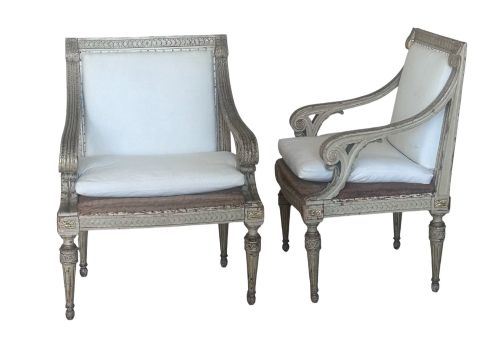
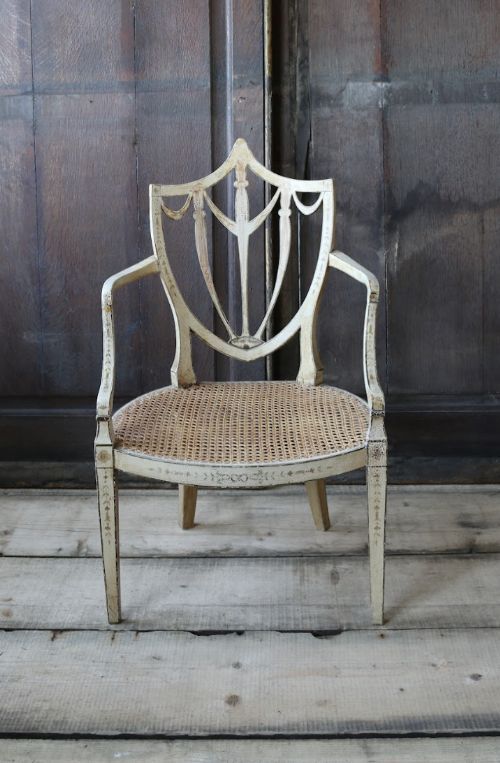


Neoclassical Wooden Armchair
These neoclassical wooden armchair selections offer the balanced geometry and restrained ornamentation characteristic of late eighteenth and nineteenth-century seating.
Neoclassical Wooden Armchair
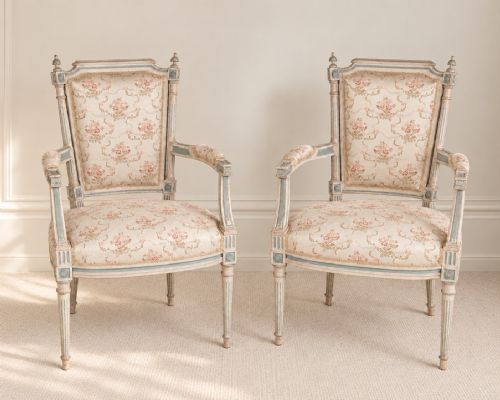
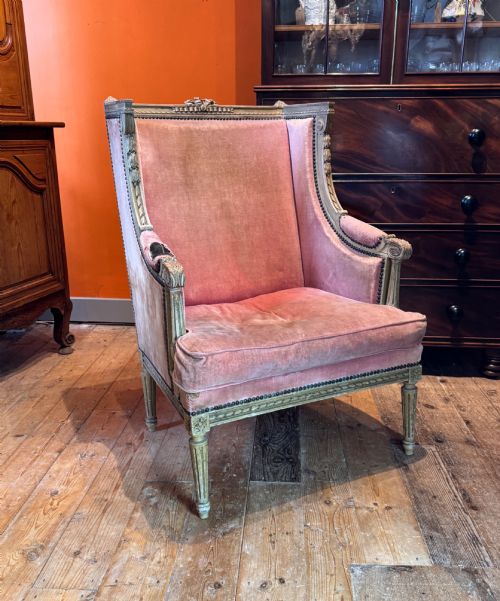
A neoclassical wooden armchair brings architectural order and classical restraint to a room through balanced proportions and disciplined carving. These seats appear in forms ranging from shield-back dining chairs and desk chairs to pairs of French salon armchairs.
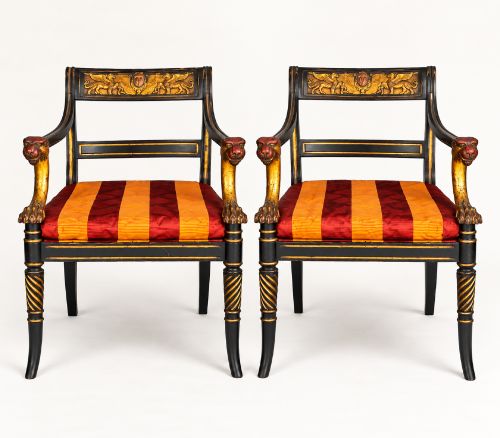
The selections on this page span the Georgian era through the Edwardian period, alongside Continental pieces in Louis XVI, Biedermeier, and Empire styles. Mahogany, birch, walnut, and satinwood provide the structural timber for these frames.
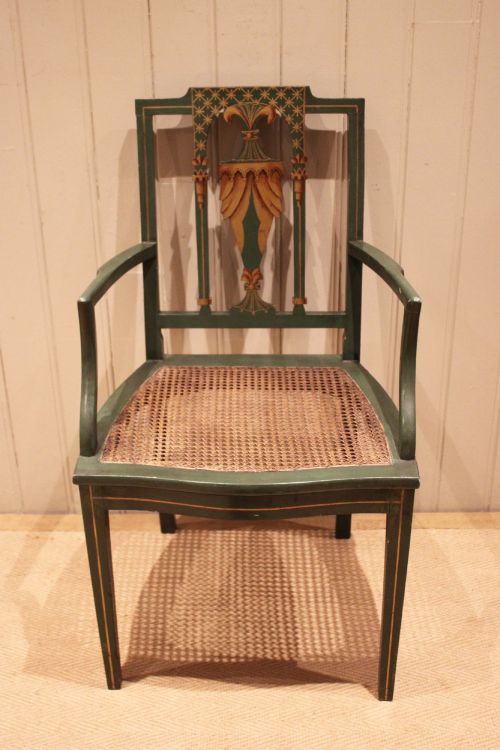
Makers and workshops across Britain, France, Sweden, and Italy interpreted classical motifs such as the lyre back, fluted leg, and shield back. Original paint surfaces, cane seating, and upholstery in velvet, fabric, and textile complete the physical record.
How They Were Made
Cabinetmakers constructed these frames using dense hardwoods like mahogany, birch, and walnut, often applying satinwood veneers or ebonised details. Joinery relied on traditional mortise and tenon methods to ensure structural rigidity in load-bearing arm supports and legs.
Surface decoration involved hand-applied paint, parcel gilding, or polished wood finishes that highlighted the grain of the timber. Caning for seats and backs was woven by hand from split cane, while upholstery utilised traditional stuffing materials beneath textiles, velvet, and fabric.
Neoclassical Wooden Armchair Retail Price Guide 2026
Typical asking prices for neoclassical wooden armchair among the pieces listed under this phrase on Sellingantiques today, from the lower quarter to the upper quarter. They describe what is for sale here now, not the wider market.
Several chairs escaped French chateaus to find themselves quietly presiding over English reading corners.
What Varies in Quality
The distinction between ordinary and exceptional seating lies in the crispness of the hand-carved detail and the selection of figured timbers like burr elm or light mahogany. Refined proportions in the rake of the back and the curve of the armrests separate master-carved pieces from simpler regional production.
The survival of original painted surfaces, parcel gilt highlights, and authentic cane work elevates the standing of a piece. Structural integrity maintained through period timber repairs rather than modern replacements preserves the historical value of the frame.
Gillows
The Neoclassical Wooden Armchair Glossary
- Neoclassical
- A style spanning the late eighteenth and early nineteenth centuries that revived classical Greek and Roman motifs. It values symmetry, straight lines, and architectural restraint over exuberant curves.
- Shield-back
- A chair back shaped like a heraldic shield, popular in Hepplewhite designs of the late eighteenth century. The perimeter often frames open slats or carved central splats.
- Bergere
- An enclosed upholstered armchair with wooden framing, frequently featuring cane panels on the back and sides. It originated in France and provides a deeper seat than standard parlor chairs.
- Parcel gilt
- A decorative technique where specific carved details or mouldings are highlighted with gold leaf while the surrounding wood remains painted or polished. This contrasts the golden elements against a darker or contrasting ground.
- Biedermeier
- A Central European style from the first half of the nineteenth century that prioritised clean lines and utility over excessive ornamentation. It frequently utilises native timbers such as birch and cherry.
Neoclassical Wooden Armchair: Frequently Asked Questions
How do I identify a neoclassical armchair?
Look for straight tapered legs, fluting, urn motifs, and geometric symmetry in the frame construction.
These design elements distinguish neoclassical seating from earlier rococo curves and later Victorian excesses.
Are cane seats strong enough for daily use?
Split cane seats offer surprising resilience and flexibility when maintained with appropriate humidity levels.
Original caning requires gentle treatment, while well-executed historic replacements support regular sitting.
Where should I place a painted armchair?
Position painted and parcel gilt chairs in drawing rooms, bedrooms, or studies away from direct sunlight.
Protecting the original paint surface from heavy friction preserves both the colour and the underlying timber.
What is the difference between a carver and a parlor chair?
Carver chairs feature wooden armrests and typically served as head-of-table seating in dining rooms.
Parlor armchairs were designed for reception rooms, offering wider seats and lighter proportions for social gatherings.