



Olive Velvet Upholstered Chair
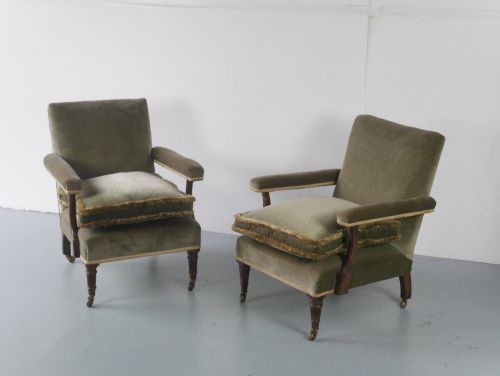
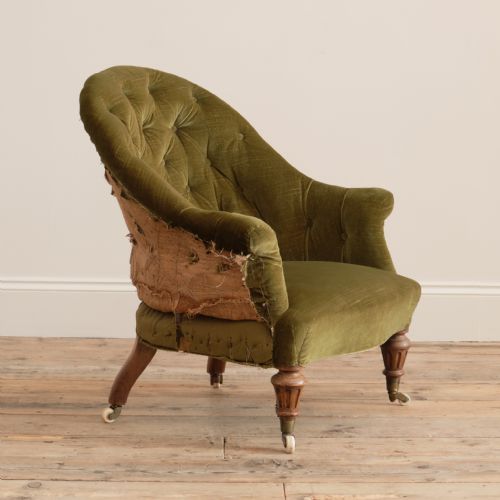
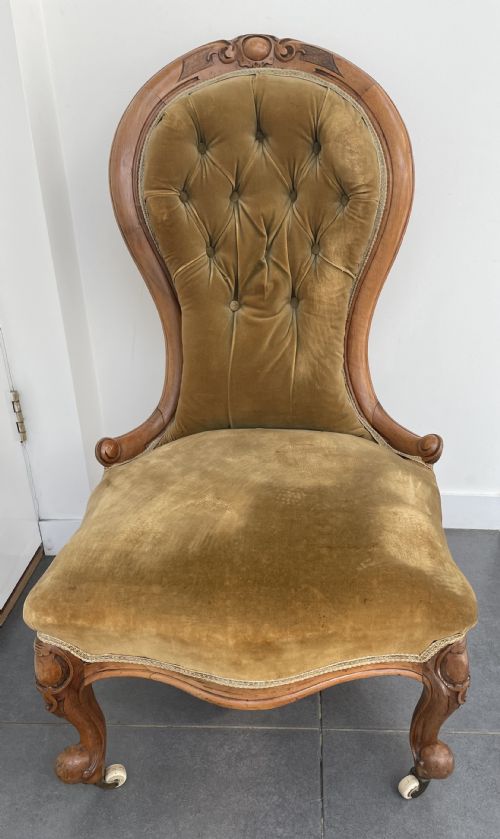
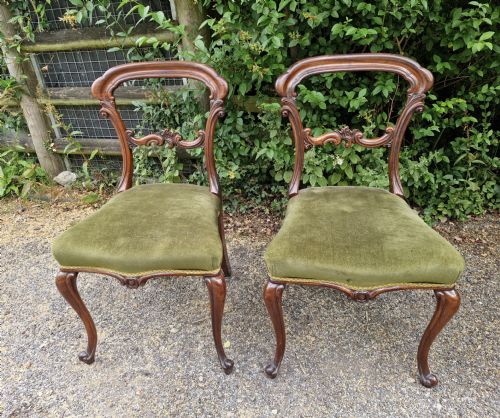
An olive velvet upholstered chair brings tactile warmth and period form to a room, ranging from compact Victorian nursing seats to generous Regency library armchairs.
Olive Velvet Upholstered Chair
An olive velvet upholstered chair is a seating form defined by its piled textile covering and timber structure. When searching for an olive velvet upholstered chair, buyers encounter pieces spanning the nineteenth century through the early twentieth century, including armchairs, occasional chairs, slipper chairs, and chaise longues.
Victorian and nineteenth-century examples predominate, often retaining carved hardwood frames of walnut, mahogany, or rosewood beneath their piled upholstery. Buyers find both fully upholstered iterations ready for placement and frames described for upholstery.
How they were made
Cabinetmakers utilised hardwoods including mahogany, walnut, rosewood, oak, and general timber to construct sturdy chair frames. These structural supports were carved, turned, or shaped to follow prevailing Regency, Victorian, and Edwardian aesthetic preferences.
Upholstery involved securing textile over padding and internal springing, finished with decorative elements such as brass detailing. Frames were constructed using traditional joinery appropriate to the period, accommodating subsequent re-covering in velvet.
Olive Velvet Upholstered Chair Retail Price Guide 2026
Typical asking prices for olive velvet upholstered chair among the pieces listed under this phrase on Sellingantiques today, from the lower quarter to the upper quarter. They describe what is for sale here now, not the wider market.
Several chairs arrive with stories of quiet parlours and grand libraries built right into their springs.
What varies in quality
Quality rests in the sculptural integrity of the timber frame, the precision of carved details on walnut and rosewood, and the architectural proportions of the chair type. Finer examples display harmonious lines across backrests, arm supports, and leg assemblies.
The sophistication of the underlying joinery and the selection of cabinet timbers distinguish standard production from superior pieces. Preservation of the original structural frame dictates the long-term integrity of each chair.
Hampton & sons pall mall
The Olive Velvet Upholstered Chair Glossary
- Velvet
- A woven tufted fabric characterised by a dense pile, providing a soft surface texture. It has historically been utilised for formal seating upholstery.
- Rosewood
- A dense, dark timber featuring distinct grain patterns, favoured for cabinetmaking during the nineteenth century. It frequently appears in Victorian chair frames.
- Regency
- A British design period spanning the early nineteenth century, characterised by classical restraint and elegance. Pieces from this era often exhibit clean structural lines.
- Nursing chair
- A low-seated Victorian chair designed for comfort, traditionally utilised in domestic quarters. Their diminutive scale distinguishes them from standard armchairs.
- Chaise longue
- An elongated upholstered seat intended for reclining, combining elements of a chair and a daybed. These large forms appeared frequently in nineteenth-century interiors.
Olive Velvet Upholstered Chair: Frequently Asked Questions
How do I clean velvet?
Velvet requires gentle brushing to maintain the direction of the pile and prevent flattening. Professional cleaning is recommended for antique textile upholstery.
Harsh moisture and chemical solvents can damage the delicate fibres of vintage pile fabrics. Regular light maintenance preserves the soft surface texture.
Are these chairs comfortable?
Nineteenth-century and early twentieth-century armchairs were designed with generous proportions and padded backs for daily use. Wingbacks and library chairs offer substantial physical support.
Comfort levels vary depending on the internal springing and padding condition of individual pieces. Some historic examples may require professional reupholstery to restore optimal padding.
How do I date a chair?
Dating relies on identifying the stylistic markers of periods such as the Regency era, Victorian reign, or Edwardian decade. Timber choice, such as rosewood or mahogany, also indicates manufacturing eras.
Structural construction methods and joinery details provide further evidence of age. Comparing specific carved motifs helps narrow down the decade of production.
Where should I place an occasional chair?
Occasional chairs function well in corners, bedrooms, or reading areas where supplementary seating is required. Their compact footprint allows them to integrate easily into existing room layouts.
Consider the sightlines of the room to showcase the timber frame and upholstery colour. Pairing an occasional chair with complementary furniture creates a balanced interior arrangement.