


Neoclassical Vanity Desk
These neoclassical vanity desk pieces bring refined proportions and classic lines to a room, offering a dedicated space for morning routines.
Neoclassical Vanity Desk
When you search for a neoclassical vanity desk, you encounter sophisticated dressing tables, writing desks, and occasional tables that draw on classical antiquity. These pieces date from the eighteenth century through the early twentieth century, spanning periods such as Georgian, Victorian, and the nineteenth century.
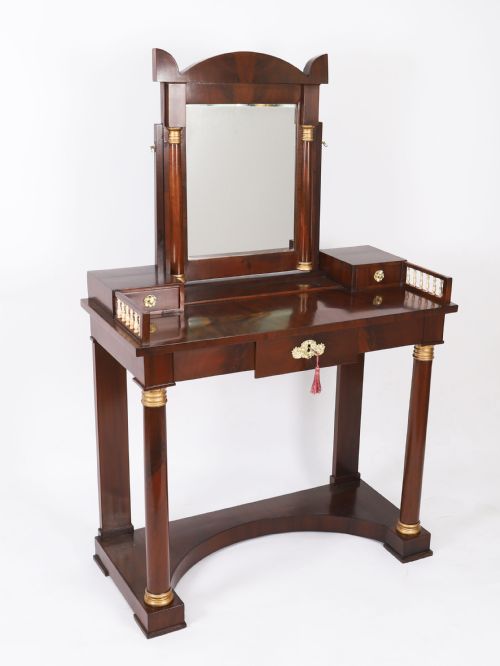
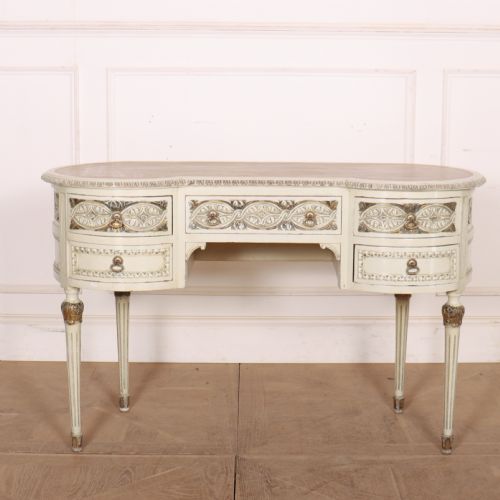
You are most likely to meet mahogany or painted wood examples on this page, often showing French Empire, Sheraton, Swedish Gustavian, or Louis XVI styles. Many incorporate integrated mirrors, marble inlays, or ormolu mounts to complete the refined appearance.
The forms serve multiple functions, operating variously as dressing tables, writing surfaces, and occasional tables. Their shared design vocabulary relies on symmetry, restrained ornamentation, and architectural balance.
Materials and Construction
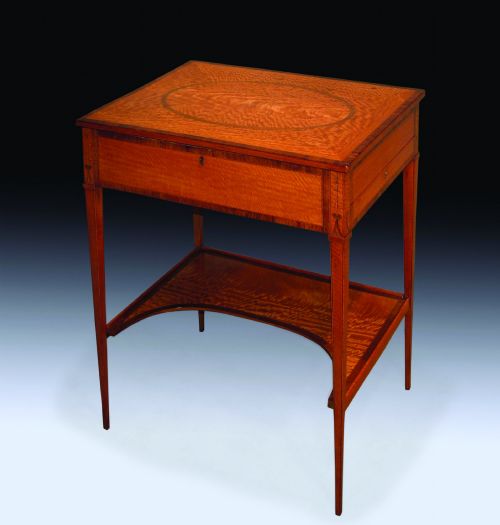
Cabinetmakers utilised dense timbers like mahogany and satinwood, frequently pairing them with contrasting marquetry or painted finishes. These woods provided a stable canvas for both delicate inlaid details and decorative paintwork.
Metal elements such as brass, gilt bronze, and ormolu were cast and applied to accent key structural points. Marble tops and inserts offered durable, smooth surfaces suited to daily use in dressing areas.
Current listings feature pieces spanning the Georgian and Victorian eras, alongside nineteenth-century French Empire and Swedish Gustavian examples.
Assessing Quality
Quality rests in the precision of the timber selection and the crispness of any applied brass or ormolu mounts. Finer examples display meticulous grain alignment and securely seated stone inlays.
The integrity of original decorative paintwork separates standard iterations from exceptional survivals. Hand-painted surfaces retain distinct brushwork and cohesive palettes that define the piece's character.
The Neoclassical Vanity Desk Glossary
- Ormolu
- Gilded bronze mounts applied to furniture for decorative effect. This French technique adds metallic contrast to dark timber surfaces.
- Marquetry
- Inlaid patterns of various woods applied to a veneered surface to create pictorial or geometric designs. It requires high precision from the cabinetmaker.
- Satinwood
- A durable, yellowish timber prized for its lustrous sheen and smooth grain. It appears frequently in lighter neoclassical designs.
- Bonheur du jour
- A small, light lady's writing desk featuring a tiered superstructure with drawers and shelves. These pieces originated in France during the eighteenth century.
Neoclassical Vanity Desk: Frequently Asked Questions
How were these desks used historically?
Owners utilised them primarily for morning grooming, applying cosmetics, and managing correspondence. The integrated drawers held personal items, writing implements, and toiletries.
Over time, many transitioned into general writing surfaces or decorative occasional pieces within bedrooms and boudoirs. Their dual utility made them essential furnishings in fashionable homes.
How do I identify different periods?
Period identification relies on examining the timber choices, construction techniques, and stylistic motifs. Georgian and Sheraton pieces often feature fine mahogany and subtle inlay, while later Victorian or nineteenth-century French examples might display heavier ormolu mounts and painted finishes.
Comparing the hardware and overall proportions helps align a piece with its manufacturing era. Stylistic markers like Swedish Gustavian pale paintwork also point to specific regional traditions.
How do I care for antique wood?
Maintain these surfaces by keeping them away from direct sunlight and steady heat sources to prevent the timber from drying out. Regular dusting with a soft, dry cloth preserves the finish without abrasive contact.
Avoid commercial polishes containing silicone, opting instead for traditional beeswax when the wood requires nourishment. Handle marble inserts and ormolu mounts with care during cleaning.