




Neoclassical Upholstered Stool
A neoclassical upholstered stool brings classical symmetry and restrained ornament into a room, offering both a seat and a sculptural accent.
Neoclassical Upholstered Stool
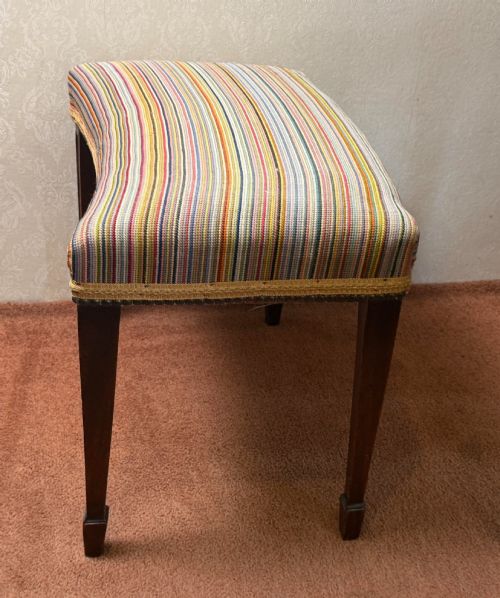
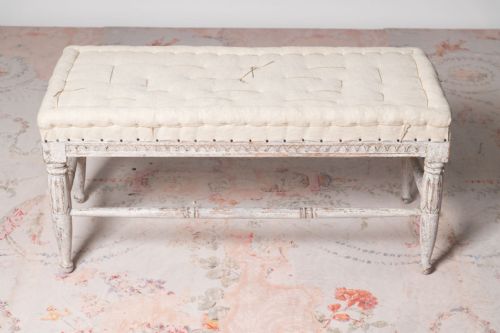
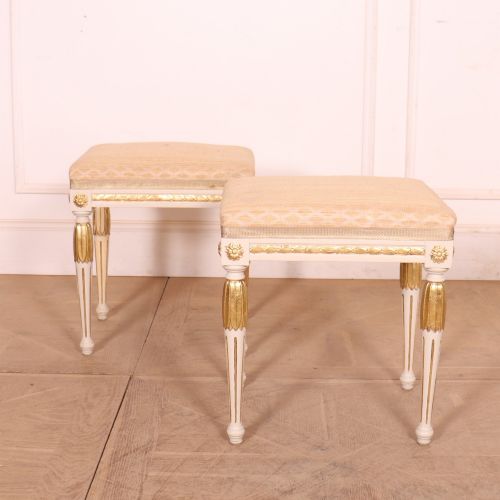
A neoclassical upholstered stool is a formal seat drawing upon ancient Greek and Roman design vocabulary, spanning periods from the eighteenth century through to the early twentieth century. You will frequently encounter Swedish Gustavian pieces alongside French Louis XVI style and English George III examples.
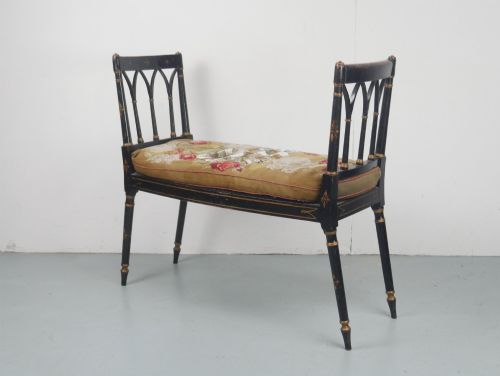
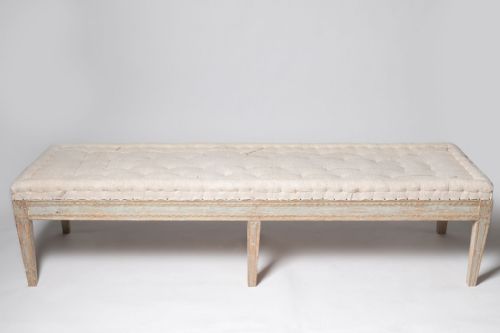
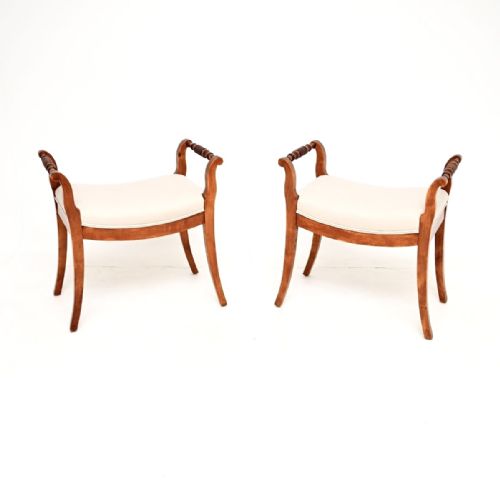
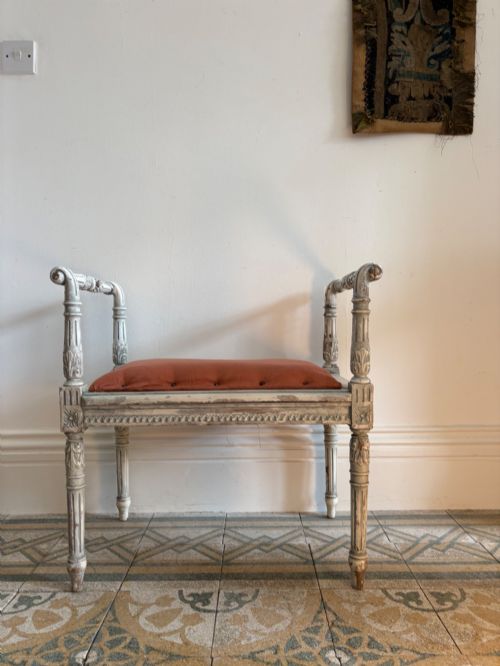
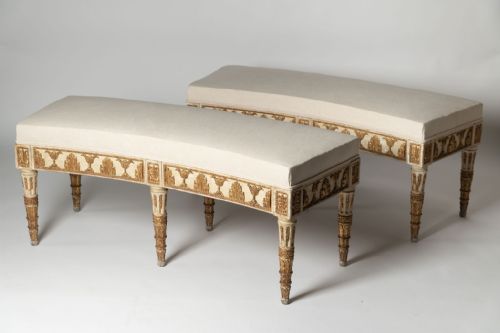
The forms vary from compact footstools and square stools to longer window seats, duet stools and X-frame curule designs. These pieces often serve double duty as low seating or decorative window benches in domestic interiors.
Materials and construction
Frames are constructed from solid timbers such as mahogany, birch, oak, and rosewood, alongside softwood variants finished with paint or gilding. Giltwood, painted wood, and carved details provide the decorative surface vocabulary characteristic of the style.
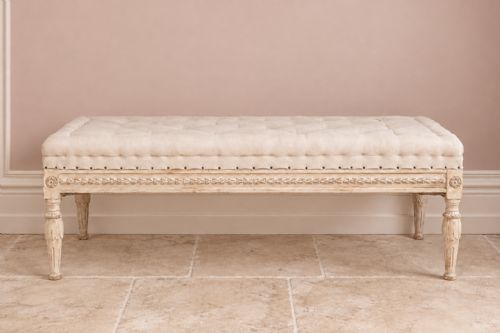
Upholstery relies on traditional textiles including silk, velvet, linen, damask, and needlework. Exposed frames frequently display carved fluting, tapering legs, and gilded or painted finishes.
Neoclassical Upholstered Stool Retail Price Guide 2026
Typical asking prices for neoclassical upholstered stool among the pieces listed under this phrase on Sellingantiques today, from the lower quarter to the upper quarter. They describe what is for sale here now, not the wider market.
Listings feature woods such as mahogany, rosewood, birch, and oak, alongside painted wood and giltwood surfaces.
Assessing quality and proportion
Quality rests in the crispness of the wood carving and the elegance of the proportions, distinguishing finely drawn frames from heavier, coarser interpretations. The integration of the upholstery with the frame architecture dictates the visual harmony of the piece.
The choice of primary timber and the execution of the surface finish, whether original paint or genuine gilding, mark the distinction between standard workshop production and finer cabinet-making.
Charles Nosotti
The Neoclassical Upholstered Stool Glossary
- Gustavian
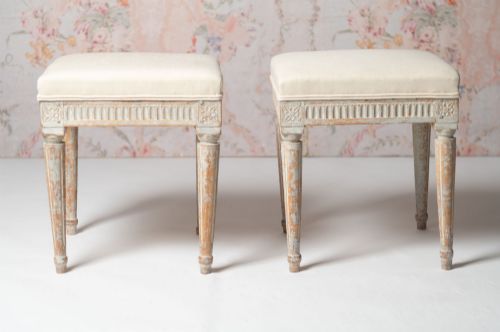
- The Swedish interpretation of neoclassical design, known for pale painted finishes and restrained classical motifs. It developed during the late eighteenth century under King Gustav III.
- Curule stool
- An ancient Roman magistrate seat form featuring crossing legs in an X shape. This X-frame silhouette reappears frequently in neoclassical revival seating.
- Window seat
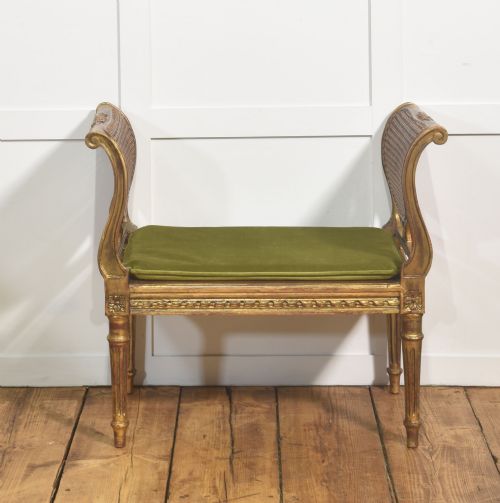
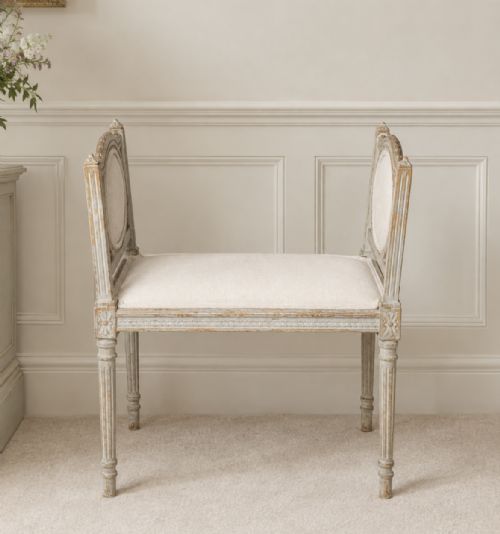
- An elongated stool designed specifically to fit within the recess of a window. These pieces often feature arms or low backs and generous upholstered surfaces.
- Giltwood
- Timber that has been coated with a thin layer of gold leaf. It provides a bright, reflective surface popular on formal French and Italian neoclassical seating.
Neoclassical Upholstered Stool: Frequently Asked Questions
Where should I place a neoclassical upholstered stool?
These stools sit comfortably at the foot of a bed, beneath a hallway mirror, or positioned beside a fireplace as additional seating. Their modest footprint allows them to tuck away easily when not in use.
Longer window seat variations suit placement in bay windows or narrow corridors where standard chairs would obstruct the path.
How do I identify a Gustavian stool?
Gustavian pieces typically display pale painted surfaces in shades of grey, white, or cream, often paired with simplified fluted legs and understated classical carving. Their aesthetic prioritises light and proportion over heavy ornamentation.
Swedish workshops produced these pieces extensively through the nineteenth century, drawing direct inspiration from French Louis XVI design.
What is the difference between a stool and a window seat?
A standard stool provides a compact, multi-directional seat with four legs and an upholstered top. A window seat is generally longer and rectangular, often built to span the width of a window recess.
Many window seats incorporate distinct end supports or low arms, bridging the form between a bench and a stool.
Are these stools sturdy enough for daily seating?
Most solid wood frames constructed in mahogany, oak, or birch offer robust structural integrity suitable for everyday use. Checking the joinery at the leg junctions ensures the frame remains stable.
Periodic reupholstery allows historic pieces to maintain functional comfort while preserving their original wooden frames.