


Neoclassical Table Timepiece
A neoclassical table timepiece brings architectural dignity and precise horology to a room, drawing the eye with balanced classical proportions and gleaming gilt mounts.
Neoclassical Table Timepiece
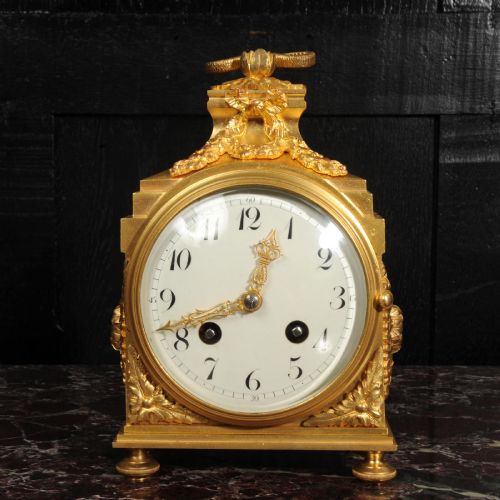
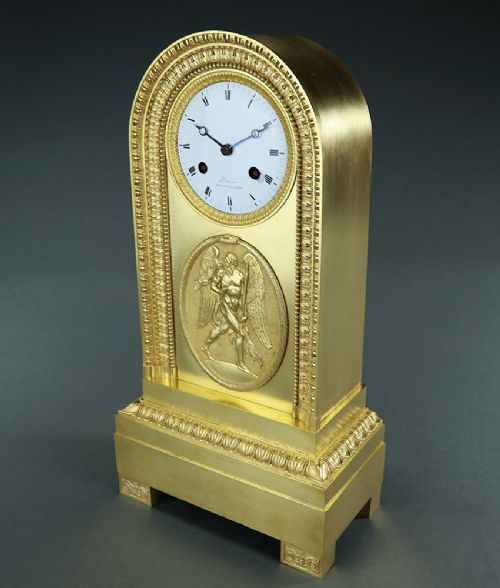
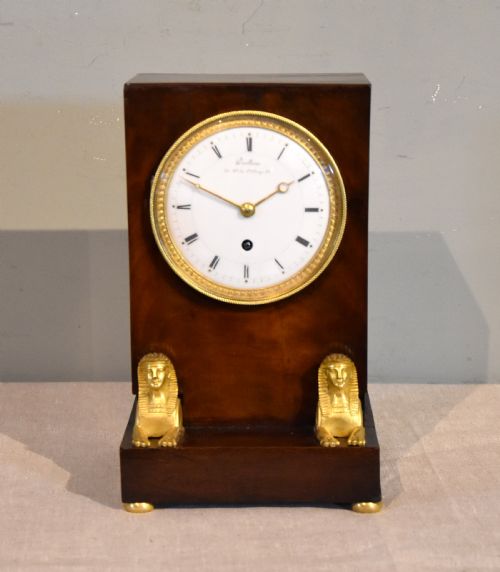
A neoclassical table timepiece stands as a refined horological instrument designed for domestic interiors, taking the form of mantel clocks, desk clocks, and garnitures. These pieces emerge predominantly from French workshops during the eighteenth and nineteenth centuries, reflecting enduring classical motifs and architectural discipline.
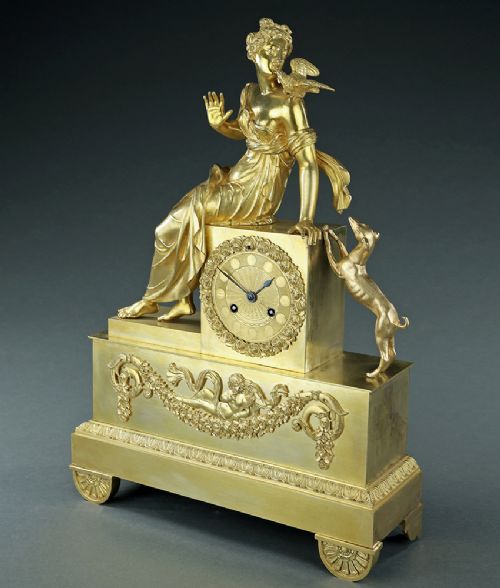
The versions most commonly met on this page showcase the enduring influence of the Louis XVI and French Empire styles. Makers translate antique columns, urns, and mythological figures into functional domestic objects that command attention on a mantelpiece or desk.
How they were made
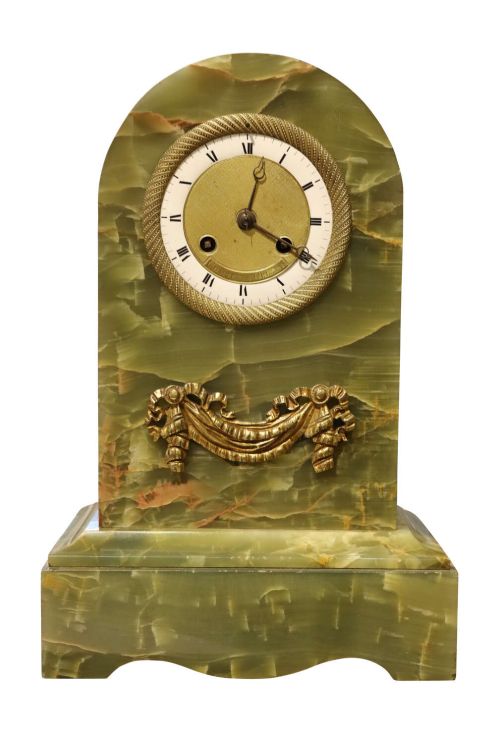
Craftsmen utilised heavy metals such as ormolu, gilt bronze, and brass to form the structural cases and ornamental mounts. These metallic elements are frequently paired with natural materials including white marble, green onyx, alabaster, and glass.
The decorative surfaces combine fire-gilding, patination, and detailed chasing alongside hand-painted enamel dials. Complex mechanical movements, often housing eight-day durations, are fitted securely within these sculptural housings.
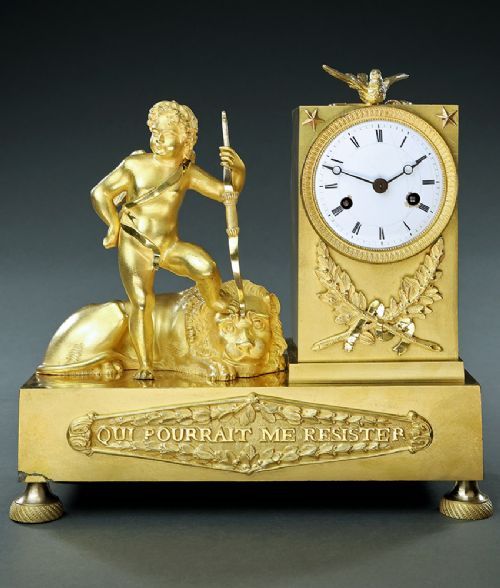
Some timepieces feature putti wrestling over strength or fidelity, reminding owners that time waits for neither love nor war.
What varies in quality
The standard of a neoclassical table timepiece rests upon the crispness of the bronze chasing and the depth of the original gilding. Finer examples display sharp definition in human figures, foliage, and architectural moulding rather than softened or cast-over details.
The mechanical integrity of the movement and the quality of the dial enamel further distinguish superior pieces. Original matched components and signed movements by recorded makers elevate the horological importance of the timepiece.
Charles à Orléans·Le Roy, Paris·Louis Goret·Deniere Et Fils·Asprey Of London·James Ritchie & Son
The Neoclassical Table Timepiece Glossary
- Ormolu
- A technique of applying finely ground high-carat gold to an amalgamated bronze object. This process yields a rich, warm golden lustre characteristic of high-end French decorative arts.
- Garniture
- A set comprising a central clock flanked by matching decorative objects such as vases or candelabra. These sets create a symmetrical arrangement on a mantelpiece.
- Enamel
- A glassy substance fused to a metal dial substrate through firing. It provides a smooth, hard-wearing surface for painted numerals and chapter rings.
- Patinated bronze
- Bronze treated with chemical solutions to produce a controlled dark surface finish. This technique contrasts sharply with bright ormolu mounts.
Neoclassical Table Timepiece: Frequently Asked Questions
Where should I place a table timepiece?
These clocks find their natural home on mantelpieces, console tables, or sturdy desks where their architectural forms can be appreciated from multiple angles. Keep them away from direct sunlight and damp environments to protect the delicate gilt surfaces and enamel dials.
Ensure the surface is completely level so the pendulum or escapement maintains an even beat. Placing the clock away from heavy vibrations ensures the mechanical movement keeps accurate time.
How do I wind the movement safely?
Insert the appropriate winding key gently into the dial arbor and turn it steadily in the indicated direction. Avoid over-winding the mainspring, stopping the moment you feel increased resistance.
Handle the key with care to prevent slipping and scratching the painted enamel dial or the surrounding ormolu bezel. Regular, gentle winding preserves the tension of the historic springs.
How do I identify French Empire style?
French Empire pieces draw heavily on classical Roman, Greek, and Egyptian motifs popular during the early nineteenth century. Look for symmetrical architectural structures, military trophies, sphinxes, and prominent figures from classical mythology.
The metalwork on these pieces typically combines dark patinated bronze with bright ormolu mounts, creating a strong visual contrast. Dials are often set within drum-shaped housings supported by pillars or classical figures.