



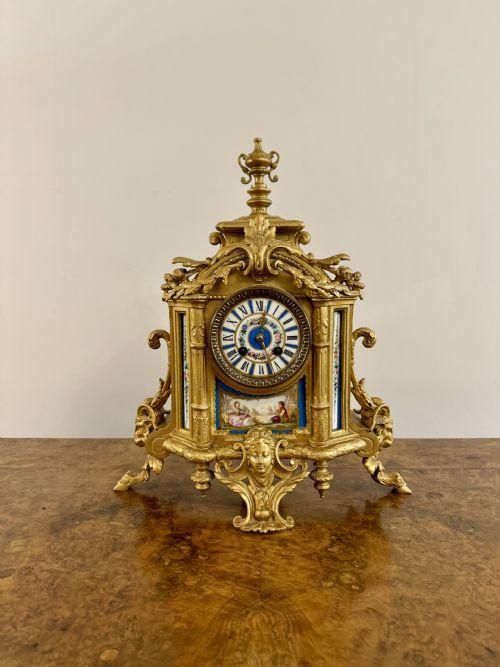
French Style Desk Clock
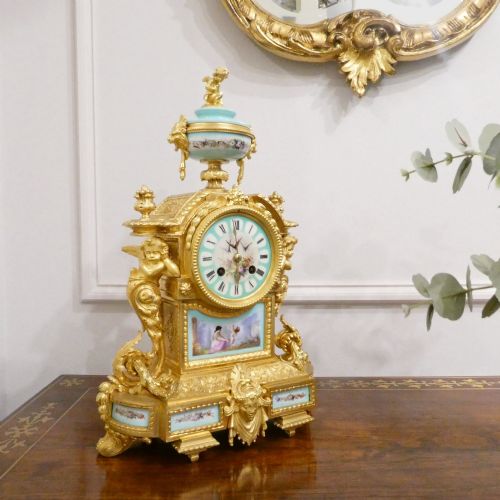
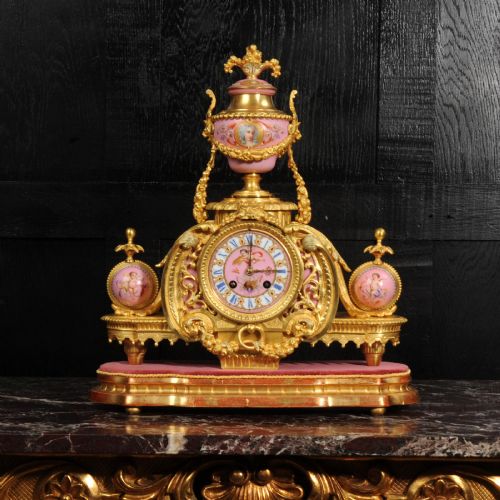
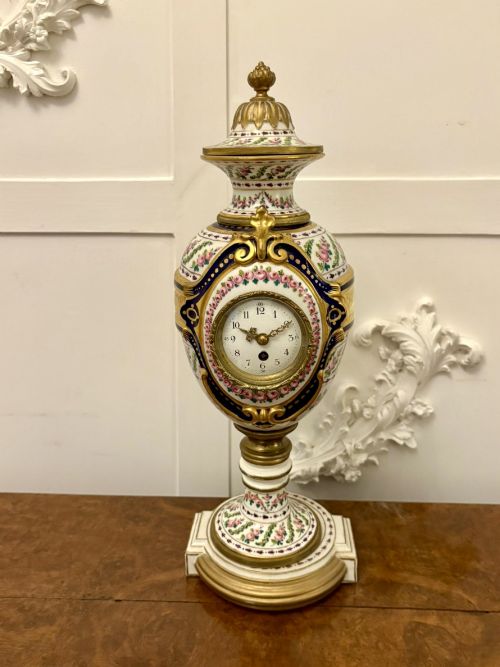
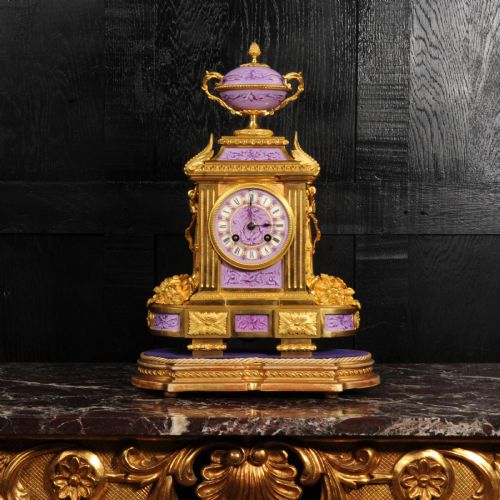
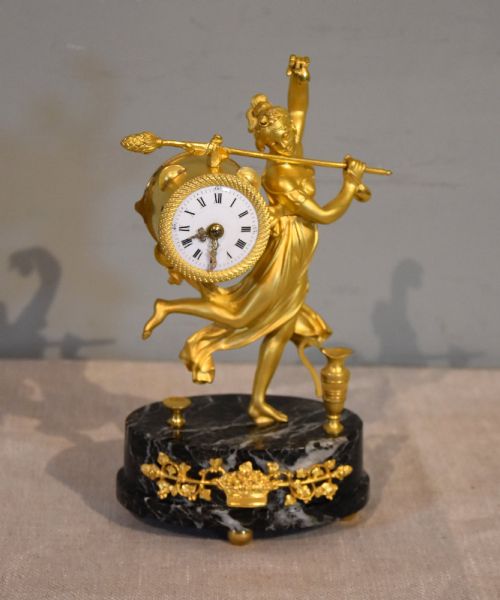
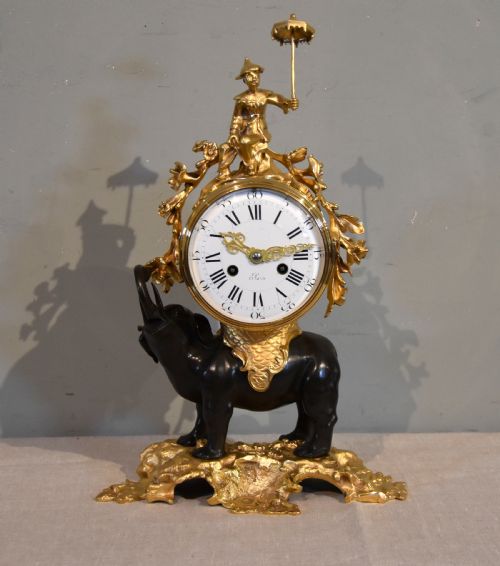
These French style desk clock pieces bring together gilt bronze, porcelain and brass in decorative timepieces from the nineteenth century.
French Style Desk Clock
A buyer examining a french style desk clock encounters decorative timepieces spanning the nineteenth century, including the Victorian and Edwardian eras. These objects take the form of mantel clocks, carriage clocks, and table clocks.
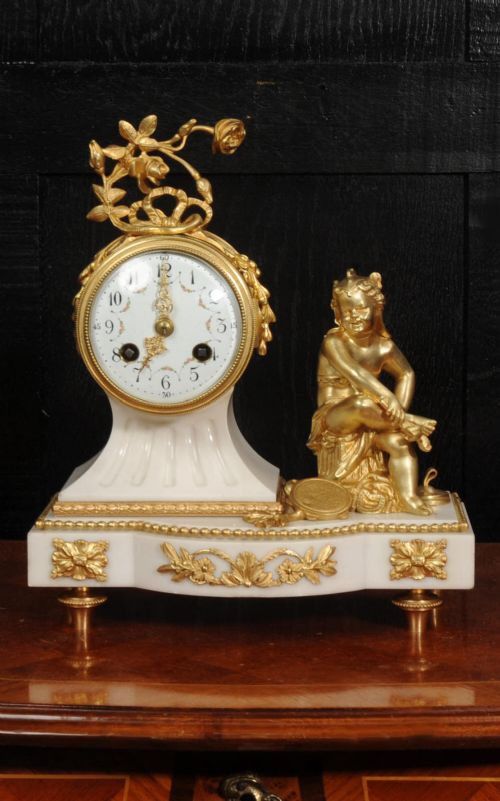
The most common variants on this page combine cast metal mounts with ceramic elements, following revival aesthetics such as Louis XVI, Rococo, and Empire styles. Many of these timepieces originate from French workshops and makers of the period.
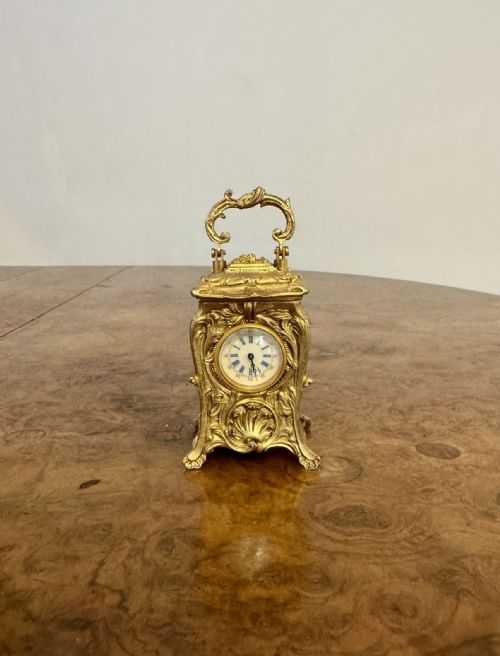
Alongside mantel timepieces, the selection includes portable carriage clocks in brass cases and portico clocks utilising cut crystal. These items served both a practical purpose in measuring hours and a decorative role within period interiors.
Materials and Construction
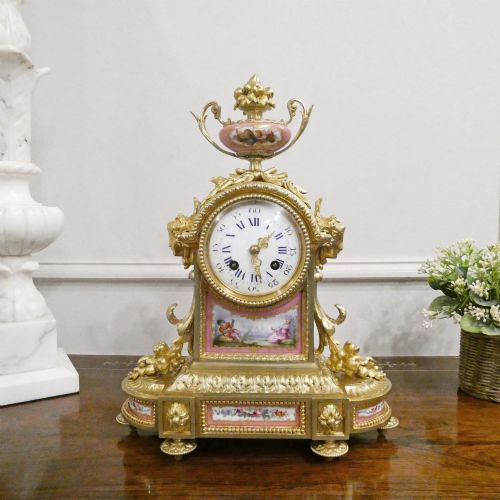
Makers utilised cast ormolu, gilt bronze, and brass to form the structural frames and decorative mounts of these timepieces. These metals were frequently chased and gilded to achieve a bright, reflective finish.
Porcelain plaques and dial faces, including Sèvres-style ceramics, were hand-painted with floral or figurative scenes and incorporated into the clock bodies alongside green and white marble bases.
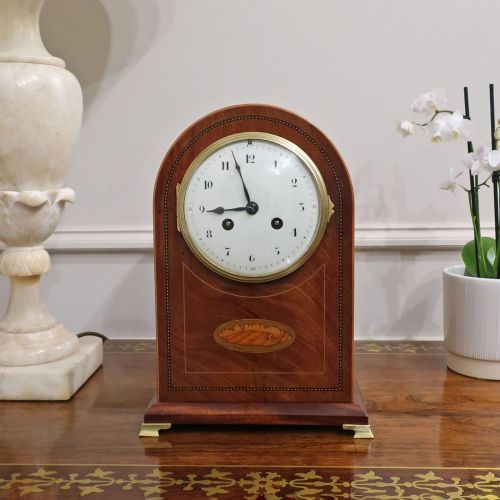
Interior mechanical movements were produced by specialised makers and fitted into cases constructed from mahogany, walnut, and tortoiseshell, or arranged behind glass panels in four-glass clock designs.
Distinctions in Quality
The standard of a french style desk clock depends upon the crispness of the metal chasing in the ormolu and gilt bronze mounts. Castings that retain sharp details and deep relief separate superior examples from softer, simpler productions.
The complexity and execution of the porcelain elements also determine the grade of the piece, with finely painted hand-painted ceramic panels and dials marking out better specimens from standard factory work.
The reputation of the movement maker contributes significantly to the standing of a clock. Signed movements from established mechanists indicate a higher tier of horological construction than unsigned or generic mechanisms.
Achille Brocot·Japy Freres·Pickford of London·Leon Message·Jollet et Cie·Samuel Marti·Tiffany
The French Style Desk Clock Glossary
- Ormolu
- Gilded bronze produced by applying a mercury-gilding technique to a bronze base. This process creates a rich, golden surface finish characteristic of many nineteenth-century French clock cases.
- Garniture
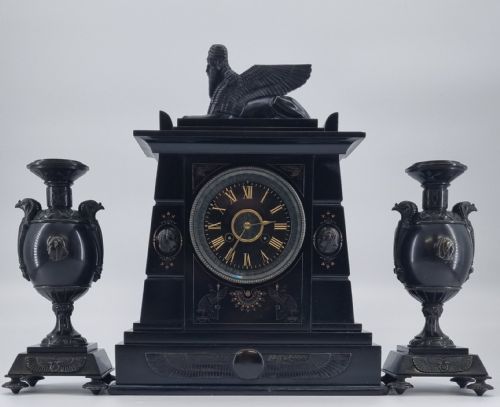
- A set consisting of a clock accompanied by matching decorative objects, such as urns or vases, designed to be displayed together on a mantelpiece.
- Portico clock
- A clock featuring a architectural case supported by four or more columns, often constructed with marble or wood and incorporating a suspended pendulum.
- Carriage clock
- A small, portable spring-driven timepiece equipped with a carrying handle, originally designed for travel during the nineteenth century.
- Boulle
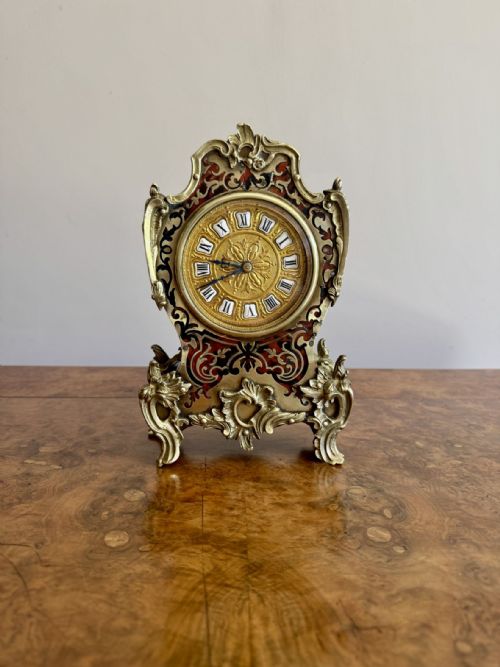
- A form of marquetry utilising tortoiseshell and brass inlay, developed in France and frequently applied to decorative clock cases.
French Style Desk Clock: Frequently Asked Questions
How do I wind a French mantel clock?
Most nineteenth-century mechanical movements require a key inserted into winding holes on the dial face to tension the mainsprings for time and strike functions.
Care should be taken not to over-wind the springs, and hands ought to be moved only in the direction indicated by the instructions for the specific escapement.
What is the difference between an ormolu and a brass clock?
Ormolu involves a gilt coating applied to a bronze substrate, resulting in a warm golden lustre through a mercury amalgamation process common in luxury French pieces. Brass is an alloy of copper and zinc used in both solid form and sheet construction, typically appearing brighter and less complex in its surface texture.
While brass was frequently used for the structural plates of movements and simpler carriage clock cases, ormolu was reserved for the ornate decorative mounts of high-status mantel clocks.
How are carriage clocks adjusted for timekeeping?
Regulation is typically performed via a small square arbor visible on the movement backplate through a glass dust cover, using a specialised regulator key to alter the effective length of the hairspring.
Moving the indicator toward the designated fast or slow mark corrects minor timing errors without requiring disassembly of the platform escapement.
Where were these clocks placed in a nineteenth-century interior?
Mantel clocks and garniture sets were positioned centrally upon fireplace mantelpieces to serve as both timekeepers and focal decorative ornaments within formal reception rooms. Smaller carriage clocks and table clocks were kept on desks, side tables, or bedchambers for portable timekeeping convenience.
The presence of glass panels in four-glass models allowed light to pass through the movement, making them suitable for placement on console tables where all sides could be viewed.