



Neoclassical Pendant Lighting
Neoclassical pendant lighting brings classical symmetry, restrained proportion, and classical motifs from the nineteenth and early twentieth centuries into interior spaces.
Neoclassical Pendant Lighting
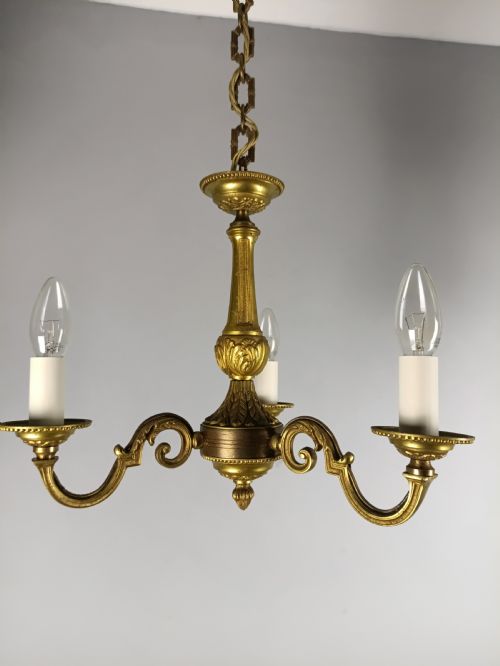
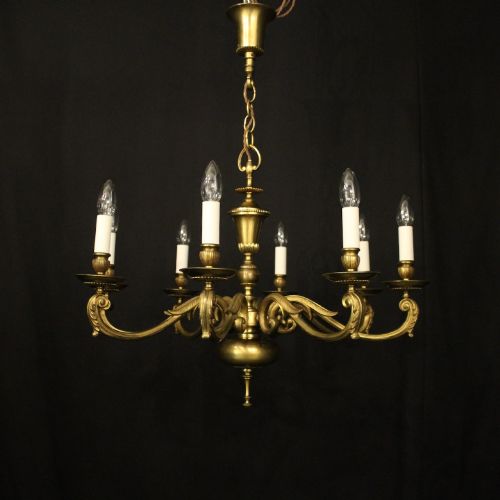
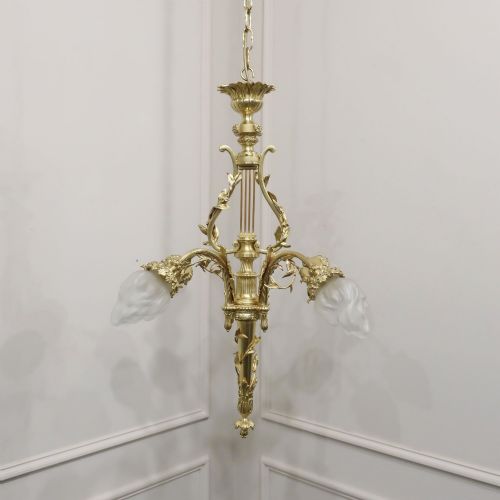
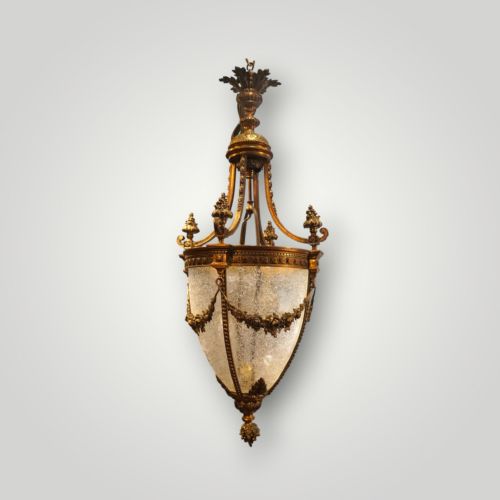
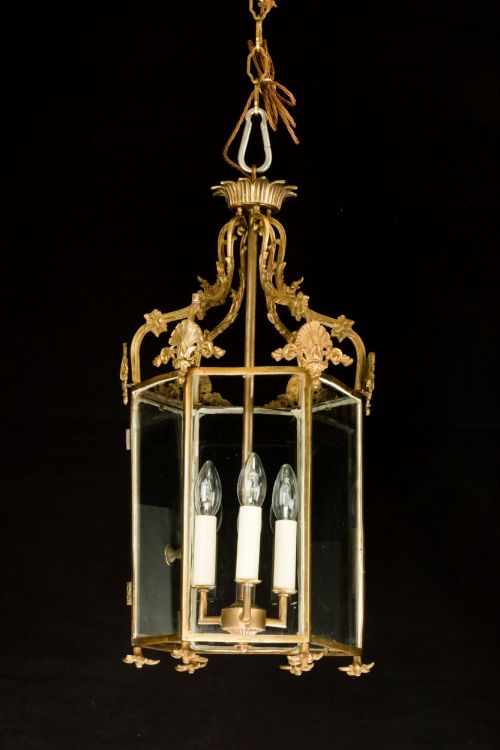
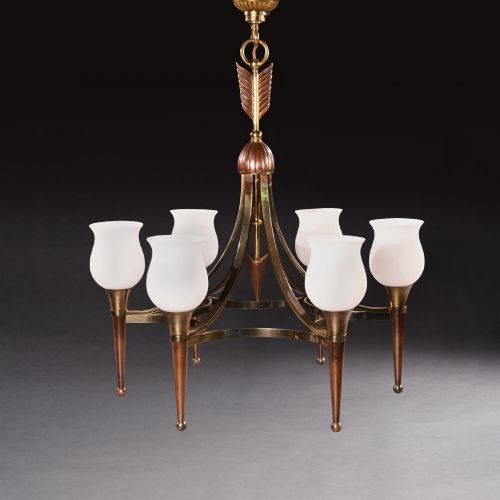
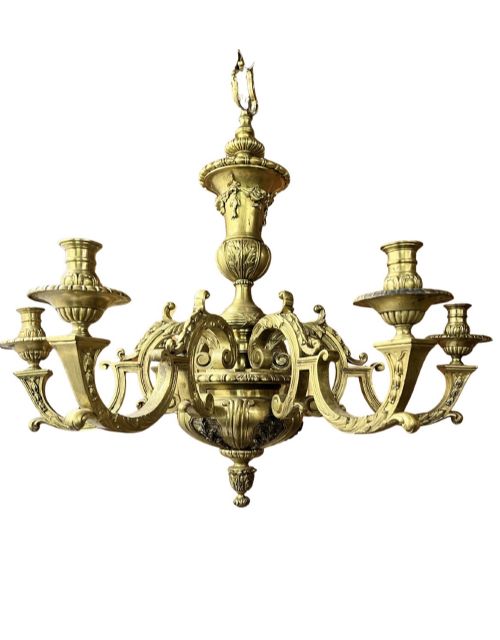
Neoclassical pendant lighting encompasses chandeliers, hall lanterns, and hanging lamps drawing on French Empire, Regency, and classical revival styles. These fixtures reflect architectural symmetry, urn motifs, and clean lines derived from antiquity.
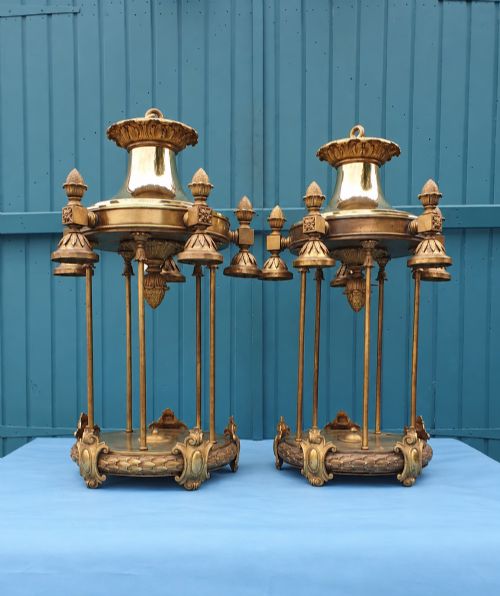
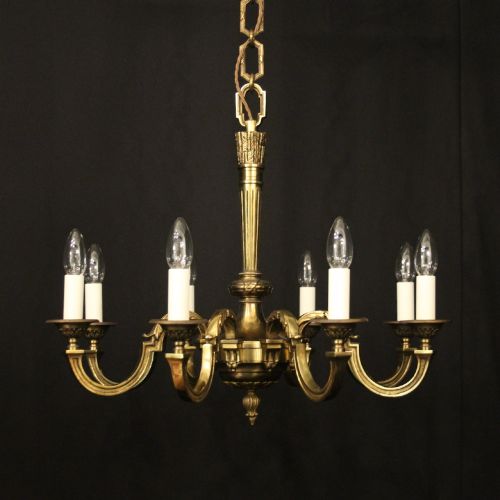
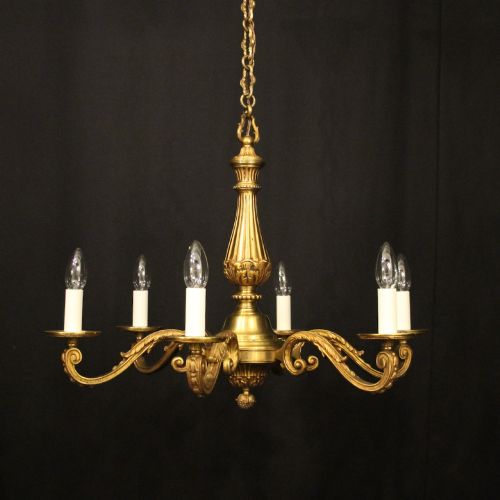
The selections available lean heavily toward French and English multi-arm chandeliers in gilt bronze, ormolu, and brass, alongside hexagonal and cylindrical hall lanterns. Pieces range from nineteenth-century origins through Edwardian examples and twentieth-century interpretations.
Buyers encounter varied formats including single-tier or double-tiered multi-light chandeliers and glass-sided lanterns designed to illuminate reception rooms and entrance halls with formal restraint.
How they were made
Construction relies upon cast brass, gilt bronze, and ormolu frames formed into structural arms, classical mounts, and suspension rings. Metal components are frequently chased, gilded, or patinated to achieve formal decorative surfaces.
Glass elements, including frosted panels, lamp shades, and decorative bowls, are integrated into metal frames through collar mounts and secured bezels. Lanterns combine glazed sides with detailed metal framework to diffuse light evenly.
Neoclassical Pendant Lighting Retail Price Guide 2026
Typical asking prices for neoclassical pendant lighting among the pieces listed under this phrase on Sellingantiques today, from the lower quarter to the upper quarter. They describe what is for sale here now, not the wider market.
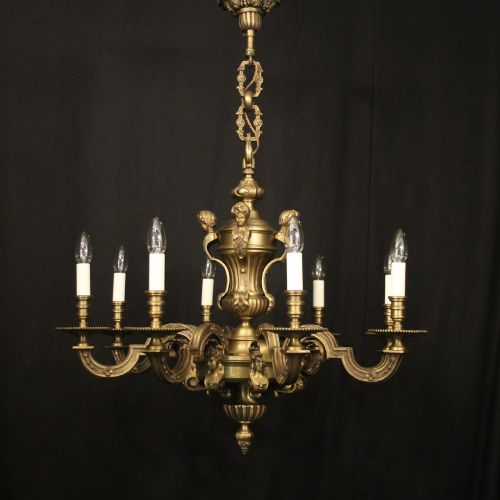
Several fixtures incorporate sculpted rams' heads peering out from the metalwork, bringing a touch of classical pastoral mythology indoors.
What varies in quality
The refinement of the casting and chasing on bronze, ormolu, and brass elements dictates the definition of classical details like acanthus leaves, rams' heads, and beaded borders. Crisper execution and deeper gilding separate superior examples from standard production.
Proportion and structural balance govern the visual weight of multi-arm chandeliers and lanterns, where heavier gauge metal work and integrated decorative components demonstrate higher workshop capability.
Maison Jansen·Andre Arbus
The Neoclassical Pendant Lighting Glossary
- Ormolu
- Gilded bronze produced by applying a mercury and gold amalgam to a bronze base and heating the metal to drive off the mercury. This technique creates a durable, golden matte surface characteristic of fine period fixtures.
- Plafonnier
- A ceiling-mounted or close-hung light fixture featuring a glass bowl or shade held within a metal mount. It provides direct downward illumination while concealing the bulb.
- Hall lantern
- An enclosed hanging light designed for corridors and entranceways, typically constructed with glazed glass panels set within a brass or bronze framework.
- Tent and bag
- A chandelier design where strings of glass beads form a conical tent shape above a gathered bag of beads at the bottom. This arrangement creates intense refraction and sparkle.
- Chasing
- The manual refinement of metal castings using punches and chisels to sharpen surface details, clear backgrounds, and define decorative motifs.
Neoclassical Pendant Lighting: Frequently Asked Questions
How do I hang a heavy antique chandelier?
Heavy chandeliers and lanterns require secure attachment to ceiling joists using rated steel fixings and appropriate weight-bearing hooks. Independent chain suspension supports the fixture while electrical wiring runs separately.
Professional installation is essential to ensure the ceiling structure can safely bear the combined weight of the metal frame and glass components.
Were these fixtures electrified originally?
Many nineteenth and early twentieth-century fixtures were originally designed for candles or colza oil before being converted to electricity during subsequent decades. Surviving examples often show evidence of past adaptations to gas or early electric wiring.
Rewiring with modern heat-resistant flex ensures safe operation while preserving the original metalwork and socket configurations where possible.
How do I distinguish French Empire style from Regency?
French Empire lighting leans heavily on military, classical Roman, and Egyptian motifs executed in gilt bronze with strict symmetry and dense ornamentation. Regency pieces favor lighter English interpretations with delicate brass work and restrained classical references.
Examining the casting quality, patination, and specific decorative vocabulary helps clarify the regional origin and stylistic context of each piece.
Can I clean ormolu and gilt bronze safely?
Ormolu and gilt bronze surfaces benefit from gentle dusting with a soft, dry brush to remove accumulated particles without disturbing the delicate gold layer. Avoid abrasive cleaners, polishes, or chemical dips that strip historical gilding.
Professional conservation is recommended for fixtures requiring deeper cleaning or restoration of degraded metal surfaces.