



French Style Hall Pendant
A french style hall pendant brings illumination and architectural presence to an entranceway through glass and metal lantern forms.
French Style Hall Pendant
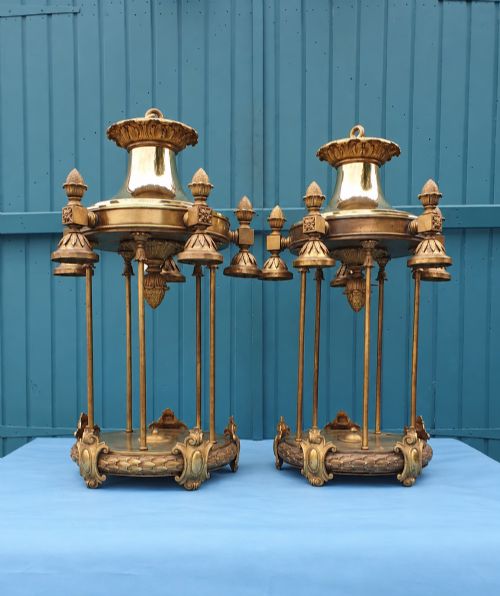
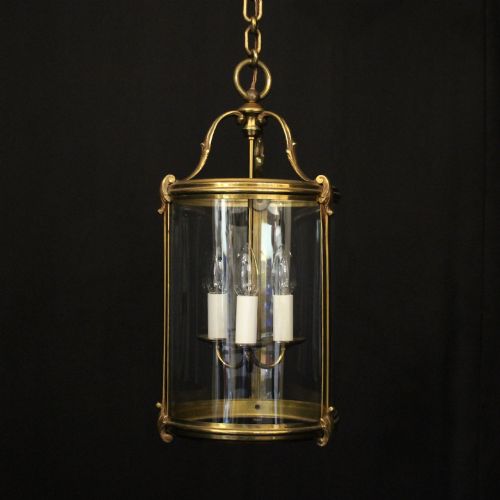
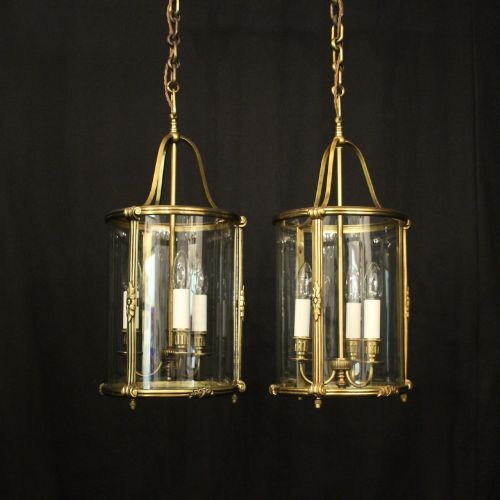
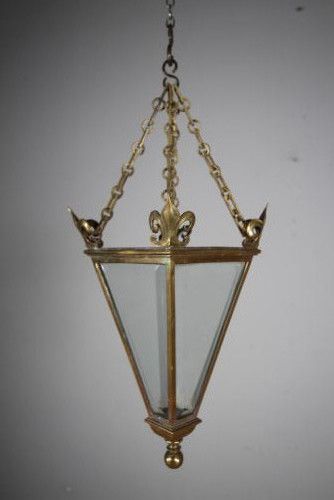
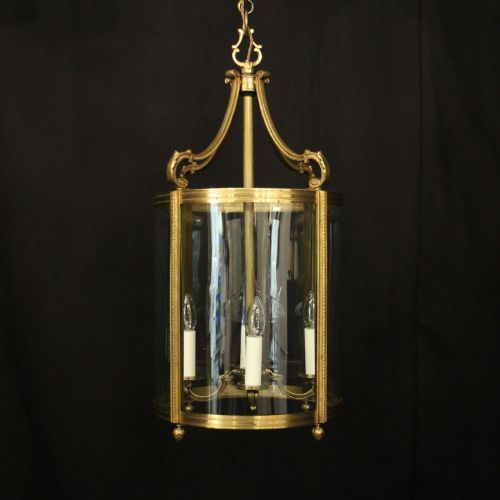
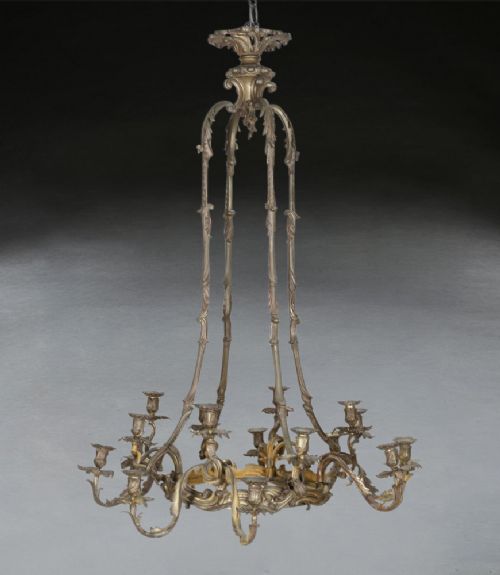
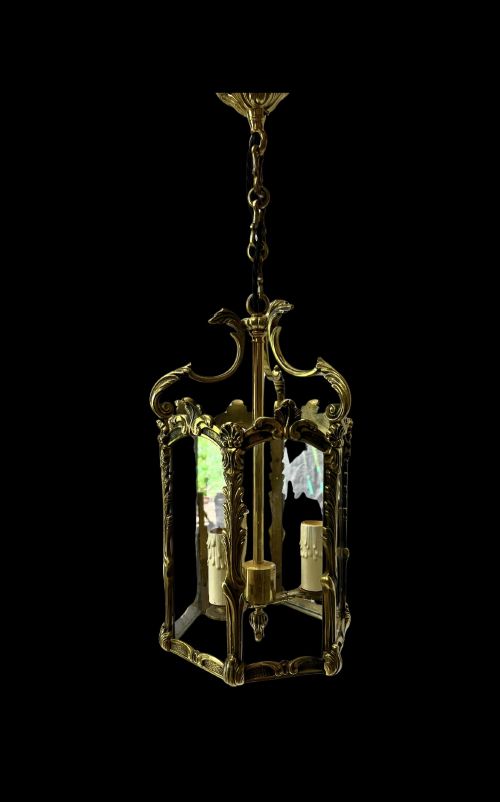
A french style hall pendant encompasses hanging lanterns, ceiling lights, and chandeliers designed to light vestibules and corridors. You will frequently encounter examples shaped with convex glass panels, hexagonal frames, or multi-light configurations.
The selection ranges across the nineteenth century, the Victorian era, and into the early twentieth century. Pieces emerge in styles such as French Rococo, Louis XVI, Neoclassical, and Arts and Crafts.
Makers and designers drew inspiration from sources including the Palace of Versailles. Standard forms balance structural metalwork with transparent or opaline glass panes.
Materials and Construction
Metalwork forms the backbone of these fixtures, utilising cast and chased bronze, gilt brass, ormolu, polished brass, and wrought iron. Artisans worked these metals into rigid frames designed to support hanging glass panels.
Glazing typically involves clear, convex, cut, or opaline glass secured within the metal framework. Structural elements accommodate single or multiple internal lights, reflecting period wiring and electrification methods.
French Style Hall Pendant Retail Price Guide 2026
Typical asking prices for french style hall pendant among the pieces listed under this phrase on Sellingantiques today, from the lower quarter to the upper quarter. They describe what is for sale here now, not the wider market.
Listings feature periods spanning from the Victorian era and the nineteenth century through to 1930, utilising materials like wrought iron, glass, and gilt bronze.
Assessing Quality and Execution
Quality rests upon the crispness of the cast metal ornamentation and the weight of the bronze or brass used in the frame. Finer examples display finely detailed foliate chasing, rococo scrolls, or precise neoclassical motifs rather than simple pressed metal.
The integration of the glass panels also distinguishes tiers of production, particularly where heavy convex or bevelled glass is fitted closely into the surrounding metal channels. Superior specimens maintain structural rigidity across large scales and complex multi-arm configurations.
Perry And Co
The French Style Hall Pendant Glossary
- Ormolu
- Gilded bronze, where a layer of gold is applied to a bronze base using mercury amalgamation or electrochemical techniques. This finish provides a bright, durable golden lustre.
- Convex glass
- Curved glass panels that bulge outward from the metal frame. This technique diffuses internal light and adds depth to the profile of the lantern.
- Toleware
- Painted or lacquered sheet metal items. In lighting, it introduces polychrome colour and decorative surface patterns.
- Rococo style
- An ornate design movement characterised by asymmetrical C-scrolls, shell motifs, and naturalistic curves. It appears frequently in nineteenth-century interpretations of eighteenth-century aesthetics.
French Style Hall Pendant: Frequently Asked Questions
How do I choose the right size hall pendant?
Consider the ceiling height and floor space of your entranceway to ensure the fixture is proportionate.
Larger spaces accommodate multi-light or exceptionally tall lanterns, while compact hallways require tighter hanging profiles.
Are these lanterns electrified for modern use?
Many surviving fixtures have been adapted to run on standard electrical circuits for interior lighting.
Some retain older wiring or require rewiring by a professional to meet safety standards.
How do I distinguish Louis XVI style from Rococo?
Louis XVI style pieces lean towards symmetry, straight lines, and classical architectural motifs derived from antiquity.
Rococo designs favour flowing asymmetry, organic curves, and ornamental scrollwork.
What is the difference between brass and gilt bronze?
Brass is an alloy of copper and zinc, offering a warm golden metallic tone when polished.
Gilt bronze involves a bronze casting coated with a layer of gold, providing a deeper and more refined surface finish.