




Neoclassical Mantelpiece Urn
These neoclassical mantelpiece urns bring classical proportion and refined metalwork into domestic rooms, offering the architectural dignity of antiquity on a domestic scale.
Neoclassical Mantelpiece Urn
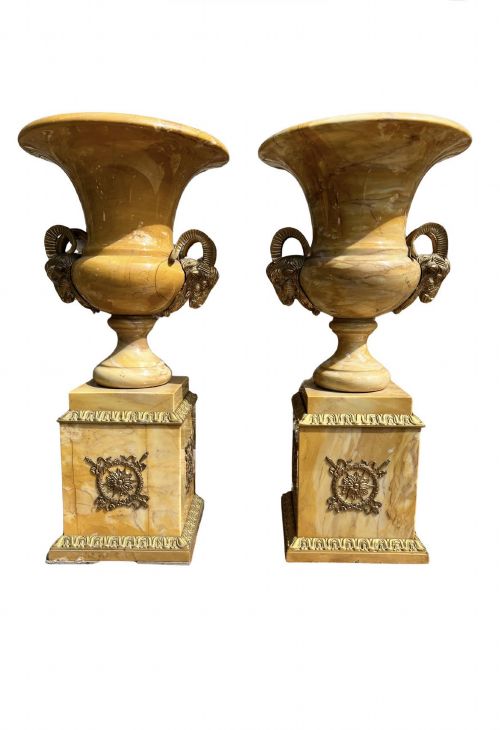
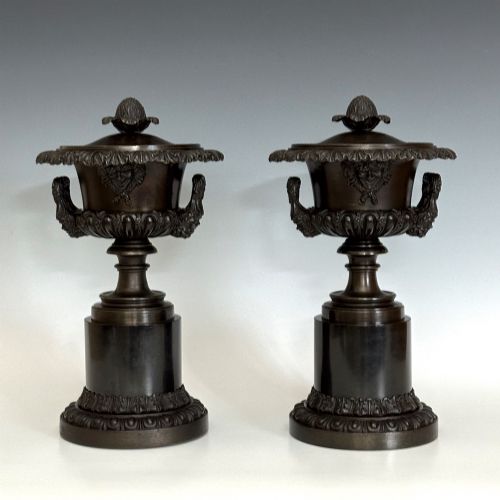
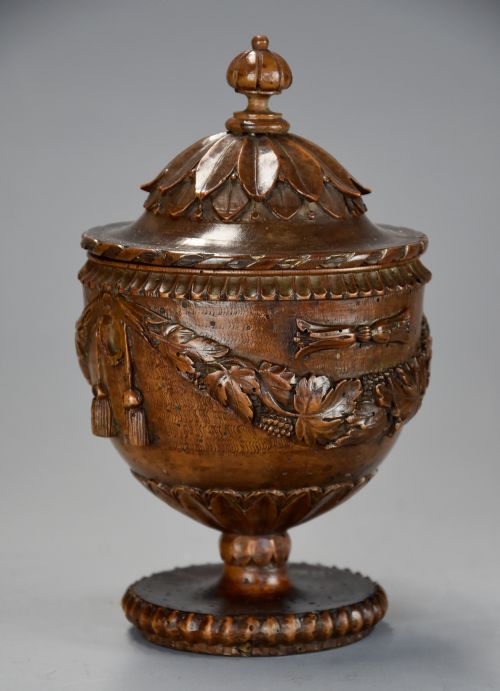
A neoclassical mantelpiece urn draws upon classical antiquity, Roman architecture, and Grand Tour souvenirs to provide balanced, symmetrical decoration for a shelf or mantel. You will most frequently encounter pairs cast in bronze, brass, or ormolu, alongside examples shaped from Sienna marble, Rouge marble, and alabaster.
The physical design follows classical shapes such as the campana, the amphora, or the tazza, often mounted on stepped plinths or square bases. Many items originate from nineteenth-century French and Italian workshops, channelling earlier Empire and Louis XVI revivals.
Beyond standalone vases and lidded vessels, the category encompasses clock garnitures and decorative ewers designed to sit centrally or symmetrically flanking a mirror or clock. These objects served primarily as visual centrepieces in formal reception rooms during the Victorian and earlier periods.
Materials and Construction Techniques
Metal vessels rely on bronze casting, brass fabrication, and ormolu gilding, frequently combined with turned and polished hardstones such as Sienna and quartz marble. Artisans shaped metal through lost-wax or sand-casting methods before applying chased surface details and mercury or fire gilding.
Stone and marble urns require precise lathe-turning and hand-carving to achieve thin walls and smooth profiles, occasionally paired with cast metal mounts, handles, and finials. Earthenware and porcelain pieces utilise kiln-fired glazes and hand-painted or gilt decoration to mimic ancient Greek and Roman pottery.
Current listings feature materials ranging from cast bronze, ormolu, and brass to Sienna marble, alabaster, quartz, and painted pine.
Assessing Craftsmanship and Material Quality
Quality rests upon the crispness of the metal chasing and the depth of the ormolu surface, where finer examples display sharp relief and rich, warm gilding rather than flat, uniform plating. The weight and selection of the marble base also indicate standard, with dense, figured stones showing superior mineral patterning.
The precision of the assembly separates standard decorative output from finer studio work, visible in how tightly metal mounts fit against stone bodies and whether handles and feet align symmetrically. Well-executed pieces maintain correct classical proportions without heavy or clumsy casting seams.
The Neoclassical Mantelpiece Urn Glossary
- Campana urn
- A bell-shaped vessel with a flaring rim and foot, commonly associated with ancient Roman wine cooling and later nineteenth-century decorative castings. This shape forms the silhouette for many bronze and spelter mantelpieces.
- Ormolu
- Finely ground high-carat gold mercury-gilded onto a bronze or brass base, producing a warm, durable metallic lustre. It appears frequently on French Empire and revival mounts.
- Grand Tour
- The nineteenth-century practice where wealthy travellers collected classical souvenirs, bronzes, and art across Italy and France. These pocket-sized or mantel-scale antiquities inspired numerous domestic reproductions.
- Garniture
- A set of three or more matching decorative objects, typically comprising a central clock flanked by matching vases or urns. They were manufactured to create a balanced arrangement on a fireplace mantel.
- Tazza
- A shallow saucer-like cup or vase raised on a stem and foot, derived from ancient Roman drinking vessels. They are frequently cast in bronze and modelled after archaeological finds.
Neoclassical Mantelpiece Urn: Frequently Asked Questions
What is a mantel clock garniture?
A garniture is a matched set of decorative objects designed to sit together on a mantelpiece, usually consisting of a central clock flanked by two matching urns or vases.
This arrangement creates a balanced display that was popular in nineteenth-century interiors to anchor the fireplace wall.
How do you clean antique bronze and marble?
Bronze surfaces require only a gentle dusting with a soft brush, avoiding chemical cleaners that strip patination and original gilding.
Marble components should be wiped with a dry or barely damp cloth, taking care not to let moisture seep into unsealed stone or metal joins.
What period do these urns typically date from?
The majority of pieces originate from the nineteenth century, encompassing Victorian interpretations, Grand Tour souvenirs, and French Empire or Louis XVI revival styles.
Earlier examples from the late eighteenth century and later twentieth-century iterations also appear within the broader neoclassical tradition.
Were these urns used for flowers?
Most decorative mantelpiece urns served a purely aesthetic function as sculptural ornaments rather than practical vessels for water and flowers.
Lidded versions and solid metal or stone constructions were designed to showcase classical form and material wealth on a shelf.