



Neoclassical Mahogany Vitrine
A neoclassical mahogany vitrine offers an elegant home for treasured items, combining fine timbers with glazed display space.
Neoclassical Mahogany Vitrine
When you search for a neoclassical mahogany vitrine, you are looking at sophisticated display furniture designed to showcase ceramics, books, and small decorative objects behind glass. These pieces draw upon classical design principles, utilising rich mahogany as a primary carcase material.
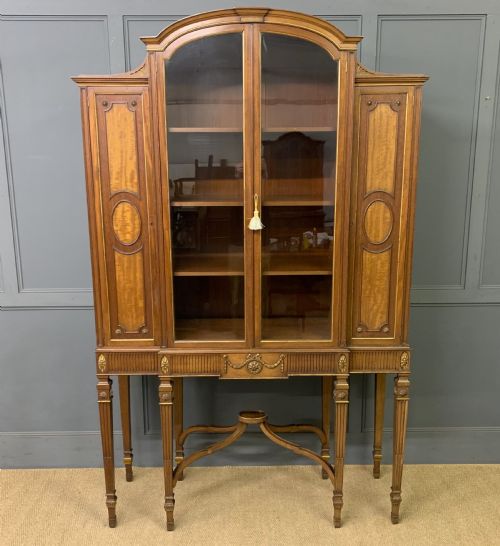
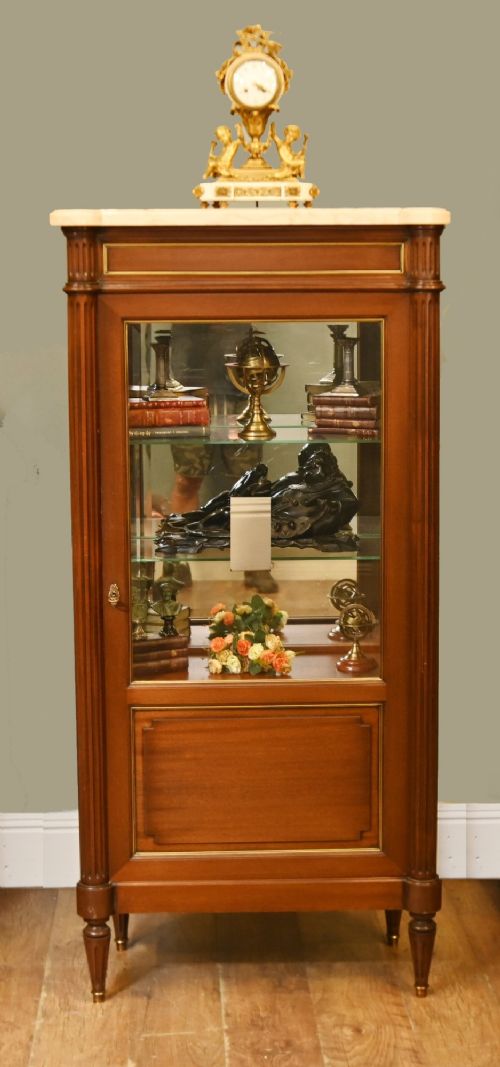
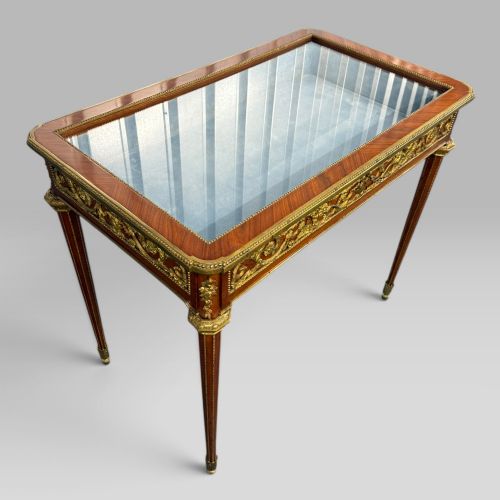
You are most likely to meet revival pieces on this page, spanning the nineteenth and twentieth centuries. The selection encompasses forms ranging from bowfronted corner cabinets and tall bookcases to low bijouterie display tables and single-door wall cabinets.
The aesthetic bridges several related revival styles, including Sheraton, Louis XVI, Adam, and French Directoire. Makers often integrated satinwood inlays, painted panels, and fine brass mounts to enhance the formal architectural lines of the neoclassical idiom.
What varies in quality
Quality rests primarily in the crispness of the cabinetmaking and the precision of the timber selection. Finer examples display continuous grain matching across drawer fronts and doors, alongside hand-cast ormolu mounts with sharply defined chasing rather than mass-produced brass stampings.
The integrity of the structural joinery and the delicacy of the marquetry work dictate the upper tier of the range. Cabinets bearing maker signatures or attributions reflect workshops that employed specialist carvers and marqueteurs to execute classical ornament.
Neoclassical Mahogany Vitrine Retail Price Guide 2026
Typical asking prices for neoclassical mahogany vitrine among the pieces listed under this phrase on Sellingantiques today, from the lower quarter to the upper quarter. They describe what is for sale here now, not the wider market.
The inventory spans Victorian, Edwardian, and twentieth-century revival eras.
François Linke·Jewell of Holborn·Paul Sormani·Waring & Gillow·Edwards & Roberts·C Hindley & Sons
The Neoclassical Mahogany Vitrine Glossary
- Vitrine
- A glass-fronted cabinet designed specifically for the display of porcelain, curiosities, or books. These pieces protect delicate objects from dust while maximising visibility through glazed doors and sides.
- Ormolu
- Gilded bronze mountings applied to furniture for decorative enrichment. This technique produces a rich metallic lustre that contrasts against dark mahogany surfaces.
- Marquetry
- Decorative veneer patterns formed by fitting together thin slices of various coloured woods. Craftsmen used this technique to create floral swags, urns, and geometric borders on cabinet doors.
- Bijouterie table
- A low display table featuring a glazed top and shallow compartment for holding small precious items or jewellery. They often stand on slender cabriole or tapered legs.
- Bowfront
- A convex curved front contour popular in cabinet design during the eighteenth and nineteenth centuries. This curved profile softens the rigid geometry of room corners.
Neoclassical Mahogany Vitrine: Frequently Asked Questions
What is a neoclassical mahogany vitrine used for?
These cabinets were originally manufactured to exhibit porcelain, silverware, and decorative collections in formal reception rooms. The glazed panels allowed owners to display their possessions safely while keeping dust away from fragile items.
Today, they serve a similar purpose in domestic interiors, functioning as focal points for curated displays of books, ceramics, and small antiques.
How do I identify a revival period piece?
Revival furniture often exhibits machine-sawn timber elements and standardised hardware alongside hand-finished details. Nineteenth and twentieth-century makers frequently adopted eighteenth-century classical motifs, such as bellflower husks, urns, and fluted columns.
Examining the secondary woods inside the carcase, such as oak or pine drawer linings, helps determine the manufacturing era when compared against period-specific construction methods.
Where should I place a vitrine in my home?
A vitrine requires a stable environment away from direct sunlight and rapid temperature fluctuations to protect delicate wood veneers and antique glass. Corner cabinets fit neatly into unused room angles, whilst freestanding models suit principal living areas.
Positioning the piece against an interior wall prevents excessive humidity changes from affecting the mahogany carcase and internal fabric linings.
What styles fall under neoclassical furniture?
Neoclassical design encompasses aesthetic movements inspired by the classical art and architecture of ancient Greece and Rome. This includes English Sheraton and Adam revivals, as well as French Louis XVI and Directoire styles.
These pieces share symmetrical proportions, straight tapering legs, architectural cornices, and restrained classical ornamentation rather than the curved asymmetry of earlier rococo designs.