

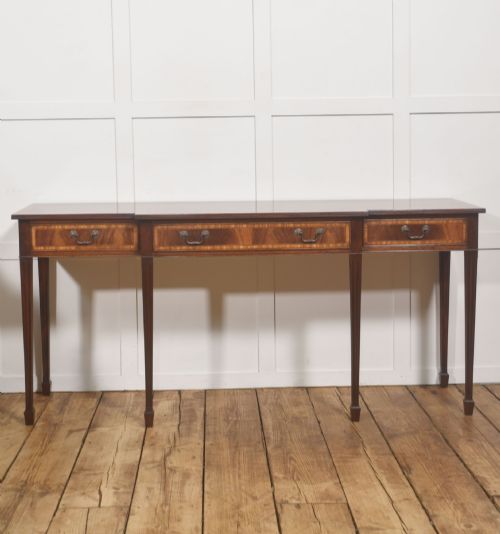


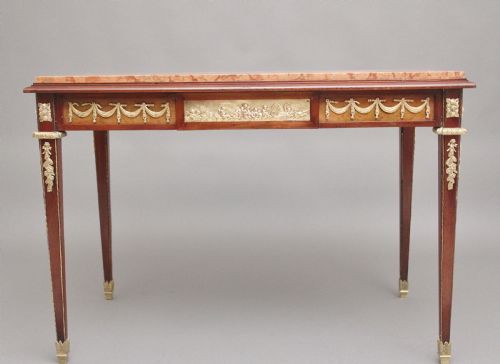


Neoclassical Mahogany Sofa
These neoclassical mahogany sofa pieces combine clean classical lines with rich timber, offering a stately centrepiece for a traditional drawing room.
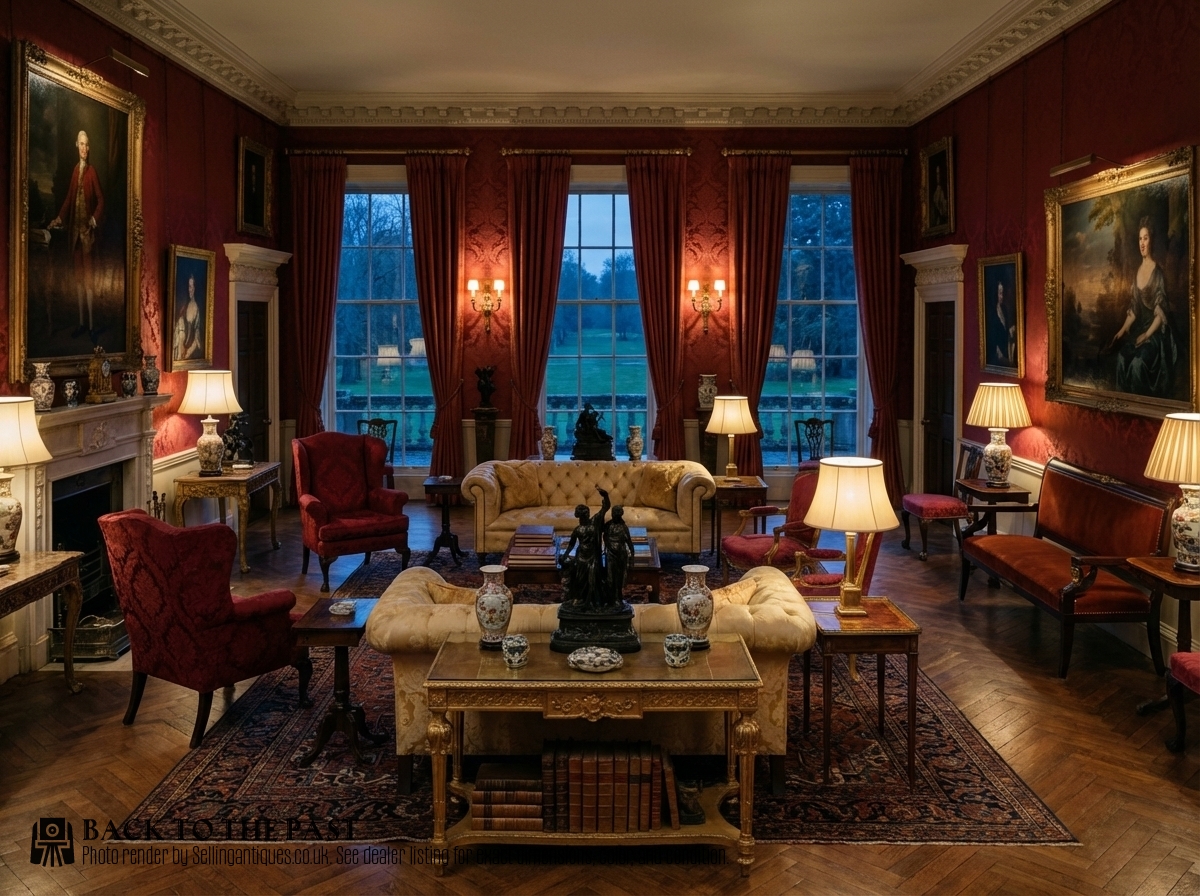
Neoclassical Mahogany Sofa
A neoclassical mahogany sofa brings classical architectural proportion and dark tropical hardwood together in seating designed for formal reception rooms. Buyers searching for a neoclassical mahogany sofa will encounter examples ranging from eighteenth-century George III pieces to later nineteenth-century revival interpretations.
The selection on this page includes serpentine frames, chair-back multi-seater forms, and French Empire models enriched with ormolu mounts. Makers adapted classical motifs from antiquity, applying carved details and inlaid satinwood to sturdy mahogany structures.
Materials and construction methods
Solid mahogany forms the structural backbone of these seats, chosen for its strength and deep warm grain. Cabinetmakers and joiners shaped the timber into curved serpentine rails and shield backs, often incorporating satinwood inlay for contrast.
Ormolu mounts and brass details provide metallic highlights on Empire-influenced examples, while upholstery fabrics include silk, damask, and traditional textiles fixed over supportive sprung or webbed bases.
Neoclassical Mahogany Sofa Retail Price Guide 2026
Typical asking prices for neoclassical mahogany sofa among the pieces listed under this phrase on Sellingantiques today, from the lower quarter to the upper quarter. They describe what is for sale here now, not the wider market.
Some nineteenth-century makers experimented with parted three-seater chair-back frames, offering three distinct seating compartments within one unified timber structure.
Distinctions in craftsmanship and finish
Quality rests upon the crispness of the timber carving and the architectural accuracy of the classical proportions. Finer examples display masterly joinery in the serpentine curves and tightly fitted joints without reliance on heavy adhesives.
The integration of decorative elements such as ormolu mounts or satinwood inlay separates standard production from exceptional pieces. Superior items retain well-balanced frames and authentic period upholstery materials that complement the underlying mahogany.
The Neoclassical Mahogany Sofa Glossary
- Neoclassical
- A style inspired by the art and architecture of classical antiquity, focusing on symmetry, straight lines, and restrained ornamentation. This aesthetic dominated late eighteenth-century design and later nineteenth-century revivals.
- Mahogany
- A durable tropical hardwood prized for its reddish-brown colour and stability in furniture construction. It accepts fine carving and polished finishes exceptionally well.
- Ormolu
- Gilt bronze ornamentation applied to furniture to create striking metallic contrasts against dark timber. This technique appears frequently on French Empire pieces.
- Serpentine
- A furniture shape featuring a gently undulating front line that curves inward then outward. It demands high skill from the woodworker to execute cleanly in solid timber.
Neoclassical Mahogany Sofa: Frequently Asked Questions
How do I care for a vintage mahogany sofa?
Keep the wood nourished with appropriate wax polishes and protect the surface from direct sunlight to prevent fading. Regular dusting with a soft cloth maintains the natural lustre of the timber.
Position the seating away from direct heat sources to avoid drying out the joints and upholstery fabric. Professional cleaning is recommended for antique textiles and delicate ormolu mounts.
Are these sofas comfortable for daily use?
These pieces were built for formal reception rooms rather than modern lounging, offering upright support with firm cushioning. Many period examples rely on traditional webbing and stuffing methods.
Buyers intending daily use should inspect the internal suspension and padding condition. Some pieces may benefit from professional reupholstery while retaining the historic wooden frame.
What is the difference between Georgian and revival pieces?
Georgian pieces date from the eighteenth or early nineteenth centuries during the reigns of the Georges, representing original period craftsmanship. Revival items date from the later nineteenth or early twentieth centuries, copying earlier classical styles.
Both categories utilise quality mahogany and classical motifs, but original Georgian pieces generally carry greater historical weight. Construction marks and timber patina often help distinguish the exact period of manufacture.
Where should I place a settee in a modern room?
A formal settee works well as a statement piece against a neutral wall or as a spatial divider in a large drawing room. The classical silhouette complements both traditional interiors and minimalist contemporary spaces.
Ensure adequate clearance around the piece to display its carved mahogany frame and serpentine lines fully. Pairing the seating with matching console tables creates a cohesive classical arrangement.