
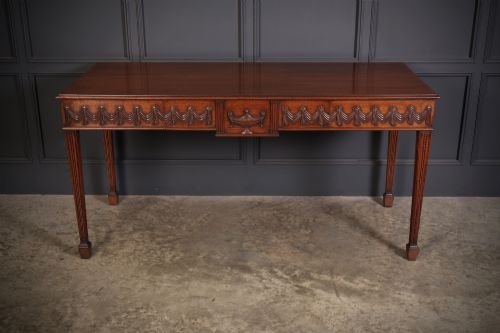
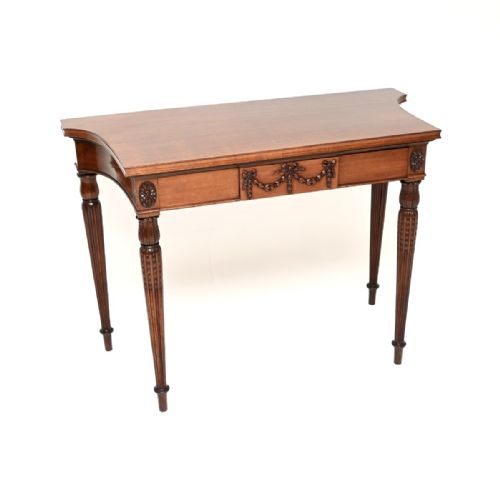
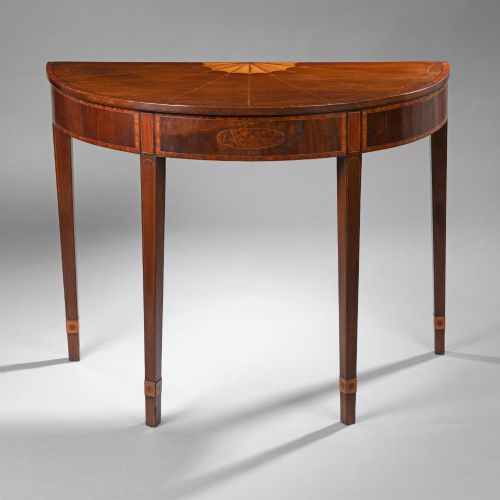
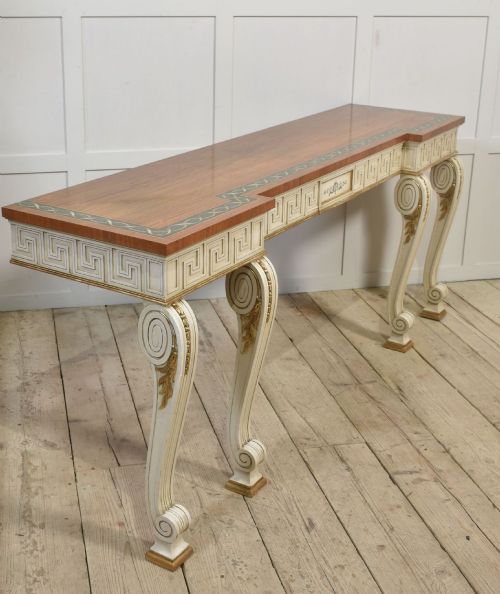


Neoclassical Mahogany Console
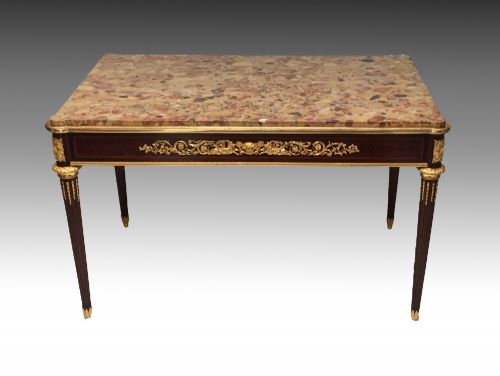
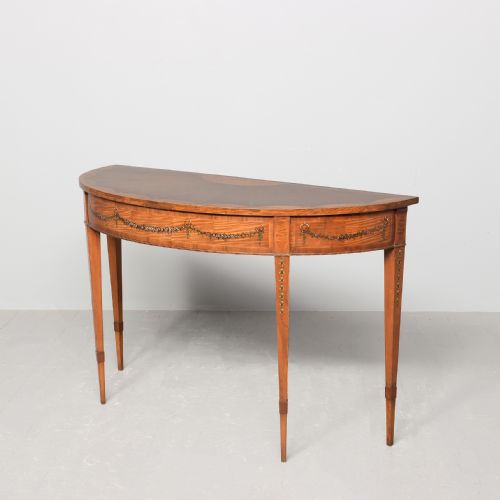
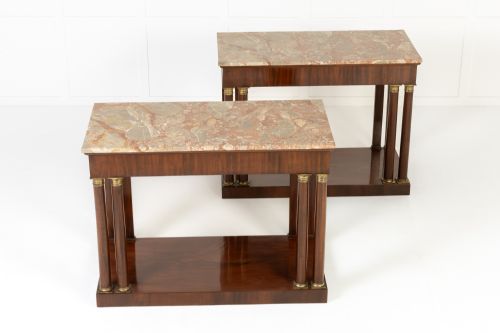
These neoclassical mahogany console tables combine architectural proportion with rich timber, designed to anchor a room with classical symmetry.
Neoclassical Mahogany Console
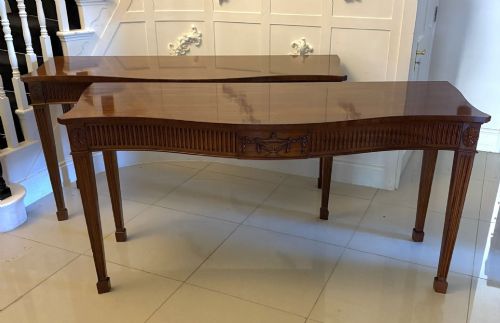
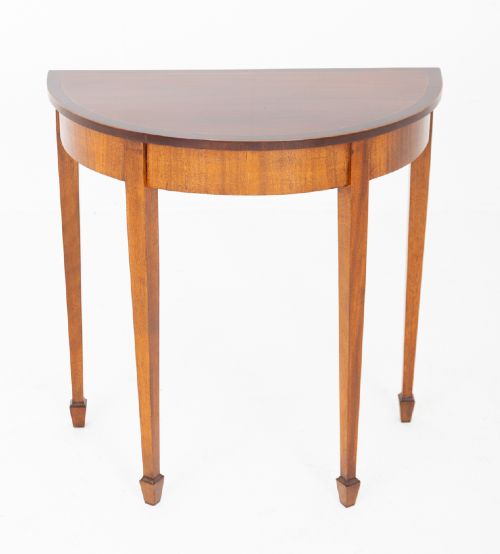
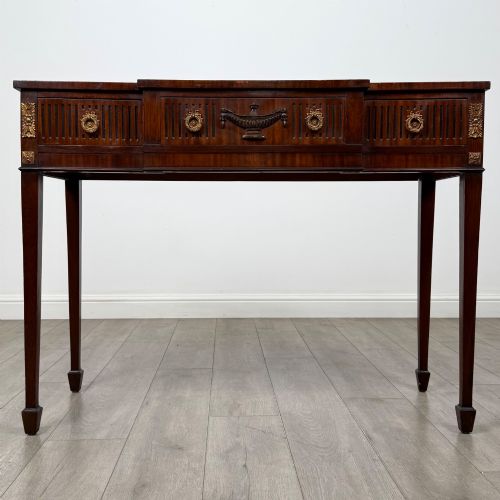
When you search for a neoclassical mahogany console, you encounter tables designed to stand against a wall, frequently taking the demi-lune, serpentine, or rectangular form typical of the Georgian, George III, and later revival periods.
The pieces on this page span the eighteenth century through to the twentieth century, with revival movements such as Adam, Sheraton, and Louis XVI appearing alongside period originals.
Makers and workshops constructed these tables primarily as console tables, serving tables, and card tables, often utilising timber frames designed to hold marble or timber tops.
Factors that distinguish quality
The grade of timber and the precision of the inlay separate standard examples from finer pieces, particularly where contrasting satinwood and boxwood create crisp geometric or floral patterns.
The refinement of the carved neoclassical detail - such as fluted legs, paterae, and bead-and-reel moulding - defines the artistry of the maker.
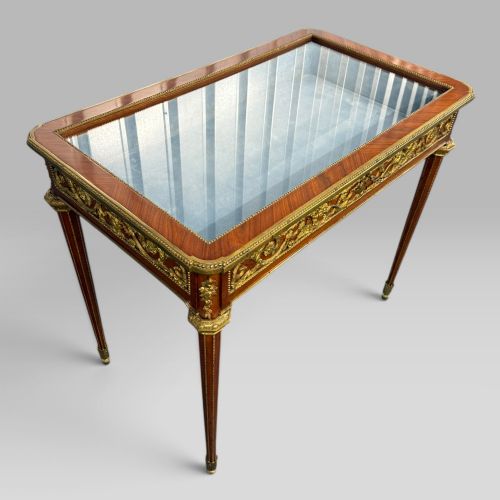
Originality of components, including integrated marble slabs and cast ormolu mounts, elevates the standing of a console table.
Several tables retain traces of aristocratic provenance, proving that past owners took their side tables very seriously indeed.
François Linke·Jean Joseph Chapuis·Lord Leverhulme
The Neoclassical Mahogany Console Glossary
- Demi-lune
- A half-moon shape characteristic of side and console tables designed to fit flush against a wall.
- Ormolu
- Gilded bronze mounts applied to furniture for decorative enrichment, common in French Empire and Louis XVI styles.
- Inlay
- A technique where contrasting woods such as satinwood or boxwood are inserted into the mahogany ground to form patterns.
- Serpentine
- A gently undulating curved line found along the front edge of certain console and serving tables.
- Paterae
- Small circular carved or inlaid ornaments resembling classical dinner plates, frequently seen on neoclassical friezes.
Neoclassical Mahogany Console: Frequently Asked Questions
Where should I place a console table?
These tables suit hallways, drawing rooms, or dining spaces where they sit flat against a wall beneath a mirror or painting.
Because many examples feature shallow depths, they occupy minimal floor space while providing a surface for lamps or decorative objects.
How do I distinguish Georgian from revival pieces?
Period eighteenth-century pieces display construction methods, timber maturity, and hand-cut joinery characteristic of their original era.
Revival pieces, produced during the nineteenth and twentieth centuries, often adopt Georgian or Louis XVI vocabulary with machine assistance and standardised timber stocks.
What is the difference between a console and a serving table?
Console tables were traditionally designed purely for display or architectural balance against a wall, frequently paired with wall mirrors.
Serving tables originated in dining rooms to hold dishes during meals, resulting in sturdier proportions and larger surfaces.
How do I care for mahogany and marble surfaces?
Mahogany requires occasional polishing with traditional wax to maintain the grain and lustre of the timber.
Marble tops benefit from simple dusting and prompt wiping of liquids to protect the polished stone from staining.