
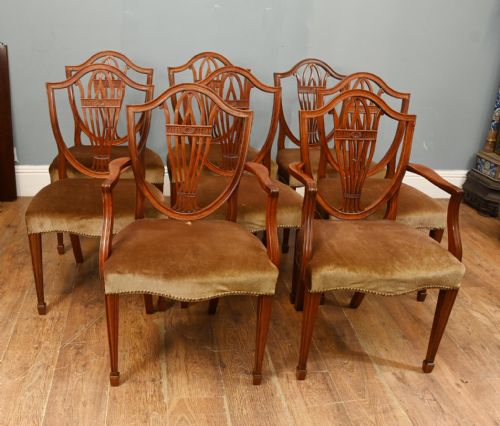


Neoclassical Mahogany Chair Set
A neoclassical mahogany chair set brings classical restraint and timber warmth to a room, offering matched seating from the eighteenth, nineteenth, and twentieth centuries.
Neoclassical Mahogany Chair Set
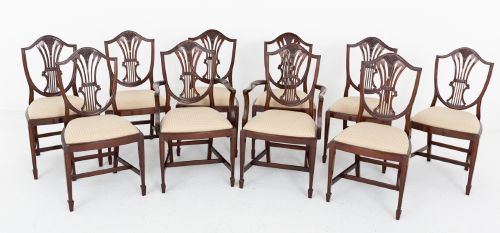
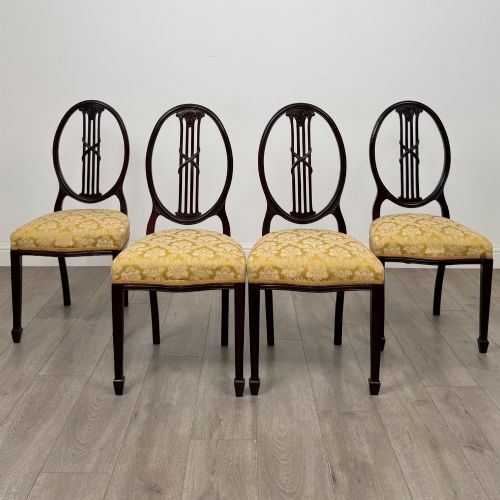
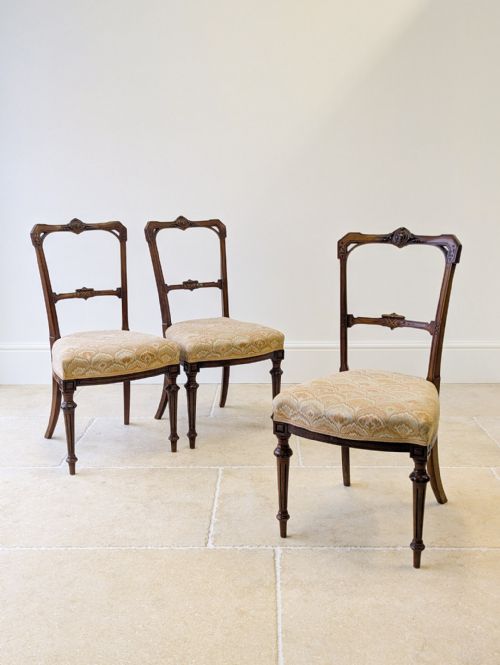
A neoclassical mahogany chair set encompasses matched groupings designed for the dining room or the salon, ranging from pairs and small sets of three or four up to larger dining sets of eight and ten. These groupings appear across multiple periods, including the Georgian and Victorian eras, alongside Edwardian and twentieth-century revivals.
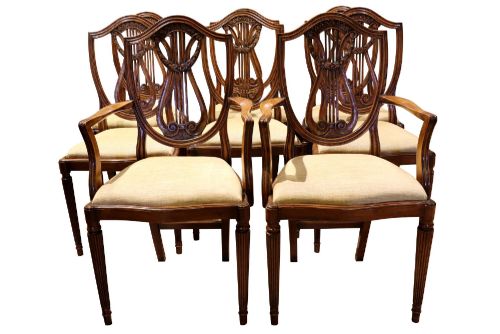
The forms span formal dining chairs, open armchairs, and salon suites, reflecting both original eighteenth-century craftsmanship and later interpretations in the Sheraton and Hepplewhite manners. Buyers frequently encounter sets produced in the nineteenth and early twentieth centuries that emulate earlier neoclassical lines.
Materials and construction
These pieces rely fundamentally on mahogany timber, often complemented by contrasting satinwood inlay that highlights the geometric and classical motifs characteristic of the style. Structural integrity relies on traditional joinery methods appropriate to each period, from eighteenth-century framing to later revival techniques.
Upholstery forms an integral part of many pieces, utilising materials such as velvet, damask, and standard upholstery fabrics to cover seats and backs. Brass accents occasionally appear as structural or decorative hardware, particularly in Empire revival pieces.
Listings span eight distinct periods, from the eighteenth century through to the nineteen-thirties, encompassing both original items and twentieth-century revivals.
Judging the work
Quality reveals itself in the precision of the timber grain, the crispness of carved details, and the subtlety of inlaid satinwood banding. Superior sets maintain uniformity across every chair in the group, showing consistent colour and matching timber selection.
The distinction between original period pieces and later revivals rests on the depth of hand-carving and the natural patina developed by the mahogany over generations. Finer examples display meticulous attention to structural proportion and disciplined adherence to classical design principles.
Brights of Nettlebed
The Neoclassical Mahogany Chair Set Glossary
- Neoclassical
- A style drawing inspiration from the classical art and architecture of ancient Greece and Rome. It emphasises symmetry, straight lines, and restrained ornamentation.
- Mahogany
- A durable, reddish-brown tropical hardwood prized for its stability and rich grain. It serves as the primary structural and visual medium for these seating groups.
- Sheraton
- A late eighteenth-century furniture style defined by light proportions, straight tapered legs, and contrasting veneer inlays. Pieces in this manner often feature delicate geometric decoration.
- Hepplewhite
- A style associated with elegant, graceful curves, shield-back chair designs, and subtle carved motifs. It represents a cornerstone of neoclassical seating design.
- Salon Suite
- A matched set of seating furniture intended for formal reception rooms. These suites typically include a combination of sofas and armchairs sharing a unified aesthetic.
Neoclassical Mahogany Chair Set: Frequently Asked Questions
How do I clean mahogany chair frames?
Dust the timber regularly with a soft, dry cloth to prevent the accumulation of grit. Avoid using silicone-based polishes, opting instead for traditional beeswax applied sparingly to nourish the wood.
Protect the chairs from direct sunlight and extreme temperature fluctuations to prevent the mahogany from drying out or splitting over time.
Are these sets suitable for daily dining?
Most antique and vintage dining sets are structurally robust enough for regular use, provided they are handled with reasonable care. Checking the joints periodically ensures they remain stable under daily seating demands.
For very delicate salon chairs or fragile silk upholsteries, occasional or lighter use helps preserve the antique fabric and delicate frame construction.
How do I distinguish eighteenth-century pieces from later revivals?
Original pieces display authentic tool marks, timber shrinkage consistent with age, and a deep, natural patina developed over centuries. Revival pieces from the Victorian era or the twentieth century often exhibit standardised machine work and different internal construction methods.
Examining the underside of the seats and the joinery reveals clues regarding the manufacturing techniques and the specific period of origin.
What fabric types match neoclassical seating?
Damask, velvet, and traditional woven upholstery fabrics suit the classical aesthetic of these chairs. Historically appropriate textiles enhance the visual authenticity of the seating group.
When reupholstering, selecting patterns and textures consistent with the Sheraton or Hepplewhite styles maintains the historical integrity of the piece.