


Neoclassical Lantern
A neoclassical lantern brings symmetrical restraint and formal illumination to an entrance hall, drawing upon classical motifs from the nineteenth and early twentieth centuries.
Neoclassical Lantern
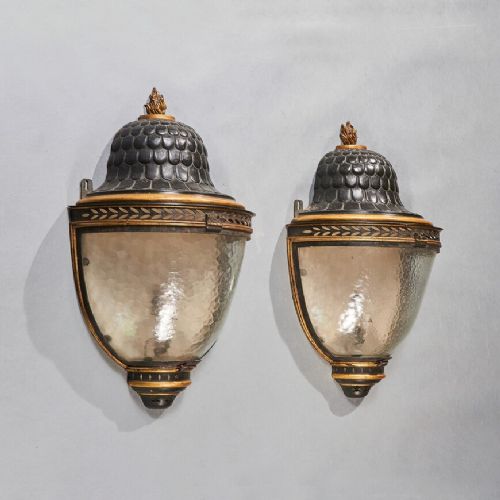
A neoclassical lantern is an architectural lighting fixture rooted in historical design styles such as Louis XVI, French Empire, and general neo-classical aesthetics. These pieces typically take the form of ceiling pendants, hall lanterns, wall-mounted carriage lights, and sconces designed to illuminate interior spaces or sheltered exterior thresholds.
Buyers browsing this selection will most frequently encounter nineteenth-century and early twentieth-century examples rendered in brass, gilded bronze, or patinated metal. Many pieces reflect French origins, drawing inspiration from palace interiors and formal coach-house traditions.
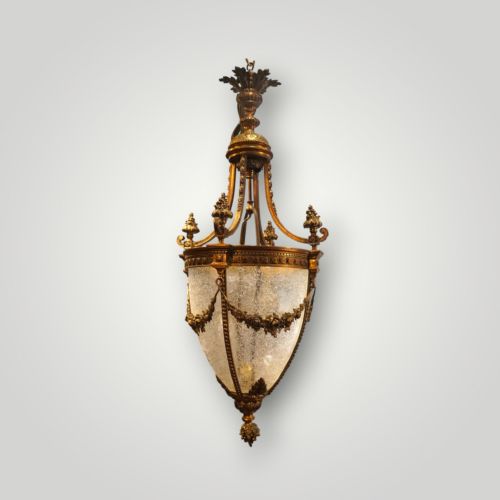
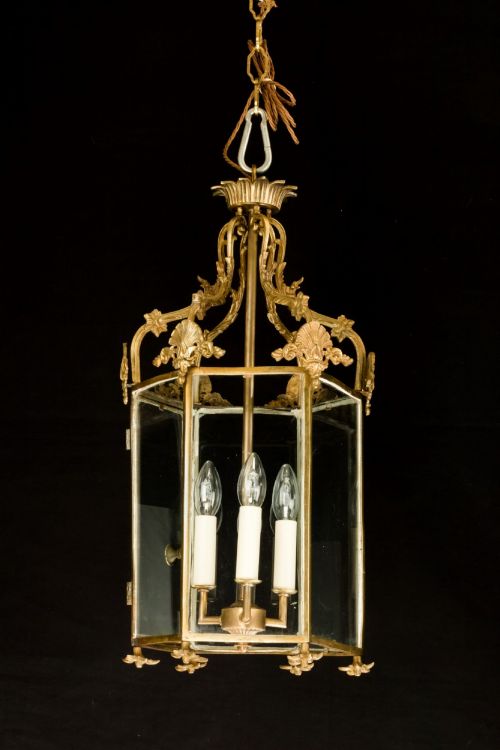
The assortment spans hanging lamps with glass panels, hexagonal or convex frames, and multi-light configurations suited for substantial hallways and reception rooms. These fixtures balance functional illumination with strict geometric forms and classical ornamentation.
Assessing quality and craftsmanship
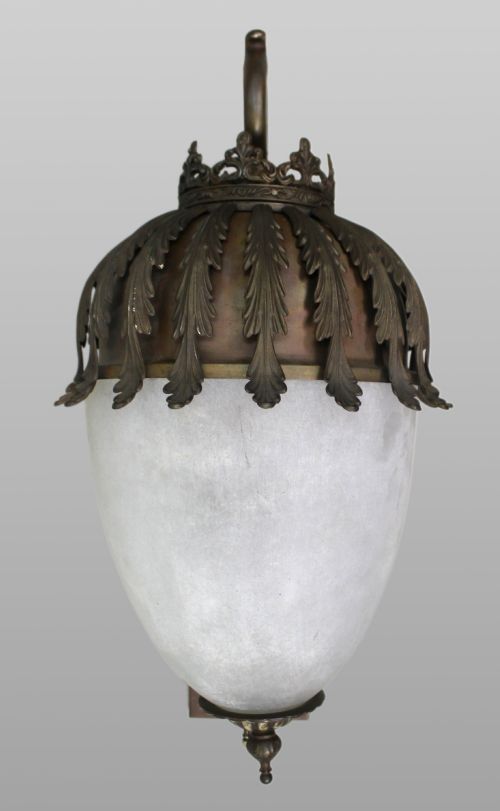
Quality in a neoclassical lantern rests upon the crispness of the metal casting, the weight of the brass or bronze framework, and the precision with which the glass panels are secured. Finer examples display cleanly rendered classical details, such as acanthus leaves or geometric borders, rather than soft or generalized surface decoration.
The integrity of the original joins, the retention of period gilding or patination, and the proportional balance of the frame distinguish superior pieces from standard production. A well-constructed lantern maintains structural rigidity across its suspension points and framing bars, ensuring safe hanging and enduring presence.
Listed periods concentrate heavily in the nineteenth and early twentieth centuries, including Edwardian and 1930s examples.
The Neoclassical Lantern Glossary
- Ormolu
- Gilded bronze used widely in decorative hardware and mountings during the eighteenth and nineteenth centuries. This finish involves applying a mercury and gold amalgam to bronze.
- Tole peinte
- Painted sheet metal, often associated with decorative trays and lantern bodies from the nineteenth century. It provides a smooth surface for applied colours and parcel gilt details.
- Convex glass
- Curved glass panes used in lantern bodies to project light outward and create a rounded profile. This technique required specialised glass-blowing and cutting skills.
- Parcel gilt
- A surface treatment where only specific portions of a metal object are covered in gold leaf. This technique highlights raised motifs against a darker base metal.
- Verdigris
- A green patina formed naturally on copper or brass through atmospheric exposure over time. Makers sometimes applied artificial verdigris to simulate age on exterior fixtures.
Neoclassical Lantern: Frequently Asked Questions
Where should I hang a neoclassical lantern?
These fixtures suit entrance halls, vestibules, and high-ceilinged corridors where their vertical proportions can be fully appreciated. They also function effectively in stairwells and formal reception rooms.
Ensure adequate ceiling height for hanging pendants, or select wall-mounted variants for narrower passages where clearance is limited.
How do I date a brass lantern?
Dating relies on examining the casting methods, the type of metal alloys used, and the assembly screws or wiring channels. Nineteenth-century examples often feature hand-finished components and heavy cast bronze elements.
Twentieth-century iterations may show standardised fixings and altered electrical wiring components added during later updates.
Are these lanterns wired for electricity?
Many surviving fixtures have been adapted for modern electrical supplies at various points in their history. Internal lamp holders are typically integrated into the central frame.
Buyers should consult a qualified electrician to inspect the internal wiring and ensure compatibility with current safety standards upon installation.
How do I clean a gilded bronze lantern?
Maintenance requires gentle dusting with a soft, dry cloth to prevent the accumulation of debris on the glass and metal surfaces. Avoid harsh chemical cleaners that can strip original gilding or patination.
Glass panels can be removed carefully for cleaning if the structural fixings allow safe disassembly.