
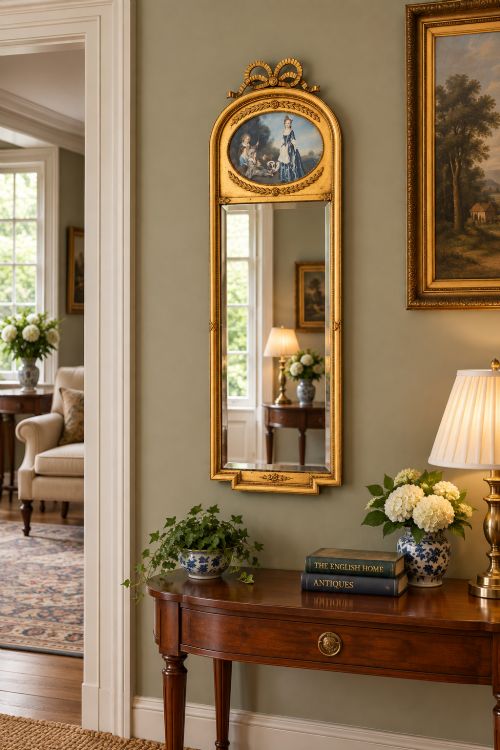
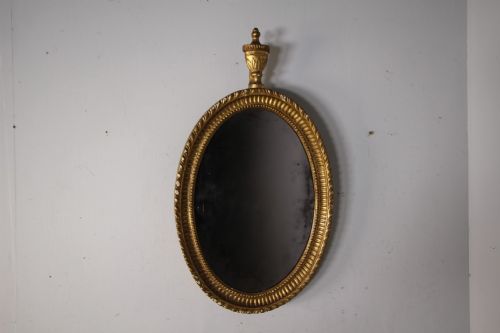
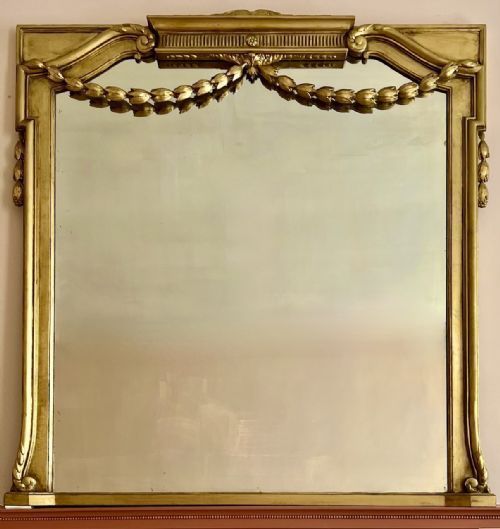
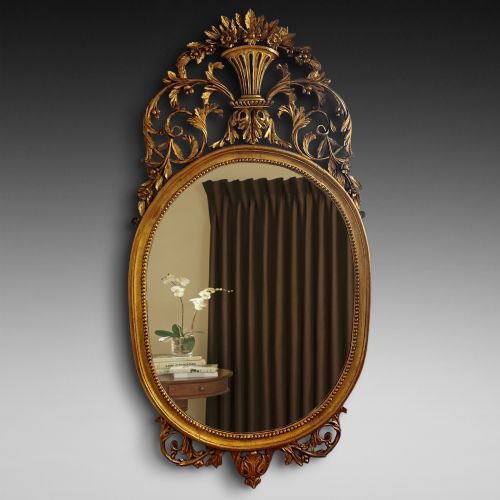
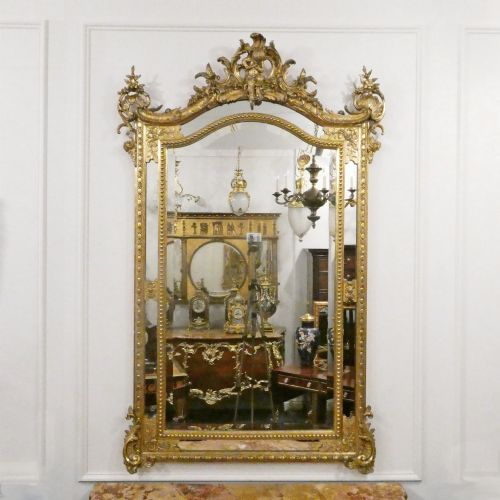
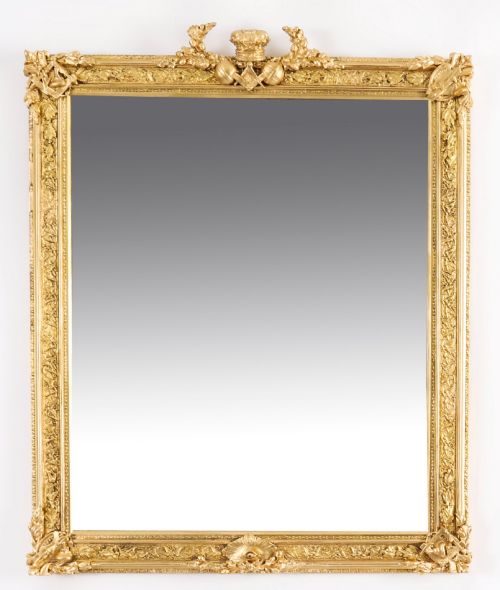
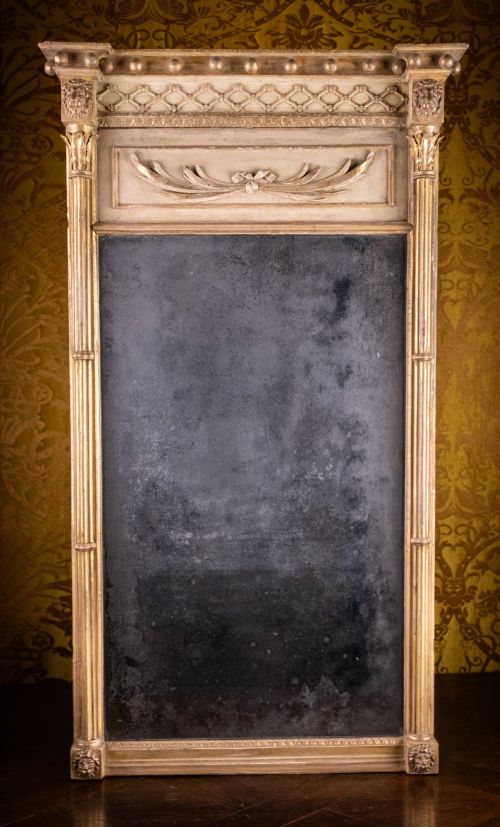
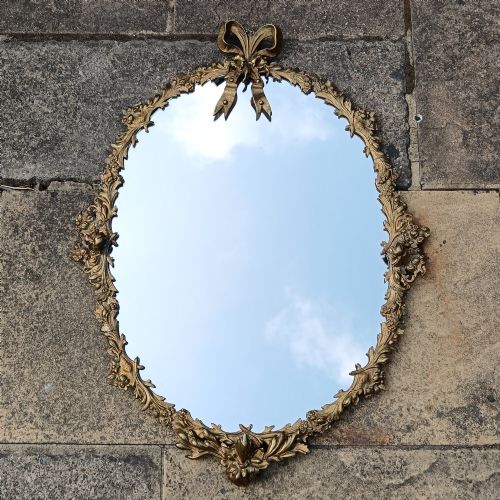


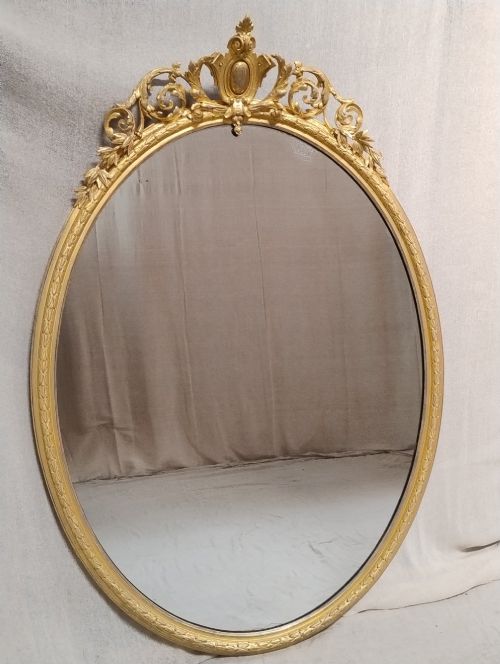
Neoclassical Gold Mirror
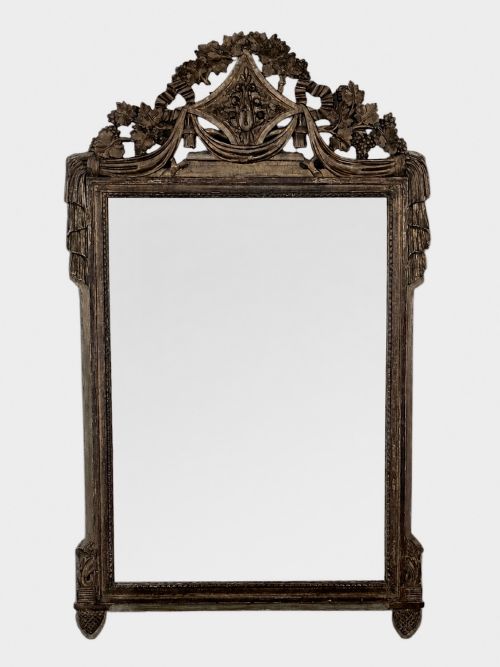
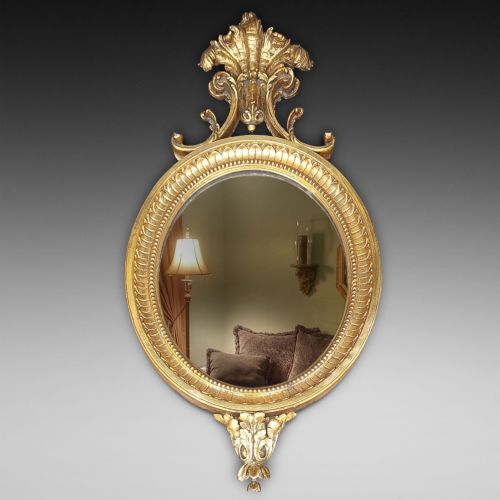
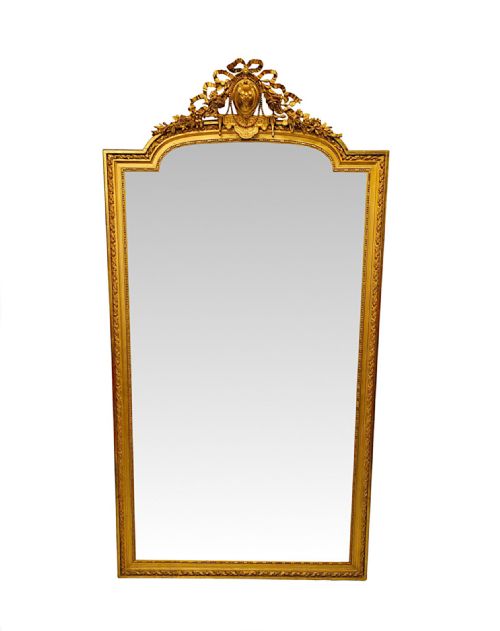
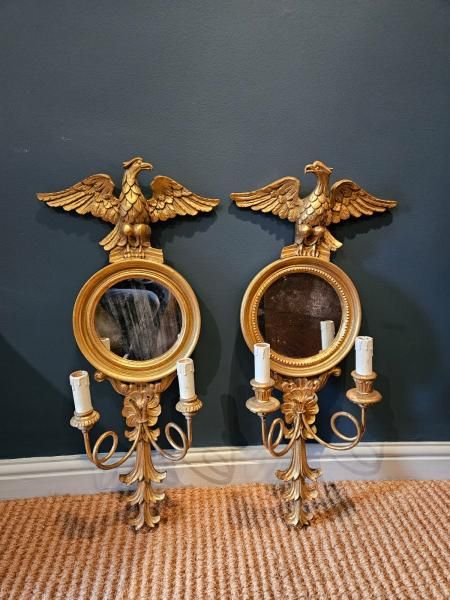
A neoclassical gold mirror brings symmetry and classical ornament to a room, drawing the eye with carved urns, swags, and gilt surfaces.
Neoclassical Gold Mirror
A neoclassical gold mirror combines structured classical proportion with gilded enrichment, drawing on eighteenth-century design principles. When searching for a neoclassical gold mirror, buyers encounter various forms including wall mirrors, overmantels, and tall pier glasses designed to reflect light across a room.
The pieces appearing on this page span the eighteenth, nineteenth, and early twentieth centuries, encompassing Georgian, Regency, Adam revival, and Louis XVI styles. English and French workshops dominate the selection, producing oval, rectangular, and architectural formats adorned with motifs such as lion masks and urns.
Materials and construction methods
Makers built the foundational frames using timber, frequently applying layers of gesso to create smooth surfaces for intricate relief decoration. Carved wooden elements combine with moulded composition ornament to achieve crisp architectural details like swags and classical drapery.
Finishes rely on gold leaf or paint applied over the prepared ground, while the reflective panels consist of traditional mercury glass or original bevelled mirror plates. Ebonising and parcel-gilt details also appear, providing contrast against the predominant gilded schemes.
Selected frames depict historical narratives, including one nineteenth-century overmantel illustrating Anania and her chariot.
Distinctions in craftsmanship
The calibre of a piece rests upon the crispness of the carved detail and the depth of the gilding. Hand-carved wooden enrichment exhibits sharper definition than moulded composition ornament, while genuine gold leaf retains a warmer lustre than modern metallic paints.
Proportion and structural integrity separate standard examples from finer works. Original mirror plates showing period characteristics like foxing or mercury silvering add authenticity compared to modern replacement glass.
The Neoclassical Gold Mirror Glossary
- Giltwood
- Wood that has been coated with gold leaf or metal leaf. This traditional finish provides the warm, reflective surface seen on period frames.
- Gesso
- A plaster mixture applied to wood frames to create a smooth surface for carving and gilding. It allows for crisp ornamental details.
- Composition
- A moulded mixture of whiting, resin, and oil pressed into ornaments. It was widely utilised as a cost-effective alternative to hand carving.
- Pier glass
- A tall mirror designed to hang on the wall space between windows. These pieces often coordinate with console tables placed below.
- Overmantel mirror
- A wide mirror made to hang above a fireplace mantelpiece. They frequently incorporate classical architectural motifs and landscape scenes.
Neoclassical Gold Mirror: Frequently Asked Questions
Where should I hang a neoclassical gold mirror?
These pieces suit positions above fireplace mantelpieces, in hallways, or as focal points on principal drawing-room walls where they amplify natural light.
Matching the scale of the mirror to the surrounding wall space ensures the architectural proportions remain balanced within the room.
How do I identify the period of a mirror?
Dating relies on examining the construction methods, the wood behind the gilding, and the characteristics of the glass plate.
Stylistic cues such as Adam revival motifs or Louis XVI proportions further indicate the design era of the workshop.
Are the mirror plates original?
Many surviving examples retain their original glass, which may display signs of age such as minor clouding, foxing, or mercury backing.
Inspecting the edge of the glass and the fitting at the back helps determine if the plate dates to the period of the frame.
How should I clean a antique gilt mirror?
Dust the gilded frame gently with a dry, soft brush to protect the delicate leaf or painted surface from moisture damage.
Clean the glass plate sparingly with a mild glass cleaner applied to a cloth rather than sprayed directly onto the surface.