



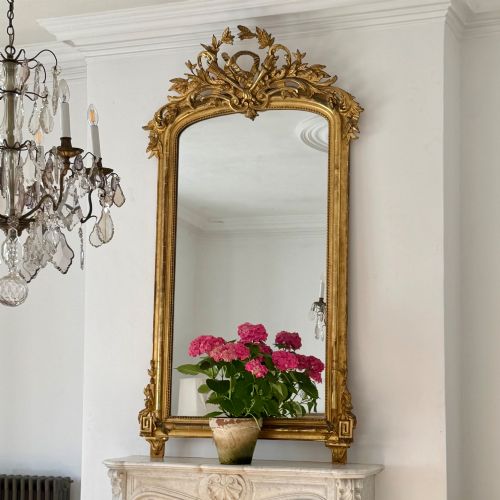


Neoclassical Giltwood Pier Mirrors
Neoclassical giltwood pier mirrors bring architectural symmetry and reflected light into a room, framed in carved gold and historic glass.
Neoclassical Giltwood Pier Mirrors
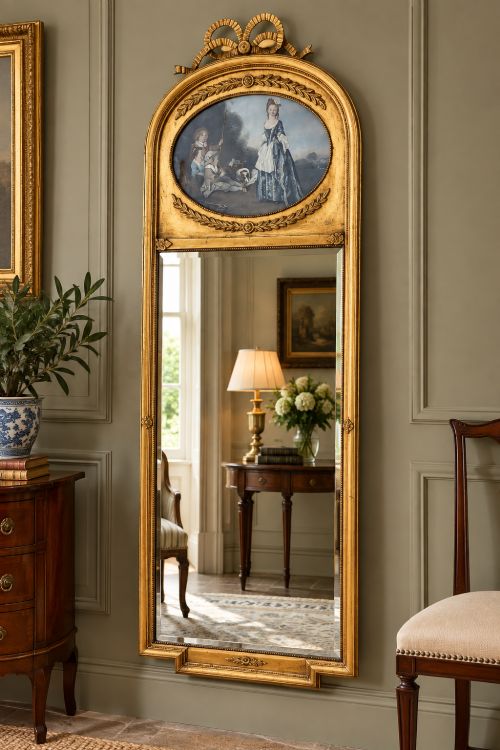
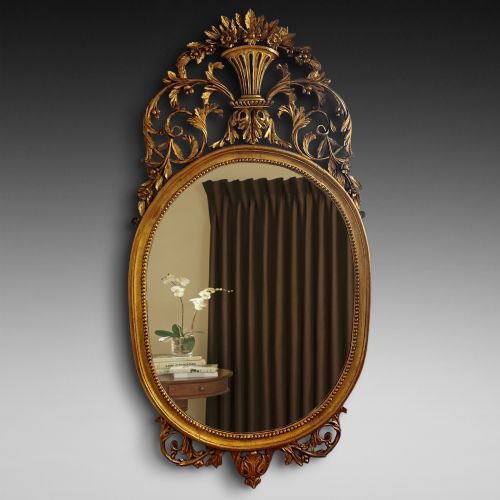
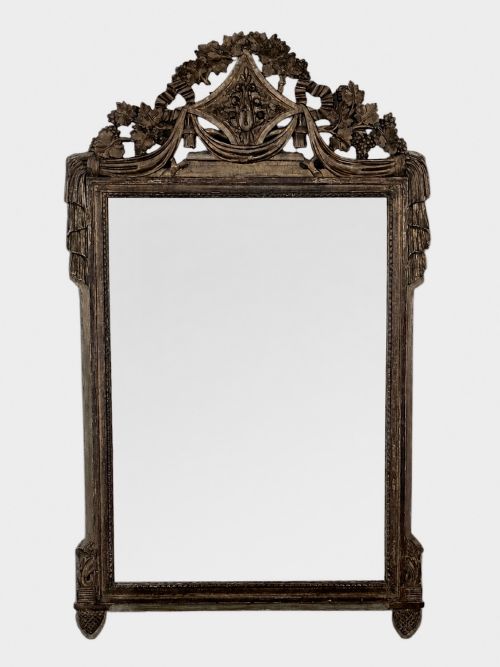
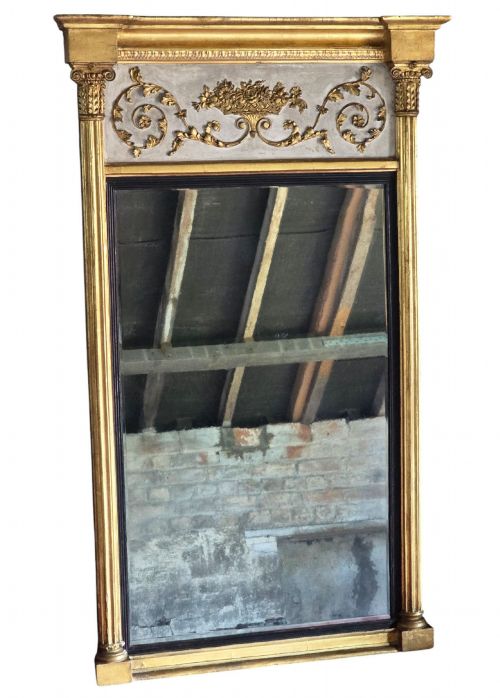
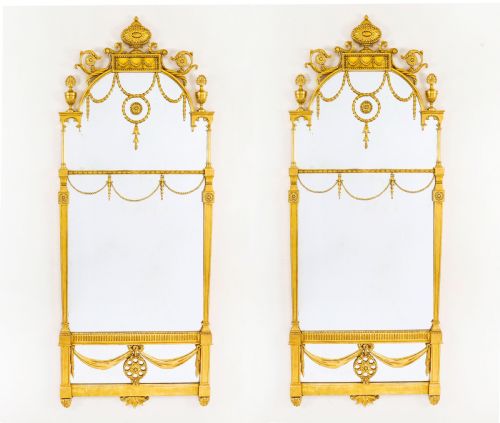
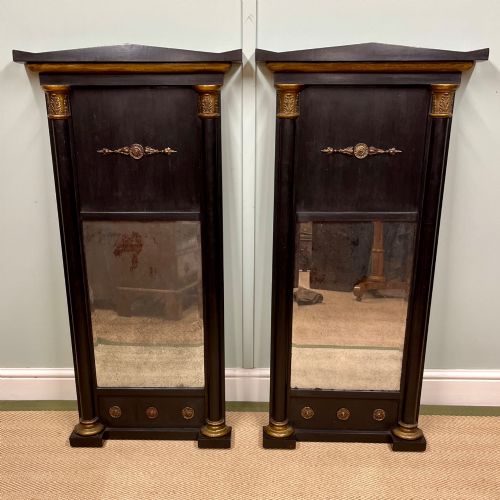
Neoclassical giltwood pier mirrors sit between windows or above console tables, matching the proportions of tall historic rooms. The pieces here span the eighteenth and nineteenth centuries, taking forms defined by George III, Regency, and Louis XVI designs.
Most examples on this page date from the nineteenth century, drawing on earlier Adam, French, and Swedish neoclassical traditions. Makers built these tall, narrow glass plates to draw daylight deep into dark townhouses and drawing rooms.
Surviving formats include standalone wall plates and matched sets paired with console tables. Buyers find oval, rectangular, and architectural formats featuring carved frames and original mirror plates.
Materials and construction
Carvers shaped softwoods and hardwoods before applying layers of gesso to build up crisp relief detail. Artisans then laid gold leaf or used composition ornaments over the prepared wooden carcase.
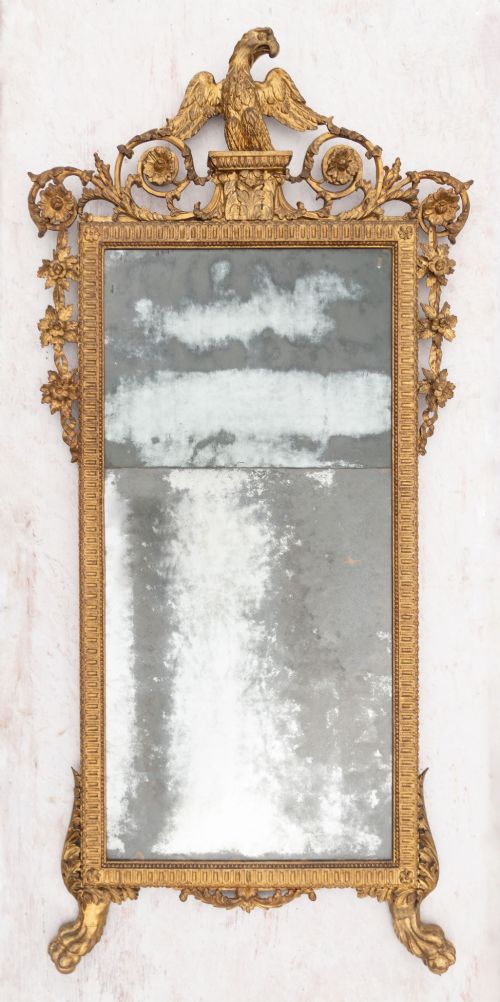
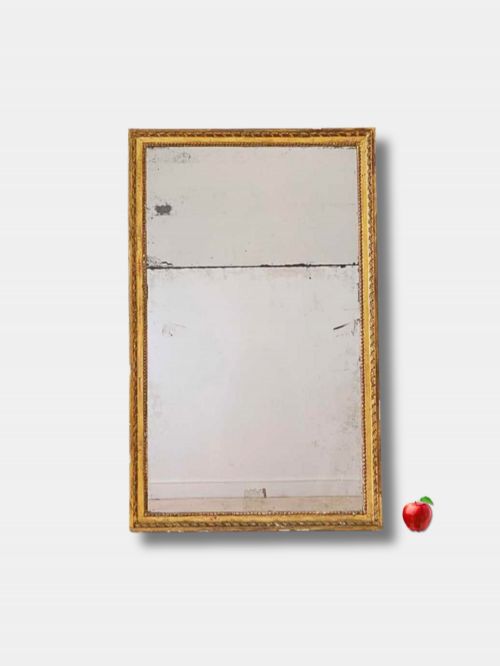
Early plates utilised mercury silvering behind mirror glass, creating characteristic dark speckling and soft reflection. Later nineteenth-century examples often use standard silvered glass plates within painted and gilded wooden frames.
Listings include examples from the seventeenth, eighteenth, and nineteenth centuries, incorporating George III, Regency, and Louis XVI styles.
Evaluating the standard
The depth and sharpness of the hand-carved gesso relief separate superior frames from simpler moulded pieces. Crisp floral swags, urns, and neoclassical motifs indicate skilled workshop execution.
The survival of original mercury glass plates and untouched historic gilding determines the integrity of an object. Later re-gilding or replaced mirror plates alter the visual weight and historical character of the piece.
The Neoclassical Giltwood Pier Mirrors Glossary
- Pier glass
- A tall mirror designed to hang on the narrow pier of wall between two windows. This placement maximised the distribution of natural light in a period room.
- Gesso
- A mixture of chalk, gypsum, and size used as a base for gilding on wood. Carvers incised and moulded this versatile substance to create relief ornament.
- Mercury glass
- Mirror glass backed with a tin and mercury amalgam before silver nitrate took over in the nineteenth century. It yields a characteristic mottled reflection.
- Giltwood
- Timber covered with thin sheets of gold leaf over a prepared ground. It provides a durable metallic surface that catches candlelight and daylight.
- Console table
- A table supported by brackets or legs against a wall, frequently paired beneath a matching mirror. Surviving sets show unified neoclassical design.
- Adam style
- A neoclassical design vocabulary inspired by Robert Adam, featuring urns, husks, and delicate swags. It dominated British interiors during the Georgian period.
Neoclassical Giltwood Pier Mirrors: Frequently Asked Questions
Where should I hang a pier mirror?
These tall mirrors suit the narrow wall space between windows or directly above a console table. Their vertical proportions balance high ceilings and draw light across the room.
Historically, they anchored the central axis of a formal reception room, often reflecting a matching table or fireplace.
How do I spot original mercury glass?
Original mercury glass shows soft, dark clouding, tiny pinpoint speckles, and a warm, uneven reflection. Modern replacement glass appears clear, flat, and uniform.
Examining the back of the frame helps confirm whether the original plate remains secured with old wood glazier pins.
What defines the neoclassical style here?
Neoclassical design draws on classical Greek and Roman architecture, favouring symmetry, urns, acanthus leaves, and ribbon swags. Frames display geometric discipline rather than exuberant rococo curves.
Pieces from the George III, Regency, and Louis XVI periods showcase these restrained, architectural proportions.
Can these mirrors be cleaned safely?
Dust the carved giltwood gently with a dry, soft brush to protect the delicate gold leaf and gesso. Moisture can lift old gilding from its wooden base.
Clean the glass plate sparingly with a soft cloth and mild solution, taking care not to let liquid seep behind the edges of the frame.