


Neoclassical French Porcelain
Neoclassical French porcelain brings together soft-paste bodies, gilt bronze mounts, and classical restraint for interiors seeking formal symmetry and refined detail.
Neoclassical French Porcelain
Neoclassical French porcelain encompasses decorative objects created across the eighteenth and nineteenth centuries, drawing heavily on classical antiquity and Louis XVI design. Collectors encounter mantel clocks, vases, urns, and portrait busts mounted in ormolu or gilt bronze.
The pieces appearing on this page span the 18th century, the 19th century, and the early 20th century, capturing periods such as Louis XVI, French Empire, and later revivals. Table lamps, garniture vases, and sculptural busts dominate the selection.
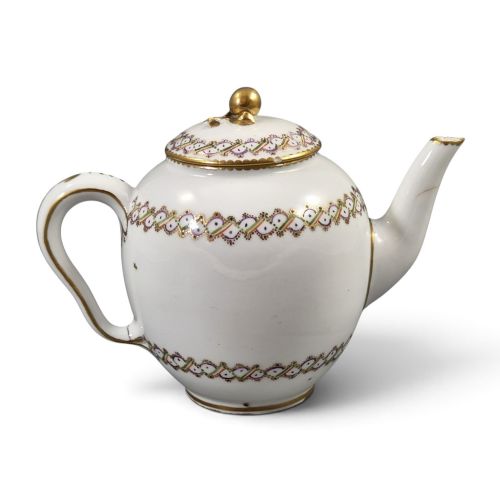
Works originate from prominent manufactories including Sèvres, Sceaux, and Paris, alongside makers like Japy Freres. Formats range from utilitarian teapots to grand decorative urns and cabinets set with porcelain plaques.
Materials and methods
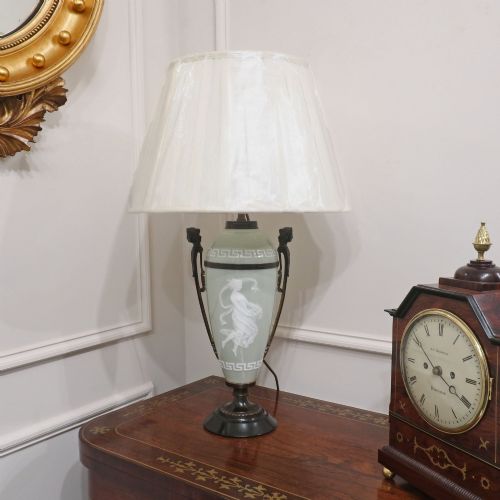
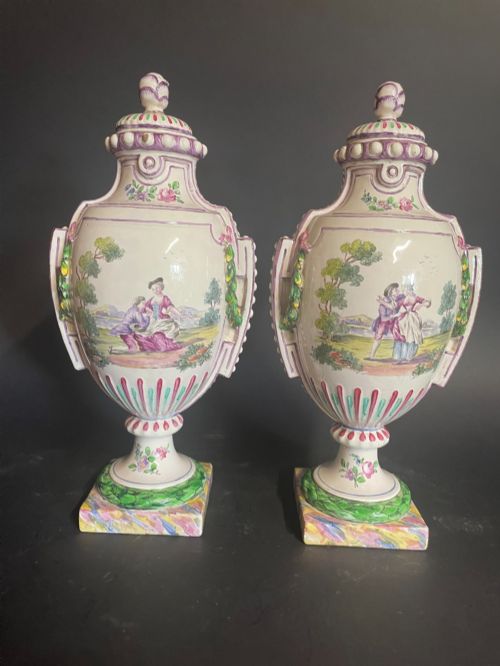
Makers shaped hard-paste and soft-paste porcelain bodies, frequently applying monochrome glazes in blue or pink alongside hand-painted scenes and delicate white bisque surfaces. Pate-sur-pate decoration builds low relief designs in white slip upon a contrasting coloured ground.
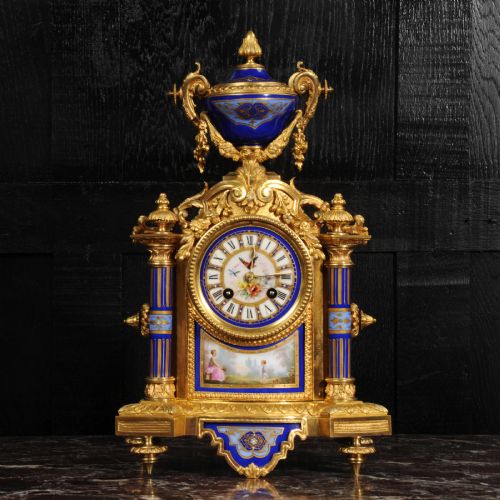
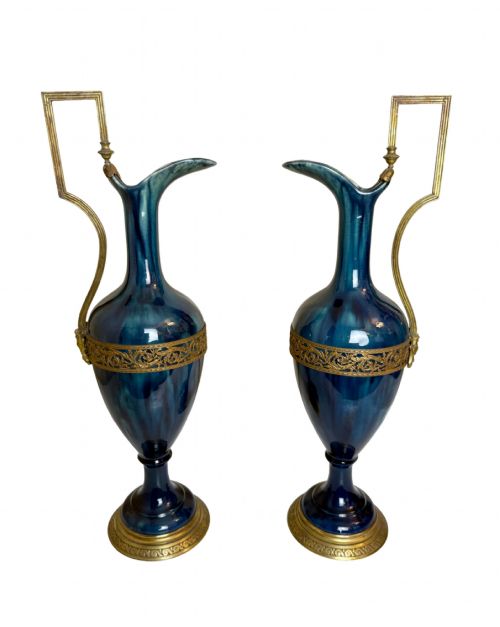
Metal mounts utilise ormolu, gilt bronze, and brass to frame the ceramic elements, securing handles, bases, and bezels around clocks and urns. Gilding with gold leaf highlights moulded details and frames painted panels.
Listings feature porcelain bodies combined with ormolu, gilt bronze, and brass, spanning the eighteenth to the twentieth centuries.
Judging quality and execution
The weight and chasing of the ormolu or gilt bronze mounts distinguish superior works from standard production. Precision in the mechanical movements of mantel clocks and the integration of ceramic bodies into metal frames indicate workshop competence.
Sèvres·Japy Freres·Sceaux Faience·Manufacture de la Reine
The Neoclassical French Porcelain Glossary
- Bisque porcelain
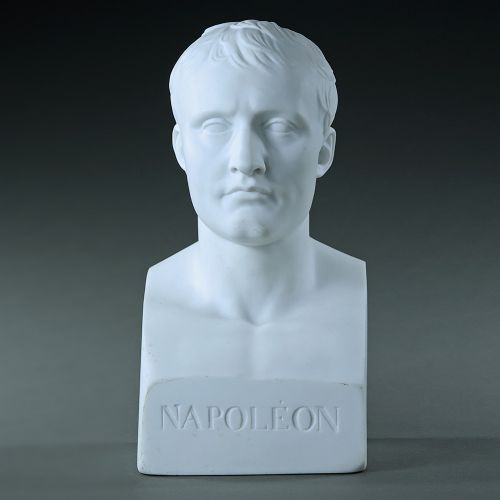
- Unglazed porcelain fired once to produce a matte, white surface resembling marble. It was frequently utilised for sculptural busts and figures.
- Ormolu
- Finely ground high-carat gold applied to a bronze base using mercury amalgamation, creating a rich golden finish. It provides mounts for clocks, vases, and lamps.
- Pate-sur-pate
- A ceramic technique where successive layers of white liquid clay are painted onto a coloured body before firing. This builds delicate relief decoration with translucent qualities.
- Trembleuse
- A cup and saucer featuring a raised ring in the centre to hold the vessel securely. It was designed to prevent spills during breakfast in bed.
- Medici vase
- A bell-shaped krater form on a pedestal foot, decorated with classical reliefs. It became a standard decorative shape in porcelain and bronze.
Neoclassical French Porcelain: Frequently Asked Questions
How do I identify a Sèvres piece?
Look for factory marks on the underside, though painted details and paste quality offer strong indicators. Genuine works often feature finely rendered hand-painted scenes paired with meticulous gilding.
Many nineteenth-century pieces adopt the Sèvres style without being direct products of the royal manufactory. Examine the sharpness of the ormolu mounts and the weight of the porcelain body for clues.
What is the difference between bisque and glazed porcelain?
Bisque porcelain remains unglazed after firing, presenting a tactile, matte white finish that mimics carved marble. It is particularly common on portrait busts and classical figures.
Glazed porcelain receives a vitreous coating that seals the ceramic body, providing a smooth, shiny surface suitable for painted decoration and vibrant colours.
How were antique French mantel clocks powered?
These clocks rely on brass mechanical movements driven by springs and regulated by pendulums or balances. They require periodic winding using a dedicated key.
Many surviving movements have undergone professional restoration to ensure reliable timekeeping while preserving their original escapements and ormolu cases.
Can antique porcelain lamps be used safely today?
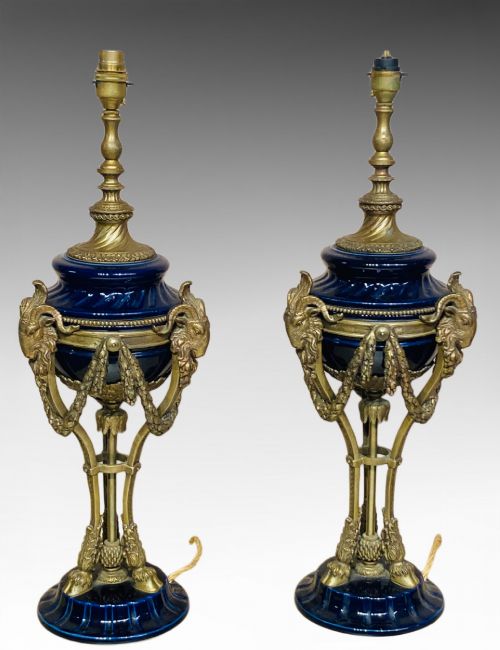
Most porcelain lamps listed have been adapted from vases or urns, sometimes incorporating modern electrical wiring while retaining the antique ceramic and bronze components.
Buyers should consult a qualified electrician to check the internal wiring and ensure the lamp meets current safety standards before plugging it in.
Where should I place a porcelain urn or vase?
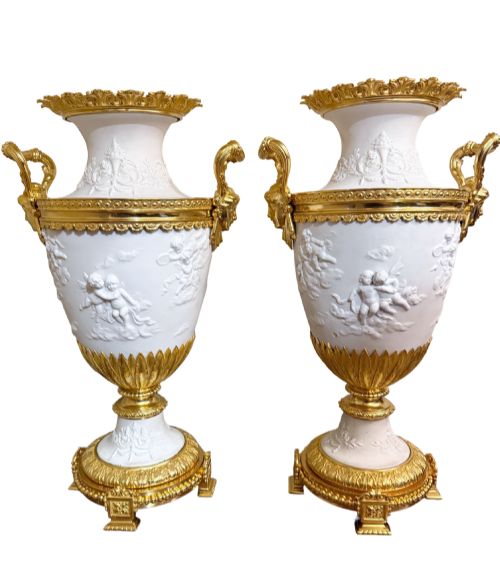
Garniture urns look best displayed on sturdy mantelpieces, sideboards, or dedicated pedestals where their painted panels and gilt mounts are visible. Avoid placing them in direct sunlight to protect the pigments.
Because porcelain and ormolu can be heavy and fragile, select a stable surface away from high-traffic areas or vibrations from doors.