

Neoclassical French Armchairs
Neoclassical French armchairs bring strict architectural lines and restrained classical ornament into a room, offering both formal symmetry and grounded comfort.
Neoclassical French Armchairs
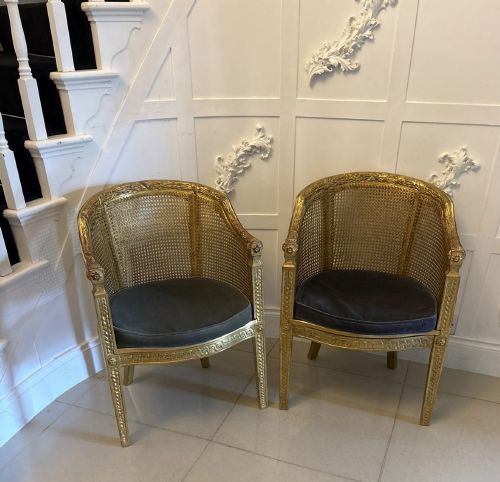
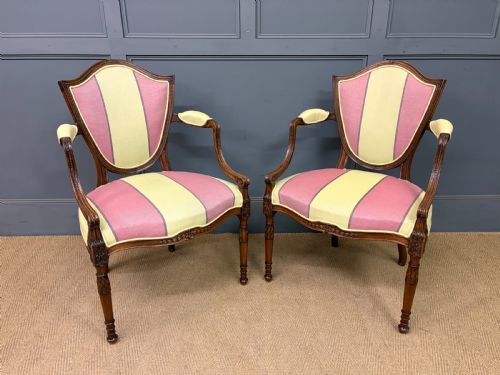
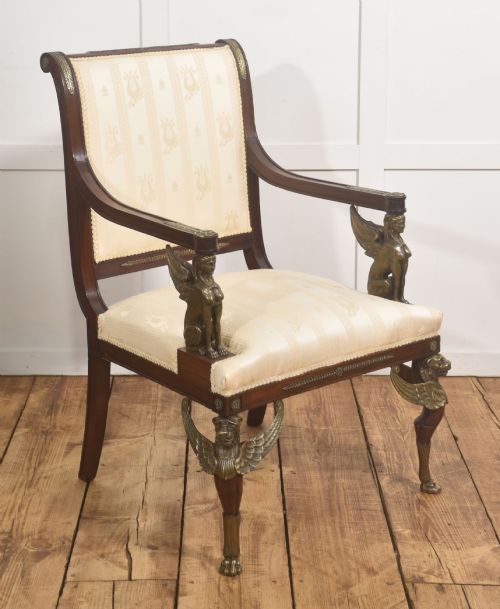
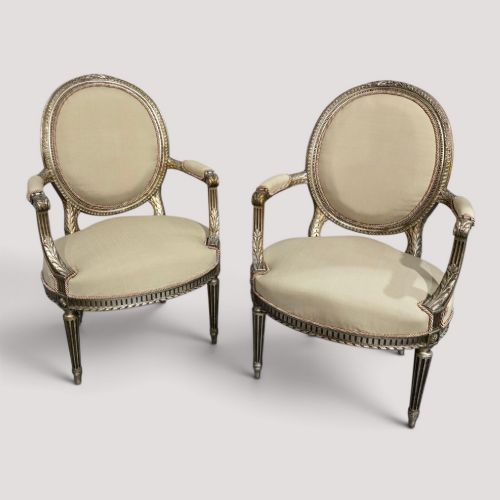
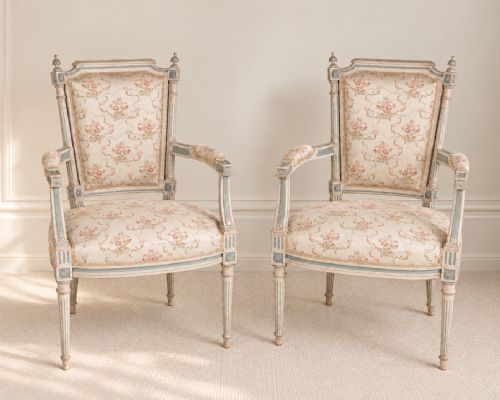
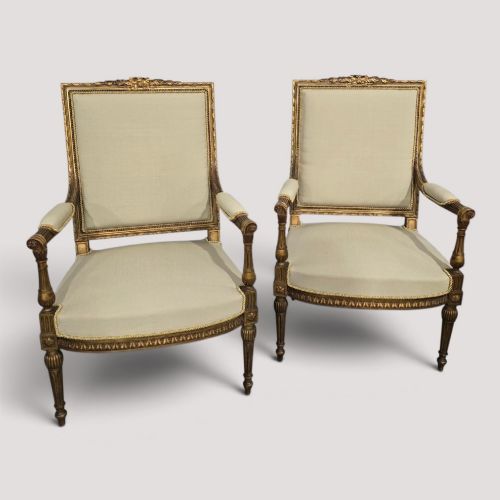
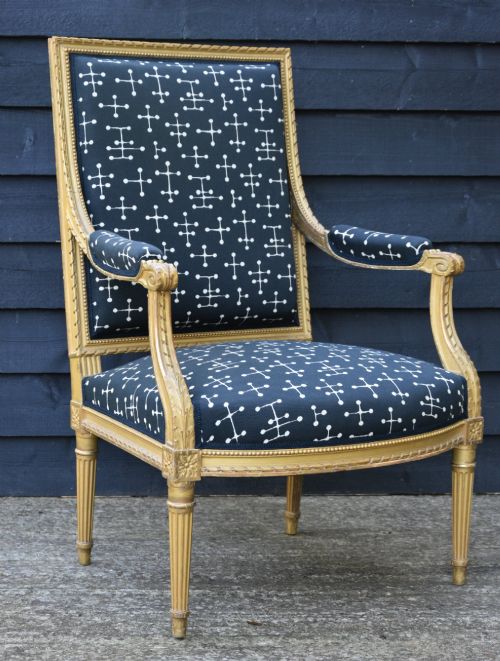
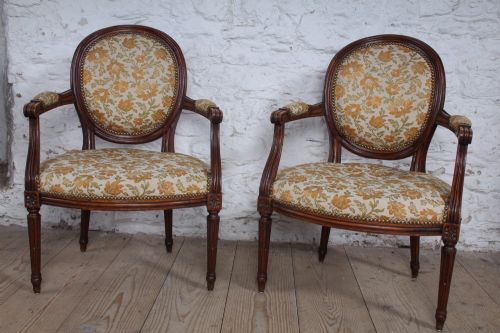
Neoclassical French armchairs draw upon the rigid geometry of the late eighteenth century, referencing the reigns of Louis XVI, the Directoire, and the French Empire. You will find that pieces on this page span from genuine late eighteenth-century examples to late nineteenth-century revivals and early twentieth-century interpretations.
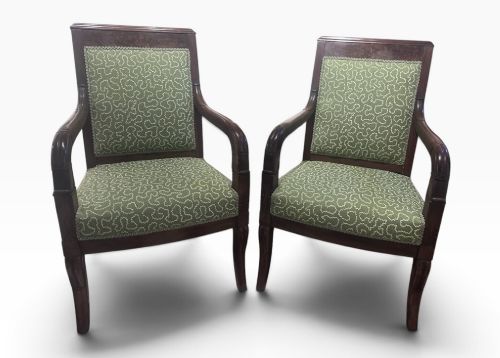
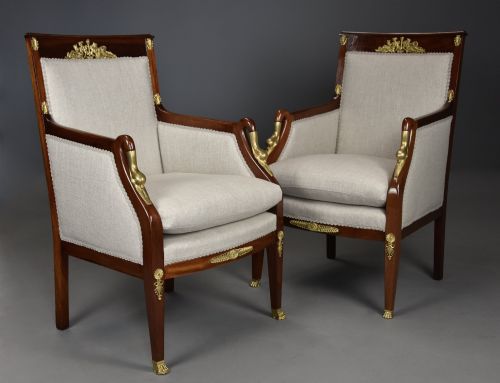
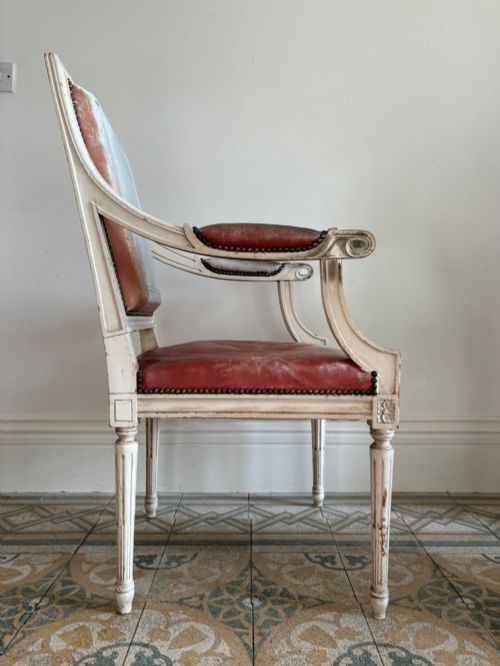
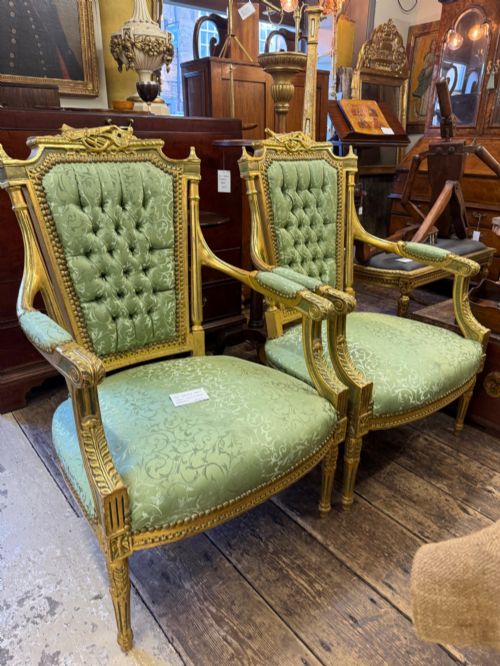
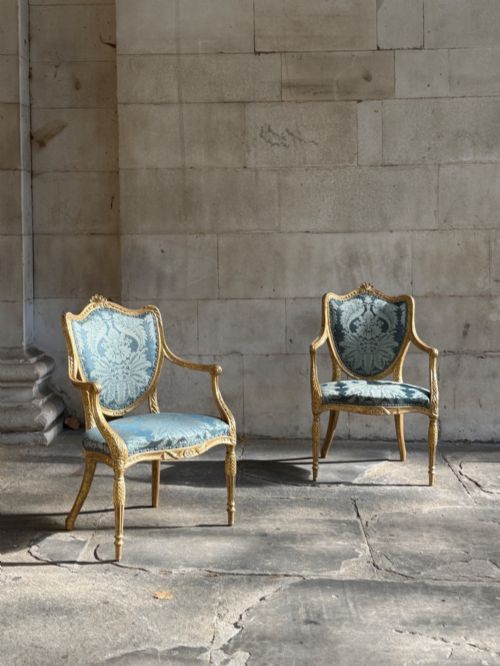
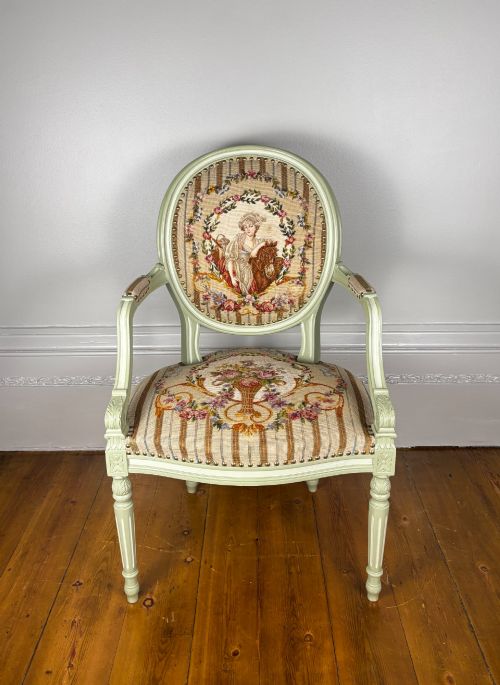
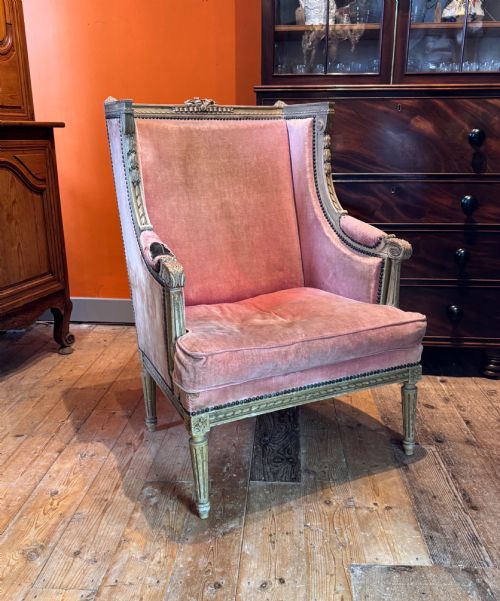
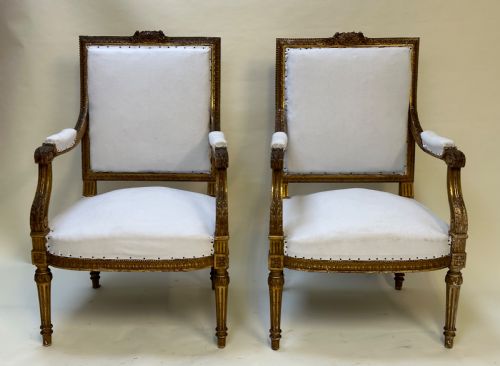
The forms divide into open armchairs known as fauteuils, enclosed bergères, and specialised desk or salon seating. Frames emerge in carved and gilded wood, painted finishes, and dark polished mahogany, often appearing in pairs or larger suites.
How they were made
Carpenters and joiners shaped solid frames from beech, walnut, or mahogany, utilising mortise and tenon joinery to bear structural weight. Giltwood examples received layers of gesso before applying thin gold leaf, while mahogany frames were rubbed to a deep sheen.
Upholstery relied on traditional stuffing techniques over webbing or squab cushions, finished with silk damask, tapestry panels, or leather. Ormolu mounts and brass details were cast and chased separately before attachment to Empire style frames.
Neoclassical French Armchairs Retail Price Guide 2026
Typical asking prices for neoclassical french armchairs among the pieces listed under this phrase on Sellingantiques today, from the lower quarter to the upper quarter. They describe what is for sale here now, not the wider market.
Periods represented span from eighteenth-century originals through nineteenth-century revivals into early twentieth-century interpretations.
What varies in quality
The crispness of the hand-carved ornament dictates the visual success of the frame, distinguishing sharp acanthus leaves and fluted columns from soft, shallow milling. Original surface treatments, whether aged gilding or faded old paint, hold greater integrity than later refinishing.
Structural heft and the clever integration of arm supports into the seat rail separate standard commercial production from the output of skilled workshops. Balance in the proportions of the backrest to the seat ensures the piece sits correctly in a room.
Jacob-Desmalter·Henri Jacob·Thomas Chippendale
The Neoclassical French Armchairs Glossary
- Fauteuil
- An open-framed upholstered armchair with exposed wooden arms, typical of French seating design. The armrests often pad the top where the elbow rests.
- Bergère
- An enclosed armchair featuring upholstered sides filled in with fabric or cane. This form offers a more enveloping sit than an open armchair.
- Ormolu
- Gilt bronze decorative mounts applied to furniture, especially prominent in Empire and revival pieces. The technique involves mercury gilding cast brass elements.
- Giltwood
- Wood coated with gold leaf over a prepared gesso ground. It reflects light and creates a high-status decorative finish.
- Directoire
- A transitional style bridging Louis XVI and the French Empire, marked by austere classical restraint. Decoration borrows heavily from ancient Roman and Greek motifs.
Neoclassical French Armchairs: Frequently Asked Questions
How do I identify a Louis XVI style armchair?
Look for straight fluted legs, geometric frames, and classical motifs like rosettes and bead reels. The overall silhouette relies on squares, circles, and ovals rather than asymmetrical curves.
Carved ribbons, pinecones, and laurel wreaths frequently decorate the crest rail and seat frame. These elements separate the neoclassical aesthetic from earlier Rococo excesses.
Where did these armchairs sit historically?
These chairs belonged in the formal reception rooms, salons, and bedchambers of grand townhouses and chateaux. They provided seating for conversation and card games.
Pairs and matching suites allowed symmetrical arrangement along the walls of a salon. Desk chairs served private studies and libraries.
How do I care for antique upholstery and giltwood?
Keep gilded and painted wood surfaces away from direct sunlight and fluctuating heat sources to prevent the gesso or paint from cracking. Dust gently with a dry, soft brush.
Protect historic textiles and leather by limiting heavy abrasion and maintaining stable indoor humidity. Professional conservation is recommended for fragile silk damask or tapestries.