


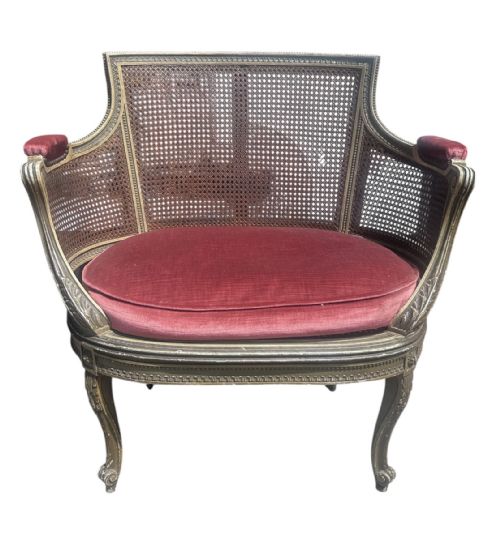


Antique Caned Tub Armchairs
Antique caned tub armchairs combine curved enclosures with woven seating, offering compact grace and supportive comfort for period interiors.
Antique Caned Tub Armchairs
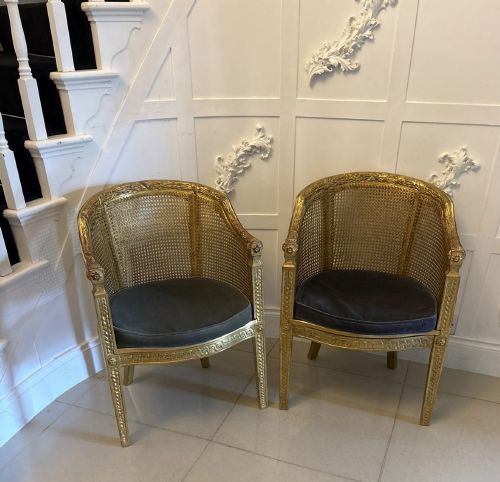
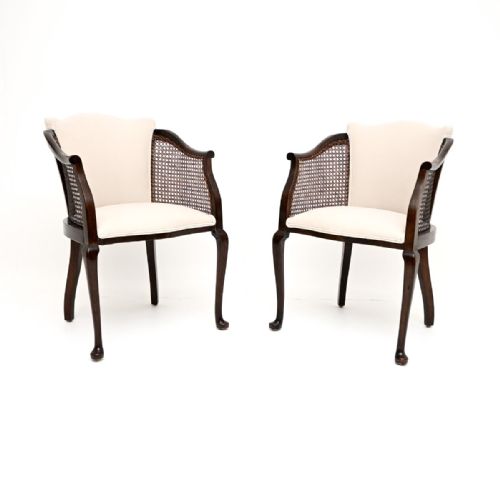
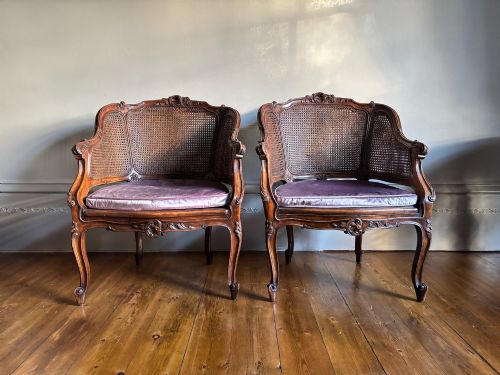
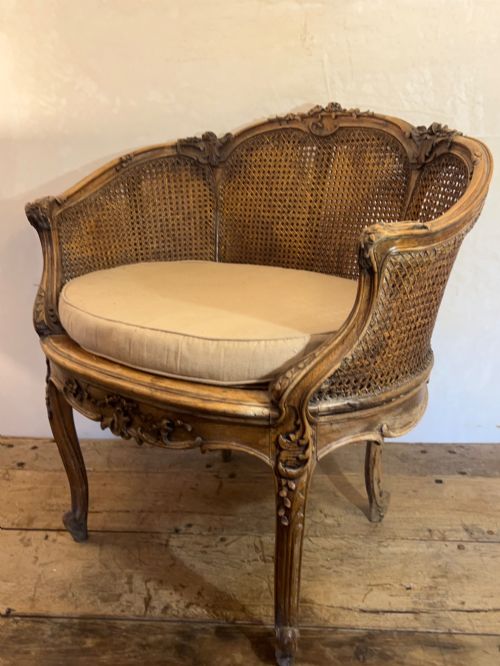
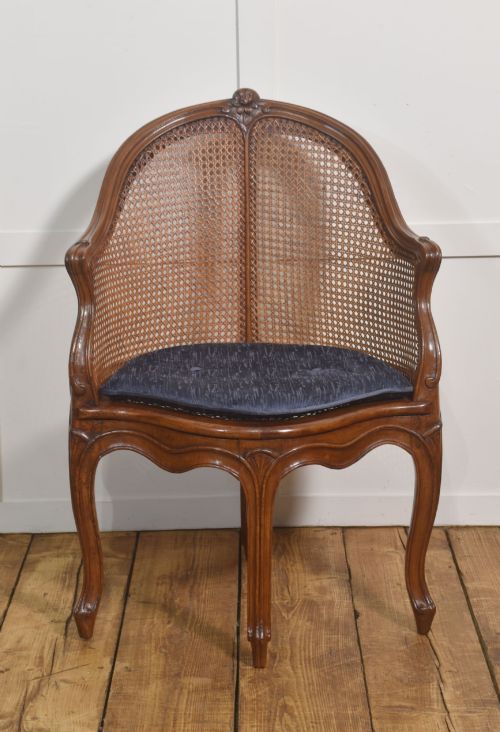
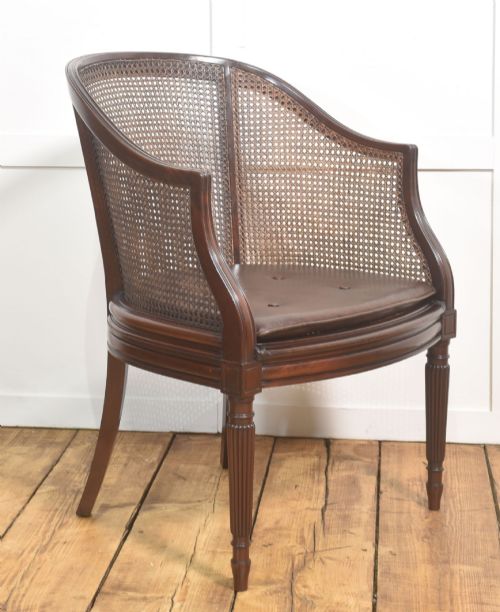
When you search for antique caned tub armchairs, you encounter deep, curved seats designed to wrap comfortably around the sitter. These pieces appear in forms ranging from compact Edwardian library models to elaborate nineteenth-century French styles.
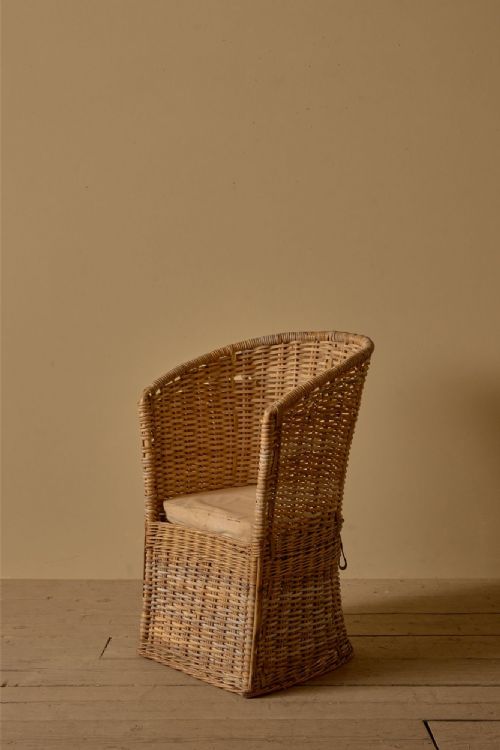
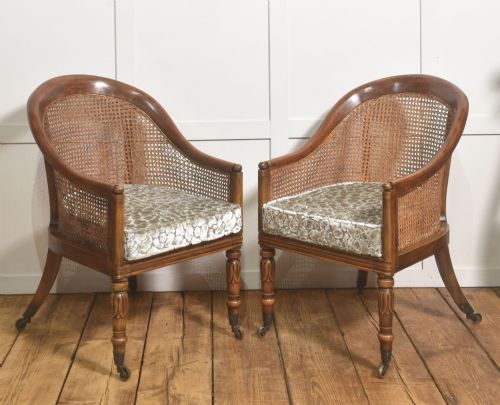
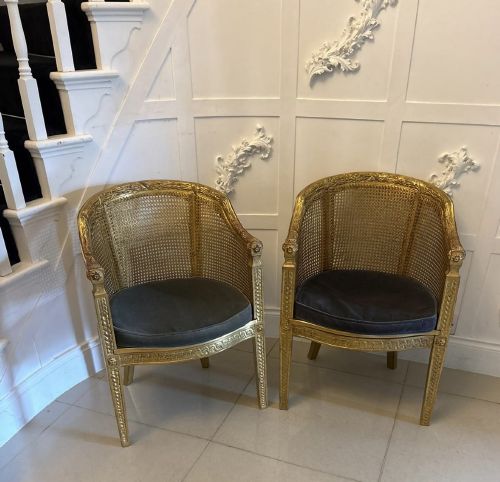
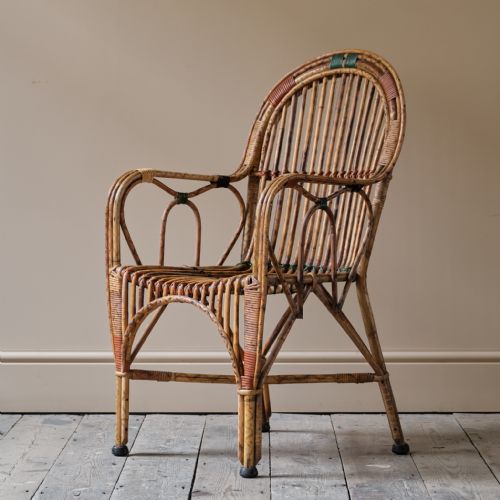
The selection on this page centres heavily on mahogany and walnut frames, frequently accompanied by Louis XV revival details or Regency proportions. You will also find painted surfaces, giltwood finishes, and occasional wicker variations from the early twentieth century.
Origin plays a defining role in these items, with English mahogany library versions sitting alongside French giltwood and walnut bergères. Whether designated as salon chairs, library armchairs, or childs armchairs, each shares the characteristic rounded back.
How they were made
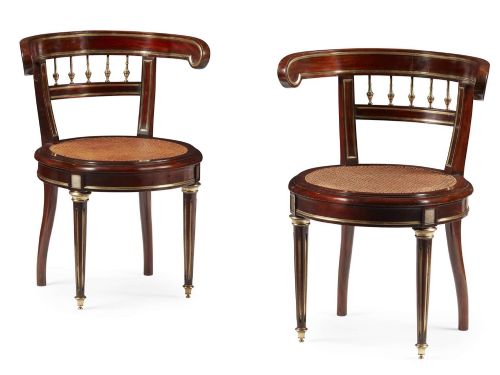
Cabinetmakers constructed the sweeping frames of these chairs using durable timbers such as mahogany, walnut, satinwood, and oak. Some pieces feature ebonised finishes or simulated rosewood graining to mimic more expensive exotic hardwoods.
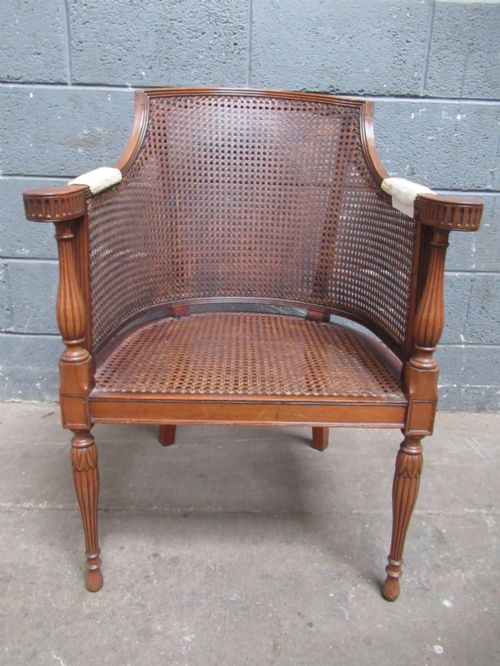
The characteristic back and side panels utilise woven cane or rattan, threaded tightly through pre-drilled holes in the wooden frame. Upholstered drop-in cushions in velvet, leather, or patterned fabric complete the seat, sometimes supported by brass fittings.
Antique Caned Tub Armchairs Retail Price Guide 2026
Typical asking prices for caned tub armchairs among the pieces listed under this phrase on Sellingantiques today, from the lower quarter to the upper quarter. They describe what is for sale here now, not the wider market.
Periods represented span from the Georgian era through Regency, Victorian, and Edwardian times up to the 1930s and 1940s.
What varies in quality
The refinement of the wooden carving dictates the initial visual impact, distinguishing fluidly shaped Louis XV style frames from simpler utilitarian seating. Crisp lines on moulded mahogany and clean joints show superior workshop execution.
The tension and regularity of the woven cane panels significantly affect the standard of the piece. Uniform hand-woven patterns that remain taut across curved tub backs represent higher levels of craftsmanship than loose or uneven strands.
Gillows·Dryad of Leicester
The Antique Caned Tub Armchairs Glossary
- Bergere
- A closed armchair with upholstered or caned sides and a built-in seat cushion. This French form became popular in England during the Regency and Victorian periods.
- Tub chair
- An armchair featuring a continuous curved back and arms forming a deep, protective semicircle. The design provides enclosed seating comfort.
- Caning
- A seating material woven from rattan peel or split cane. It offers lightweight structural strength and flexibility for curved chair backs.
- Giltwood
- Timber coated with a thin layer of gold leaf or gesso preparation. This decorative finish appears frequently on French salon furniture.
Antique Caned Tub Armchairs: Frequently Asked Questions
What is a bergere chair?
A bergere is a French-style upholstered armchair with enclosed sides, typically featuring exposed wooden frames in mahogany, walnut, or giltwood.
Unlike standard open armchairs, these pieces wrap around the occupant and usually incorporate a loose seat cushion above a caned or upholstered base.
How do I date an antique tub chair?
Dating relies on examining the timber species, framing style, and turning details against known historical periods. Regency and Victorian examples show distinct architectural proportions compared to later Edwardian pieces.
The presence of original canework, specific upholstery tacks, and maker signatures can further narrow the decade of manufacture.
Where should I place a tub armchair?
These compact armchairs suit studies, libraries, and bedrooms where deep seating is desired without occupying excessive floor space. Their curved backs look effective when positioned away from walls in open room layouts.
Pairing them with low writing desks or reading tables highlights their rounded silhouette.
How do I care for antique cane?
Antique cane requires stable indoor humidity to prevent the natural rattan fibres from becoming brittle and snapping. Avoid placing these chairs near direct heat sources or in overly dry environments.
Occasional gentle dusting with a soft brush keeps the woven panels clear without damaging the aged material.