


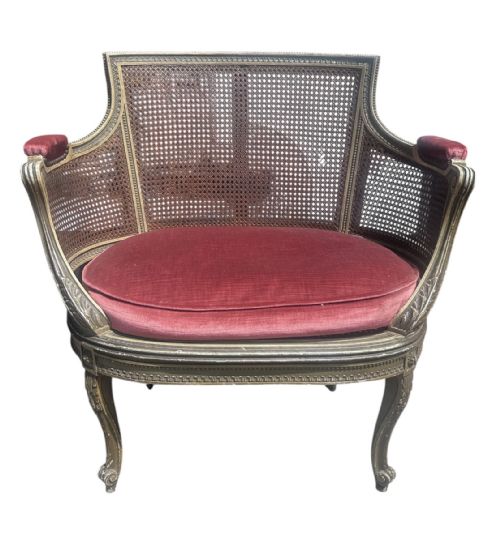


Caned Bergere Tub Chairs
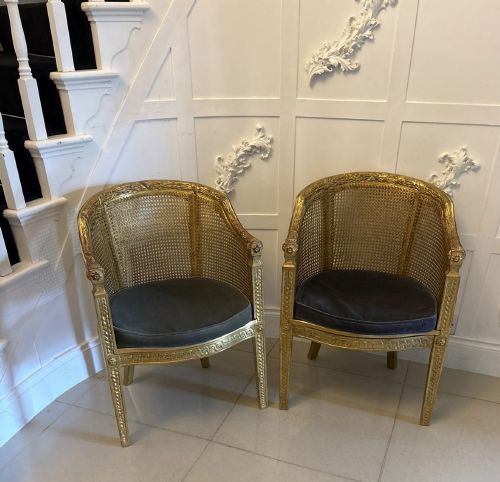
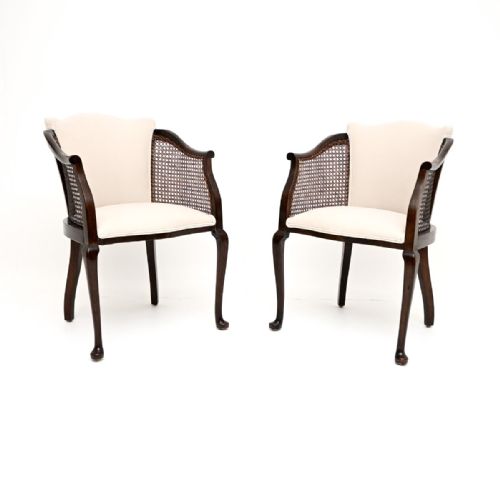
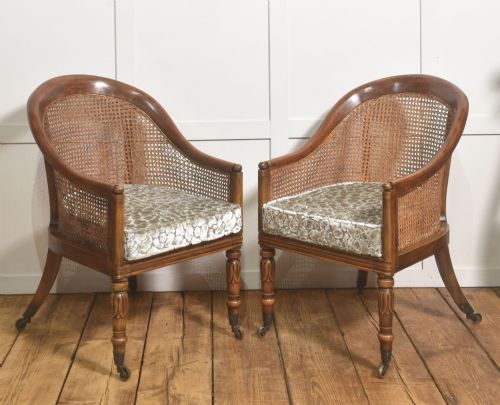
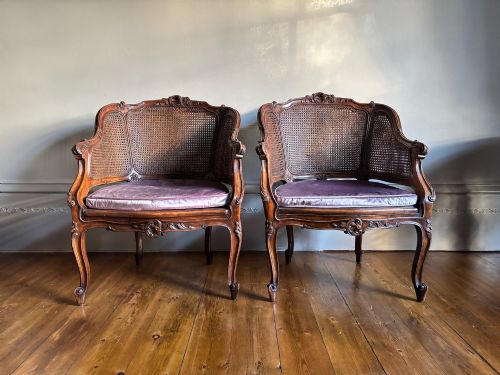
These caned bergere tub chairs offer enclosed comfort and woven cane panels, bringing classic library elegance and French revival styling straight into your sitting room.
Caned Bergere Tub Chairs
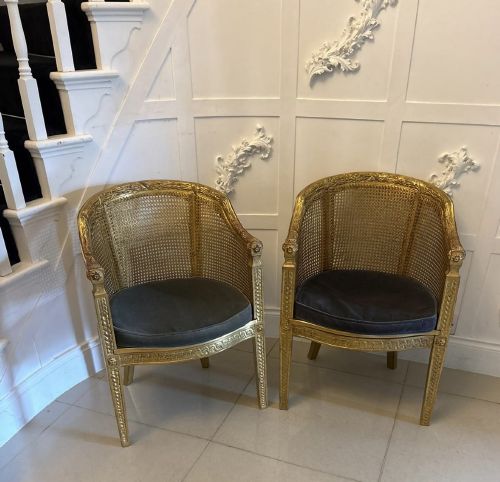
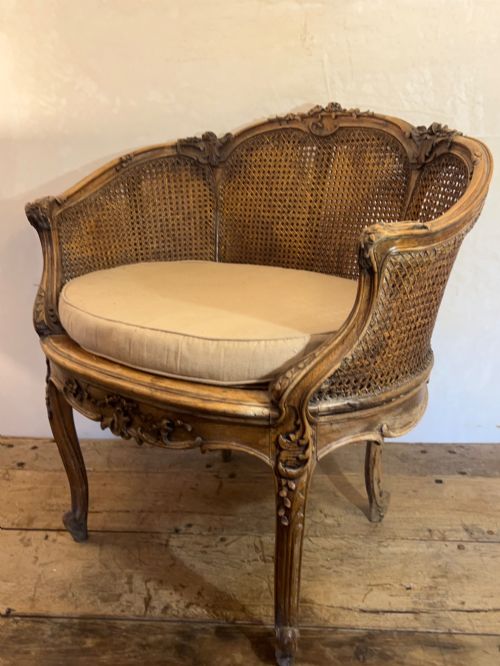
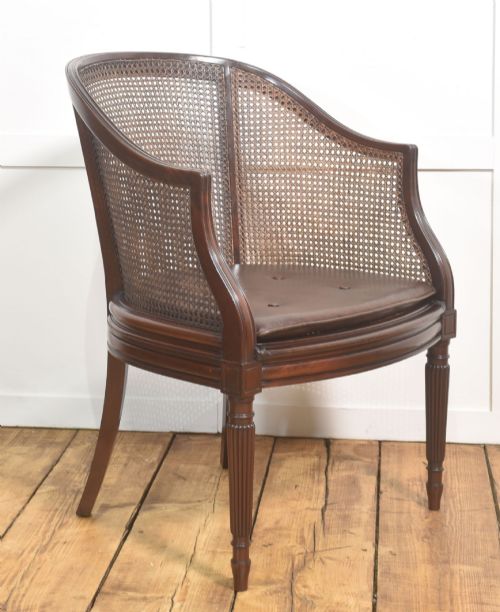
Caned bergere tub chairs encompass deeply curved library armchairs and French revival seating dating from the Georgian, Regency, and Edwardian eras, through to the early twentieth century. You will most frequently encounter pairs of Edwardian mahogany models alongside nineteenth century French giltwood and Louis XV style pieces.
Origins span British cabinet makers and French ateliers, embracing both painted finishes and polished hardwoods like mahogany, walnut, and satinwood.
Materials and construction
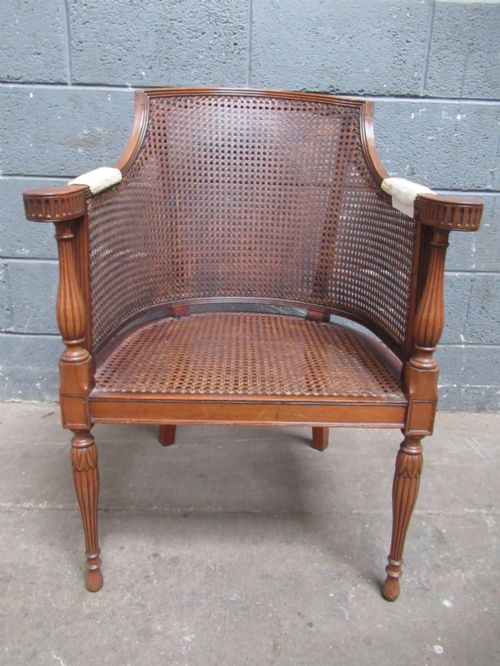
Makers utilised solid timbers including mahogany, walnut, oak, and satinwood to construct the curved frames, sometimes applying giltwood, paint, or simulated rosewood finishes. These sturdy frames support tightly woven rattan cane panels that form the characteristic back and side walls.
Upholstery details incorporate drop in cushions or fixed squabs finished in leather, velvet, or woven fabric, occasionally accented with brass elements.
Caned Bergere Tub Chairs Retail Price Guide 2026
Typical asking prices for caned bergere tub chairs among the pieces listed under this phrase on Sellingantiques today, from the lower quarter to the upper quarter. They describe what is for sale here now, not the wider market.
Even miniature readers needed style, as evidenced by surviving childs armchairs scaled down from full size library models.
Assessing quality and craftsmanship
Quality rests upon the crispness of the wood carving, the tightness of the frame joints, and the precision of the hand woven cane work. Superior pieces display fluid curves in styles such as Louis XV and Regency, alongside finely figured timber grains.
The integration of the curved back into the arm supports reveals the maker's joinery skill, distinguishing standard workshop production from finer library furniture.
Gillows
The Caned Bergere Tub Chairs Glossary
- Bergere
- An enclosed upholstered armchair of French origin, typically featuring wooden frames and woven cane sides. This form developed during the eighteenth century and inspired numerous nineteenth and twentieth century revivals.
- Tub chair
- An armchair with a continuous curved back and arms forming a deep, enveloping seat. The design provides enclosed comfort and supportive posture.
- Caning
- A weaving technique utilising split rattan to create open patterned panels within chair frames. It offers lightweight flexibility and decorative ventilation.
- Giltwood
- Timber treated with gold leaf or gold paint to produce a brilliant metallic finish. This decoration appears frequently on French revival seating.
- Corbeille
- A French term describing a basket shaped seat with a rounded, enclosing back. It often applies to nineteenth century chairs built in the Louis XV style.
Caned Bergere Tub Chairs: Frequently Asked Questions
What is a bergere tub chair?
A bergere tub chair is an upholstered armchair featuring a rounded, enclosed back and sides woven with cane panels. These seats combine wooden frames with comfortable cushions for library or parlour use.
originating in France and Britain, the style spans eighteenth century roots through to Edwardian revivals, offering deep seating enclosed by curved armrests.
How do I identify a French style chair?
French style chairs typically display carved wooden frames, curved cabriole legs, and flowing lines associated with Louis XV and Louis XVI designs. Giltwood, painted surfaces, and ornate floral motifs often accompany these pieces.
They frequently feature corbeille shaped seats where the back and arms merge into one continuous, enveloping curve.
Were these chairs used in libraries?
Yes, many bergere tub chairs served as library armchairs, providing comfortable seating for reading and study. Their enclosed backs shielded occupants from draughts in large rooms.
Mahogany and rosewood versions were particularly favoured by British cabinet makers for formal home libraries and studies.
How do I care for cane panels?
Cane panels require gentle dusting and occasional moistening to prevent the rattan from drying out and becoming brittle. Keeping them away from direct heat sources preserves the natural flexibility of the woven material.
Avoid pressing heavily against the centre of cane panels when moving the chair to prevent snapping the strands.