

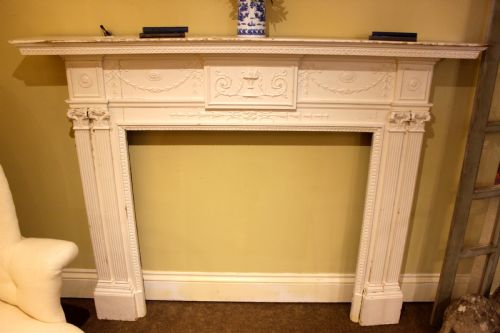
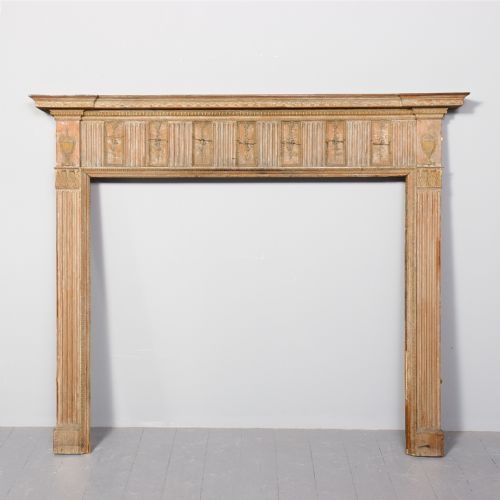
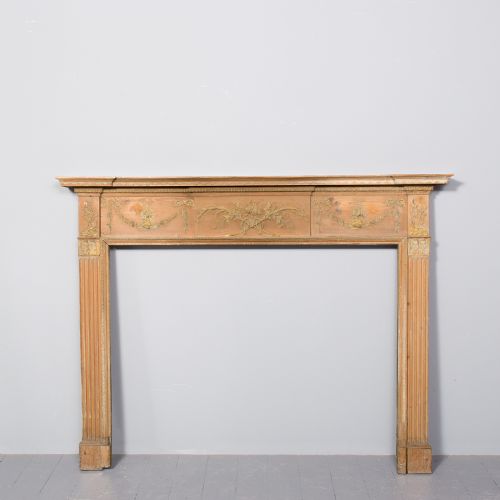
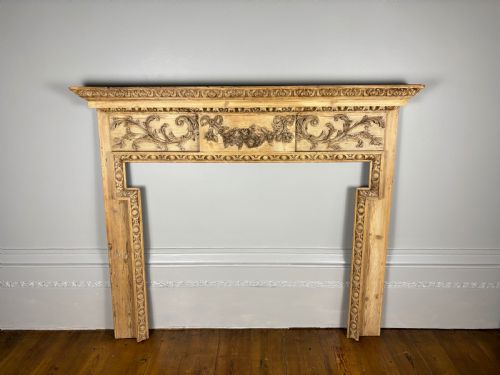


Neoclassical Fireplace Surround
These neoclassical fireplace surround pieces are architectural centerpieces carved in pine, stone, and brass that anchor a room with balanced symmetry.
Neoclassical Fireplace Surround
A neoclassical fireplace surround is an architectural framing piece designed to define the hearth with classical order and proportion. When you search for a neoclassical fireplace surround, you encounter architectural elements primarily originating from the Georgian and Victorian periods, alongside later revival interpretations.
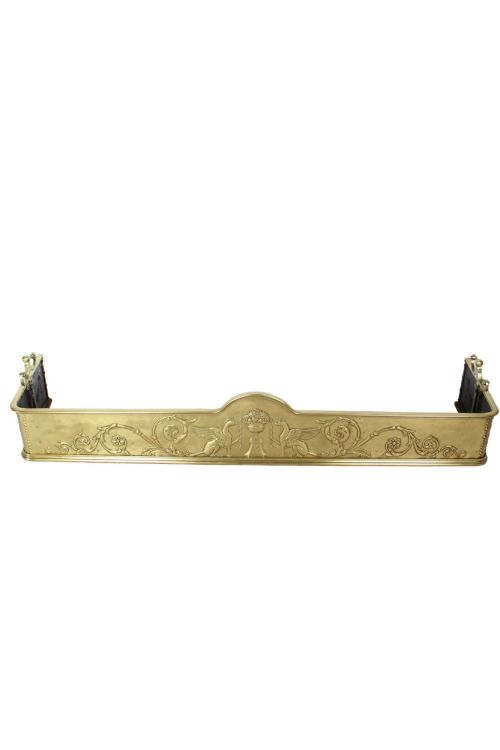
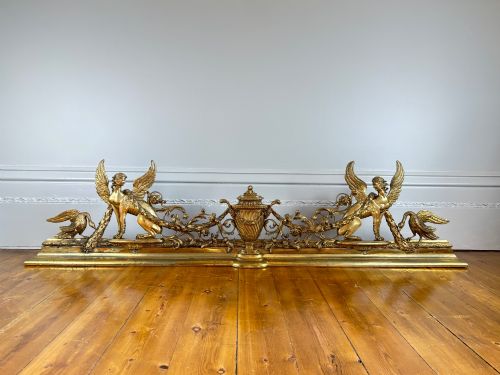
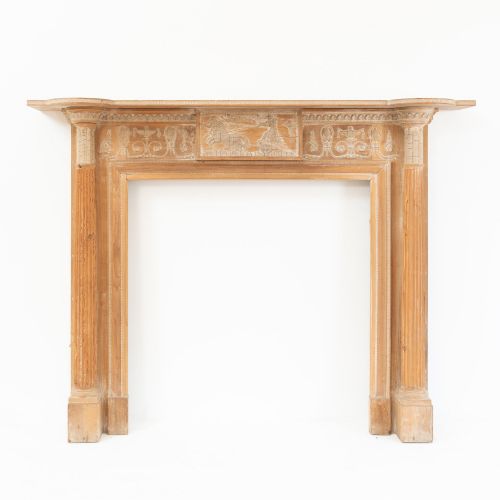
The selections available here span substantial stone chimney pieces, carved pine mantels enriched with gesso, and polished brass or ormolu hearth fenders. These components originate from British and international workshops, demonstrating the enduring influence of classical antiquity on domestic interiors.
Materials and construction methods
Makers shaped structural elements from softwood and hardwood, frequently employing pine as a base for intricate ornamentation. Artisans applied carved gesso directly onto timber substrates to build up sharp relief details like classical urns, ribbons, and floral motifs before applying paint or gilt.
Metal components involved cast iron, polished brass, and fire-gilded bronze. Foundries cast fenders and fireplace inserts using traditional moulding techniques, finishing surfaces with detailed chiselling and polishing to create reflective highlights around the hearth.
Nineteenth-century brass fenders often show subtle hammer marks from the foundry floor.
Distinctions in quality
Quality in these architectural pieces resides in the crispness of the carving and the fidelity of the classical proportions. Superior examples display deeply undercut gesso work and hand-finished detailing that remains sharp across every frieze and plinth block.
Material selection and structural integrity further separate standard items from exceptional pieces. Solid stone construction and heavy gauge brass or ormolu demonstrate a commitment to lasting craftsmanship that lighter cast alternatives lack.
E F Caldwell New York
The Neoclassical Fireplace Surround Glossary
- Gesso
- A plaster-like mixture applied to wood and carved or moulded into decorative relief before painting or gilding. This material allows for intricate surface ornament without the weight of solid carved stone.
- Ormolu
- Finely ground high-carat gold-mercury amalgam applied to a bronze base, known also as gilt bronze. It provides a rich, durable golden finish on metal fireplace accessories.
- Overmantle
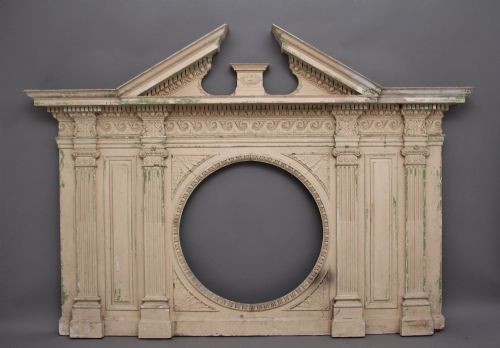
- A decorative panel, mirror, or painting designed to sit directly above the fireplace mantelpiece. It visually extends the height of the fireplace focal point.
- Fender
- A low metal guard placed on the hearth in front of the fire to contain stray embers. These accessories match the metalwork of the surround or insert.
- Mantelpiece
- The framing structure surrounding the fireplace opening, including the shelf and side jambs. It forms the primary visual anchor of the chimney piece.
Neoclassical Fireplace Surround: Frequently Asked Questions
How do I measure for a surround?
Measure the opening height and width of your fireplace brickwork to ensure the internal dimensions of the surround clear the firebox safely. Allow adequate clearance for hearth regulations and mantel depth relative to your room size.
Take into account surrounding wall space to accommodate the exterior width of the jambs and the projection of the mantel shelf. Professional fitting ensures the weight of stone or timber is properly supported.
Are these surrounds suitable for modern fires?
Many antique surrounds accommodate modern gas or electric inserts, provided internal clearance distances meet safety guidelines. Pine and stone mantels require appropriate non-combustible heat shielding if placed directly adjacent to high-output heat sources.
Consult a qualified fitter to verify that clearance zones between the fire source and the timber or gesso decoration remain within safe operational limits.
How do I clean painted pine?
Dust painted pine and gesso surfaces gently with a soft dry cloth to prevent accumulation without disturbing delicate raised details. Avoid harsh liquid cleaners or abrasive materials that could strip historic paint layers or soften the gesso.
Test any conservation cleaning products on a hidden area first if tackling deeper grime, though professional restoration is recommended for fragile antique paint finishes.
What defines the Adam style?
The Adam style draws inspiration from classical Roman architecture, featuring delicate symmetrical motifs like urns, swags, and paterae. This design vocabulary avoids heavy baroque proportions in favour of linear grace and refined relief ornament.
Surrounds from this tradition utilise painted pine and applied gesso to achieve crisp architectural detailing suited to Georgian drawing rooms.