



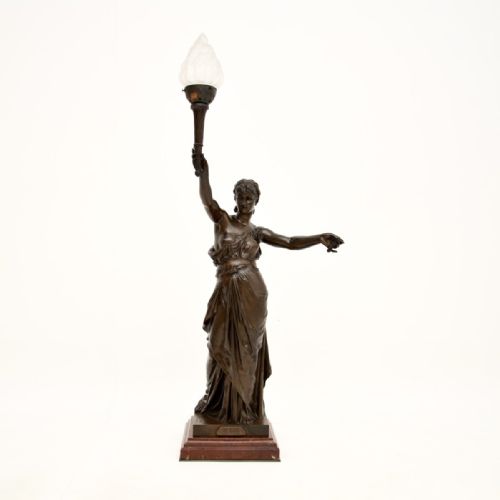


Neoclassical Figural Lighting
Neoclassical figural lighting brings classical mythology and sculpture into interior spaces through bronze, marble, and porcelain lamps and torcheres.
Neoclassical Figural Lighting
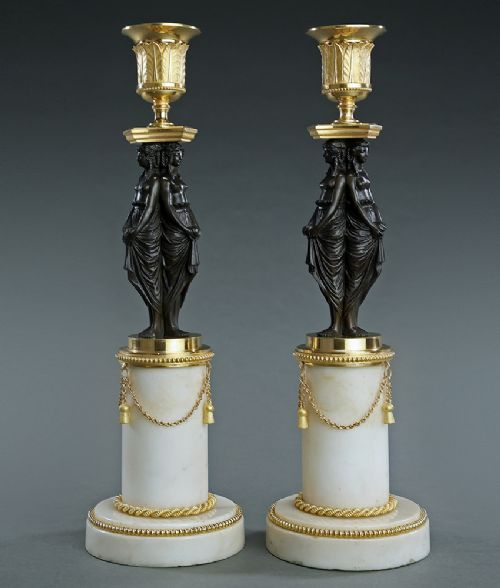
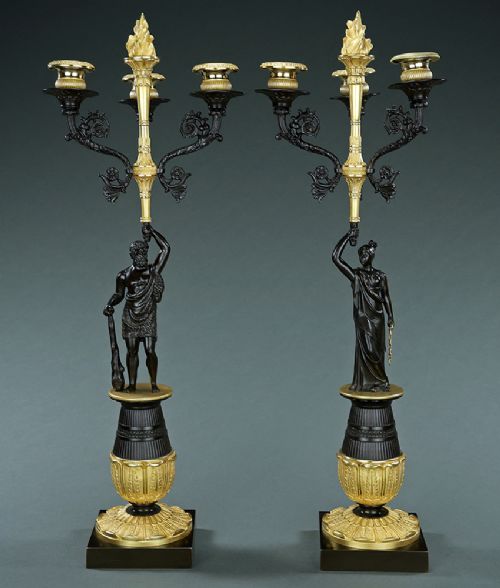
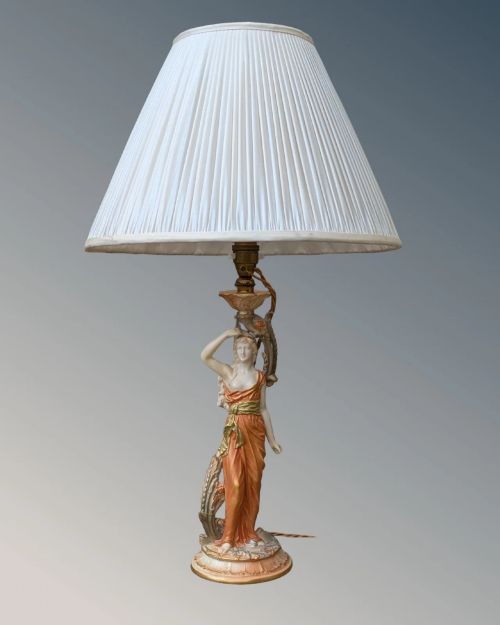
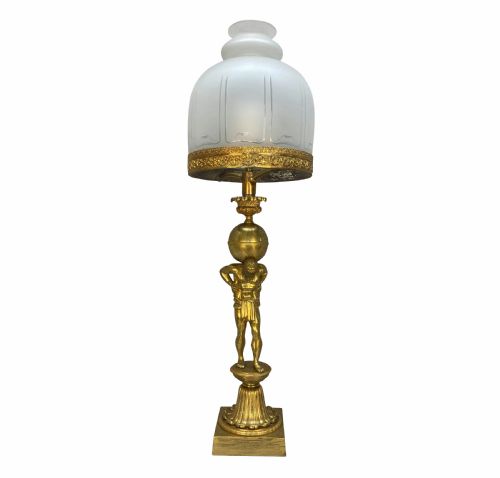
Neoclassical figural lighting combines classical sculptural forms with functional illumination, taking the shape of table lamps, floor lamps, candelabra, candlesticks, and torcheres. When you search for neoclassical figural lighting, you encounter pieces depicting figures such as caryatids, cherubs, Hercules, Atlas, and allegorical subjects.
The objects span multiple periods, including the Regency era, the nineteenth century, and early twentieth-century revivals like French Empire and Louis XVI styles. Materials frequently include marble, bronze, brass, gilt bronze, glass, and porcelain.
The most common forms on this page are figural candlesticks, candelabra, and table lamps that integrate human or mythological figures directly into the base or support structure. These items often rest upon marble plinths or china bases to elevate the sculptural composition.
Materials and construction
Metal casting forms the structural core of many pieces, utilising bronze, brass, and gilt bronze, often with patinated or ormolu finishes. Sculptors and metalworkers cast these figures in sections before chasing the surfaces and mounting them onto marble plinths.
Other examples incorporate delicate elements such as frosted glass or moulded porcelain, paired with metal mounts and ceramic bases. These varied components reflect traditional foundry and ceramic techniques spanning the nineteenth and early twentieth centuries.
Materials appearing across the inventory include marble, bronze, brass, frosted glass, and porcelain.
Assessing quality and execution
The integration of materials also dictates quality, seen in the selection of solid marble plinths, high-grade porcelain, and quality glass shades rather than composite substitutes. Signed works by known sculptors or foundries generally represent the upper tier of execution.
F. De Luca·Humphrey Hopper·Jean-Jules Cambos·Coutan
The Neoclassical Figural Lighting Glossary
- Caryatid
- A sculpted female figure serving as an architectural support or lamp stem. These figures often wear classical drapery and carry structural loads on their heads.
- Torchere
- A tall ornamental stand or floor lamp designed to hold a light source high above the ground. They frequently depict figures holding aloft torches or lights.
- Ormolu
- Finely ground high-carat gold applied to bronze through a mercury amalgamation process, or modern gilt bronze. This finish imparts a rich, durable golden sheen to metal mounts.
- Plinth
- A heavy rectangular or square block of marble or stone serving as the base for a figural sculpture or lamp. It provides both stability and visual weight to the composition.
Neoclassical Figural Lighting: Frequently Asked Questions
How do I identify a torchere?
A torchere is typically a tall floor lamp or standard designed to cast light upward from an elevated source. Many examples feature figural supports holding the light fixture aloft.
They often stand on substantial bases and were originally intended to illuminate corners or specific architectural focal points in grand rooms.
What materials are used?
These pieces utilise cast metals such as bronze, brass, gilt bronze, and patinated bronze, frequently combined with marble plinths. Some variations incorporate frosted glass, porcelain, and china bases.
Earlier nineteenth-century pieces lean heavily toward cast bronze and marble, while later twentieth-century iterations sometimes introduce alternative metals like spelter.
Are these lamps electrified?
Many items function as table lamps or floor lamps equipped for modern electricity, while others retain their original configurations as candelabra or candlesticks. Conversion from candle or oil to electric wiring happened across different decades.
When evaluating a piece, check the wiring method to understand how it integrates with modern fittings and sockets.
How do I spot a French Empire piece?
French Empire style pieces often draw upon classical mythology, featuring heroic figures like Hercules, Atlas, or allegorical personifications. They make extensive use of cast bronze and formal neoclassical symmetry.
The aesthetic reflects the Napoleonic era's fascination with Roman and Greek antiquity, expressed through heavy metalwork and disciplined proportions.