




Classical Female Figure Light
These classical female figure lights bring sculptural grace and warm illumination into a room, drawing on centuries of neoclassical design.
Classical Female Figure Light
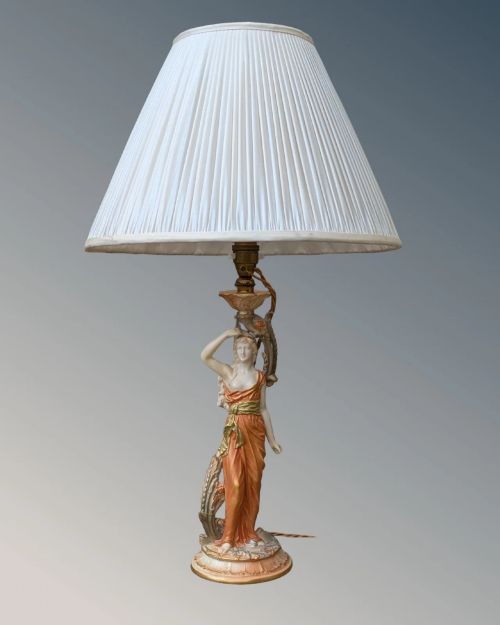
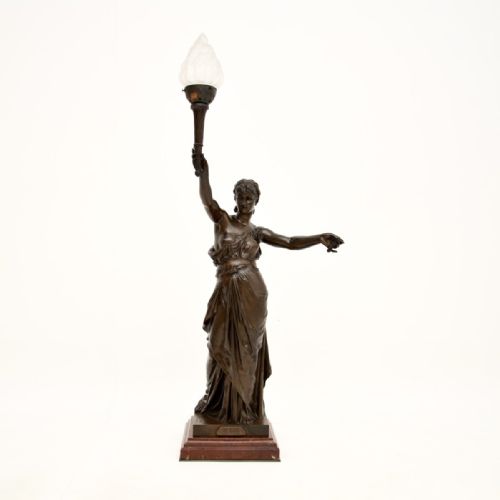
A classical female figure light combines sculptural representation with functional illumination, taking forms such as table lamps, torcheres, candlesticks, and wall lights. These pieces draw heavily on historical motifs, depicting muses, allegorical figures, and deities holding lamps or standing as columns.
The pieces available span multiple periods including the Georgian, Regency, Victorian, and Edwardian eras, alongside works from the late nineteenth and early twentieth centuries. Material choices range from traditional cast bronze and gilt bronze to spelter, marble, and porcelain.
Makers and sculptors of note appear across the inventory, including Humphrey Hopper, F. De Luca, Jean-Jules Cambos, Coutan, and Auguste Moreau. Stylistic influences lean towards the neoclassical, French neoclassical, and art nouveau traditions.
How they were made
Foundry work and casting form the foundation of many pieces, utilising metals such as bronze, gilt bronze, brass, and spelter to capture intricate drapery and facial expressions. Cold painting, patination, and silvering are frequently applied to metal surfaces to enhance depth and texture.
Carved wooden components and plaster elements appear alongside moulded porcelain and glass elements, often supported by marble bases or socles. Ornate detailing is achieved through manual chasing and finishing on metal casts, while figural elements reflect academic sculptural training.
Several figures hold their lamps so steadily they have spent a century shedding light on empty hallways.
What varies in quality
The choice of materials and the integrity of the original surface patination dictate the character of each piece. Signed works by recognised sculptors carry distinct artistry, while decorative items rely on overall proportion and decorative harmony.
Humphrey Hopper·F. De Luca·Jean-Jules Cambos·Coutan·Auguste Moreau
The Classical Female Figure Light Glossary
- Torchere
- A tall stand or floor lamp designed to hold a light source aloft. These fixtures often take the form of classical figures bearing torches or lamps.
- Caryatid
- A sculpted female figure serving as an architectural support taking the place of a column or pier. They frequently appear on candlesticks and lamp shafts.
- Spelter
- A zinc alloy frequently used as a cost-effective alternative to bronze for sculptural castings. It is often painted or bronze-plated to simulate heavier metals.
- Grand Tour
- A cultural journey undertaken by wealthy young Europeans to view classical antiquities. Souvenirs from these travels included small bronzes and sculptural lamps.
- Ormolu
- Finely ground high-carat gold applied to a bronze base using a mercury amalgamation process. This technique imparts a rich golden finish to decorative mounts.
Classical Female Figure Light: Frequently Asked Questions
What periods do these figural lights come from?
The selections span the Georgian, Regency, Victorian, and Edwardian periods, stretching into the early twentieth century. Makers and artists from continental Europe and Britain shaped these designs.
Neoclassical and Art Nouveau aesthetics dominate the visual language, reflecting changing tastes in interior ornamentation across different decades.
How were these figural sculptures used originally?
Many pieces functioned as primary light sources in grand interiors, holding candles, oil lamps, or early electric fittings. Torcheres illuminated dark corners or hallways, while smaller table lamps sat on desks and sideboards.
Sculptural figures often served an allegorical purpose, representing peace, liberty, or classical muses while doubling as decorative furnishings.
What materials should I expect to find?
Metal is the predominant medium, with bronze, gilt bronze, brass, and spelter appearing frequently. Spelter often received painted or silvered finishes to mimic costlier materials.
Additional elements include carved wood, plaster, marble bases, glass, and porcelain, frequently combined within a single piece to create textural contrast.
How do I identify different sculptural styles?
Neoclassical pieces draw inspiration from ancient Greek and Roman art, featuring restrained drapery, balanced compositions, and formal architectural elements like socle bases. Art Nouveau examples introduce flowing, organic lines and more expressive figural poses.
Signatures from sculptors such as Auguste Moreau or Jean-Jules Cambos help anchor pieces to specific artistic movements and makers.