

Neoclassical Console
A neoclassical console brings architectural restraint and carved classical detail to an interior, anchored by marble tops and gilded frames.
Neoclassical Console
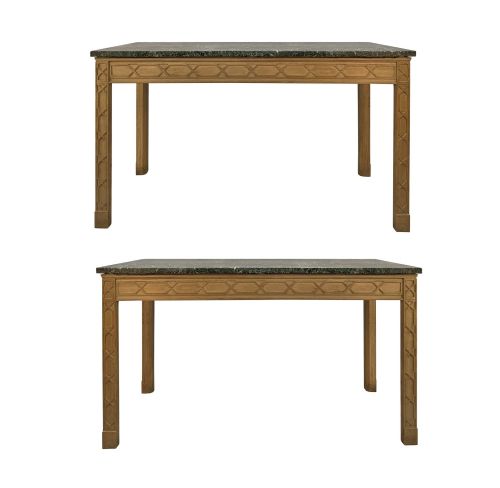
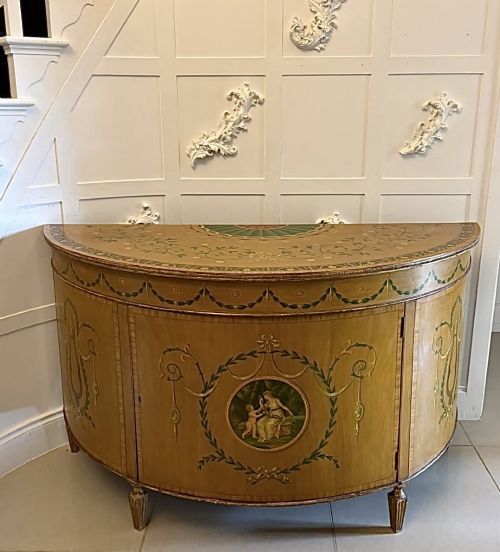
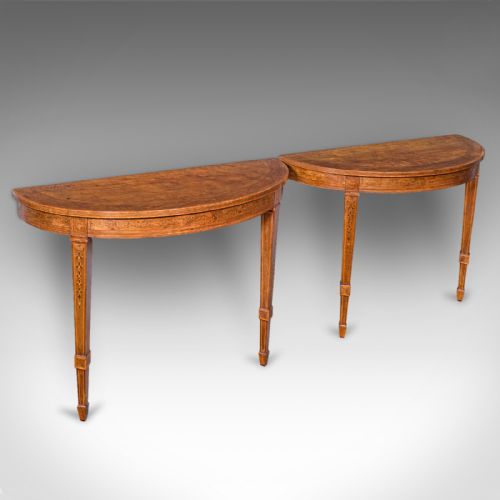
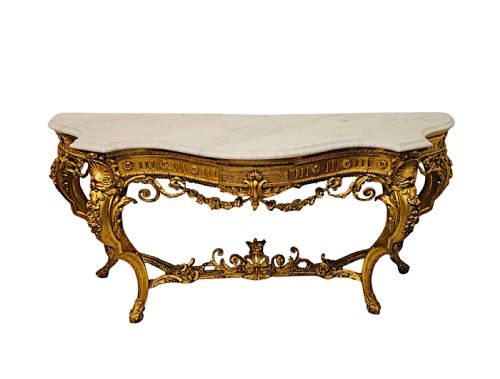
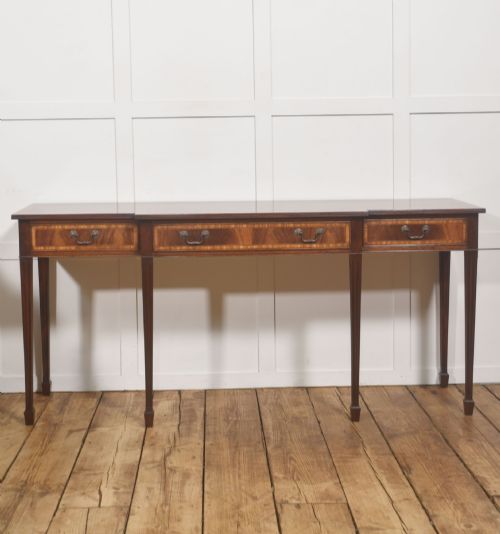
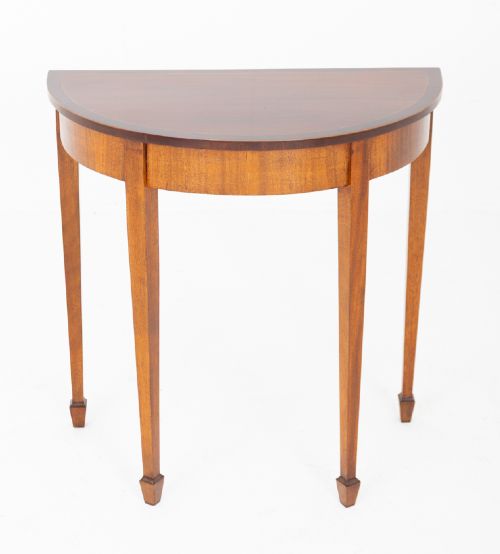
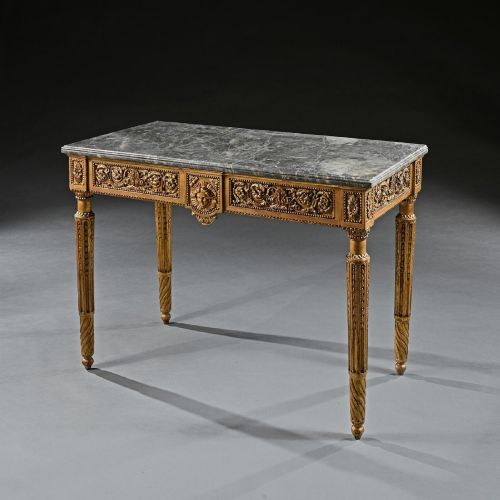
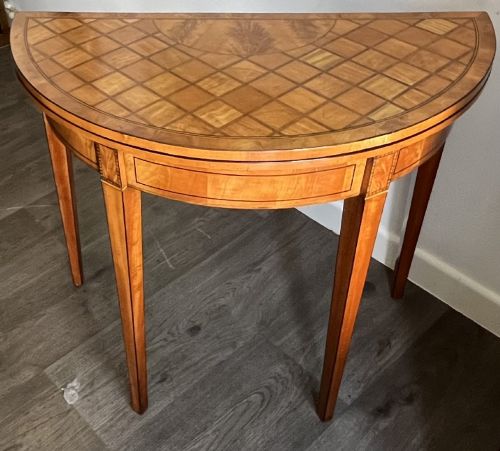
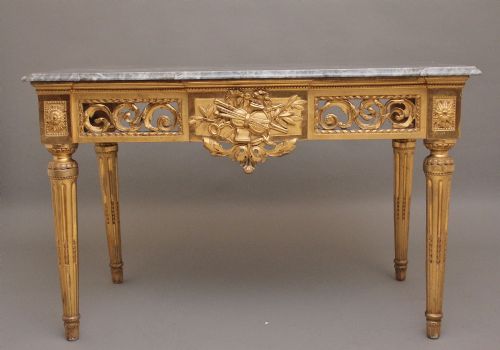
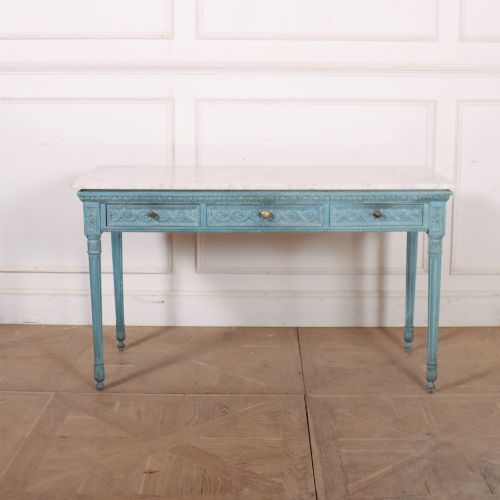
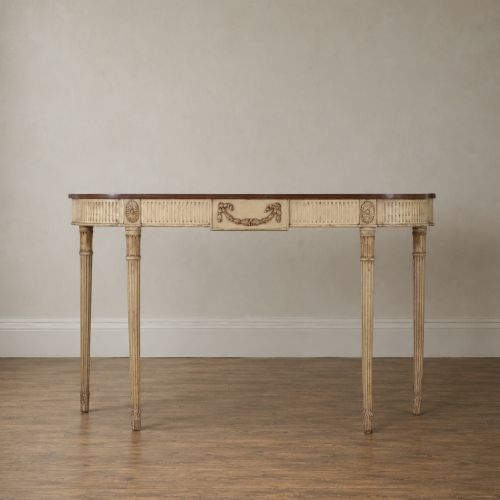
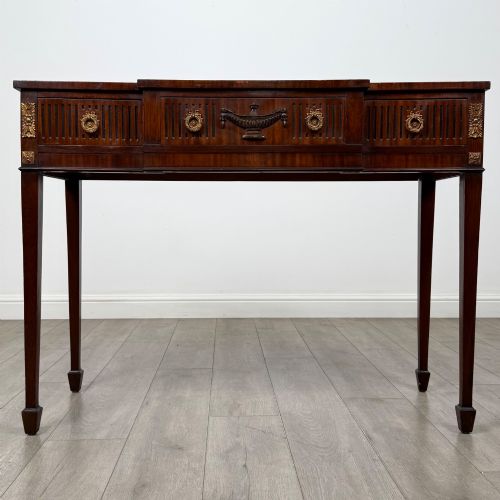
A neoclassical console appears across formats such as side tables, serving tables, and demi-lune card tables designed to stand flat against a wall. The selection spans the eighteenth century through the twentieth century, including Georgian, Gustavian, and French Empire interpretations.
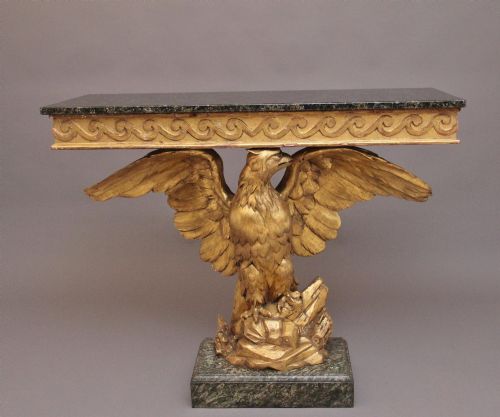
The most common examples on this page are marble-topped giltwood tables from Italy and painted wooden demi-lune pieces from English and Swedish traditions. Makers and workshops shaped these forms using mahogany, satinwood, and walnut alongside gesso and paint.
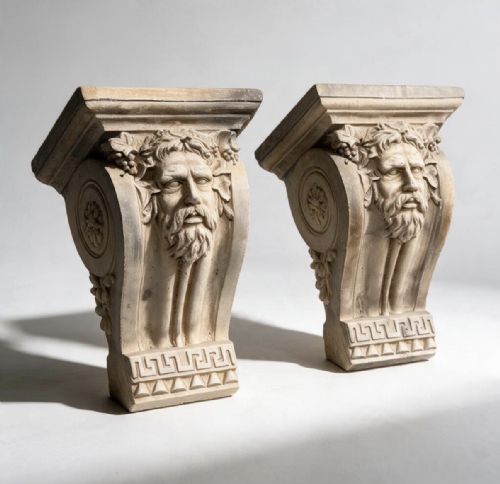
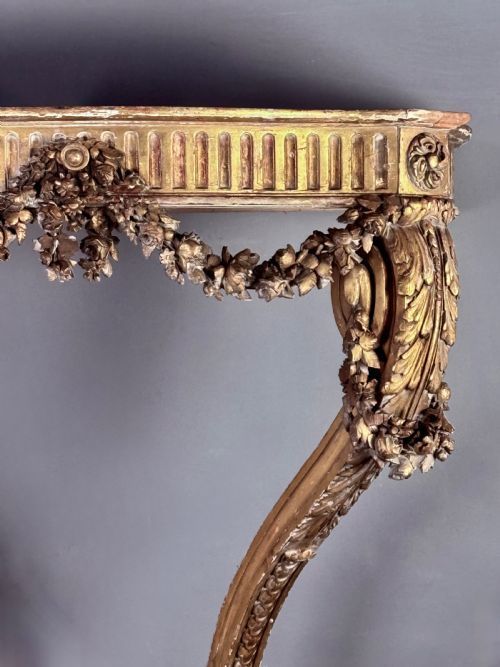
Formations range from strict architectural brackets to serving tables and narrow display surfaces. Pieces frequently incorporate classical motifs such as fluting, paterae, and giltwood carvings derived from antique archetypes.
Materials and Construction Techniques
Construction relies heavily on timber framing in mahogany, satinwood, and beech, finished with crossbanding, marquetry, or painted surfaces. Carved gesso and giltwood provide the rich surface ornamentation seen on Italian and French examples.
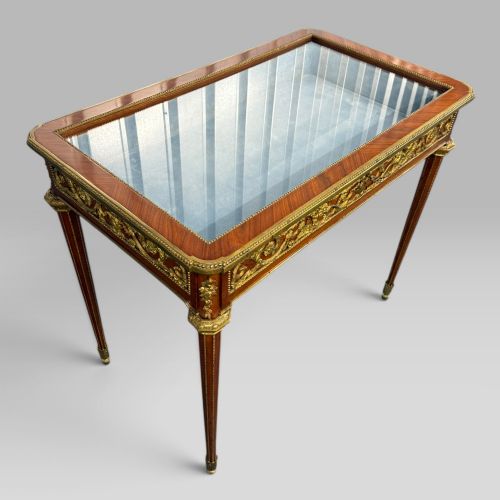
Marble slabs form the tops of many console tables, resting on wooden bases secured with brackets or mouldings. Brass and ormolu mounts punctuate Empire and Regency pieces, adding metallic contrast to dark rosewood or mahogany.
Neoclassical Console Retail Price Guide 2026
Typical asking prices for neoclassical console among the pieces listed under this phrase on Sellingantiques today, from the lower quarter to the upper quarter. They describe what is for sale here now, not the wider market.
Several tables appear with secret compartments designed for midnight correspondence.
Judging Quality and Execution
Quality rests in the crispness of the hand-carved gesso and the depth of the gilding applied to wooden frames. Finer pieces demonstrate precise joinery in demi-lune frames and delicate marquetry work on satinwood surfaces.
The selection of the marble top and the weight of the bronze or brass mounts distinguish standard production from exceptional workshops. Proportions that balance heavy stone tops with slender, tapering legs dictate visual success.
Felix-Alfred Ternisien·François Linke
The Neoclassical Console Glossary
- Demi-lune
- Half-moon shape. This semicurve profile allows tables to sit flush against walls while occupying minimal floor space.
- Giltwood
- Wood coated with gold leaf over a prepared gesso ground. This treatment gives tables a luminous metallic sheen.
- Gesso
- A plaster mixture applied to wood surfaces. Carvers sculpt intricate neoclassical details directly into this layer before gilding.
- Marquetry
- Veneers arranged in pictorial patterns on wooden furniture. Craftsmen use contrasting timbers like satinwood and kingwood to create geometric designs.
- Ormolu
- Gilded bronze mounts applied to furniture. These decorative elements embellish the corners and aprons of Empire and neoclassical pieces.
Neoclassical Console: Frequently Asked Questions
Where should a console table go?
A neoclassical console suits hallways, living rooms, and entrance spaces where surface area is needed without deep furniture clutter. Their shallow depth allows placement behind sofas or along empty passageways.
Pairing a wall-mounted bracket or console beneath a mirror creates a formal focal point within a room. Their architectural lines complement both period interiors and modern settings.
How do I care for a marble top?
Marble requires gentle cleaning with warm water and soft cloths to preserve the polished surface. Avoid acidic cleaners and abrasive materials that etch the stone.
Using coasters and mats protects the porous surface from liquids and staining over time. Regular dusting maintains the natural sheen of the marble.
How are different periods identified?
Stylistic markers such as Gustavian restraint, French Empire ormolu, and Georgian mahogany indicate the origin and era of a piece. Construction methods and wood choices further clarify the date of manufacture.
Eighteenth-century examples often feature hand-cut joinery and aged patination, while revival pieces from later eras emulate those classical proportions using contemporary tools.