




Neoclassical Console Table Pair
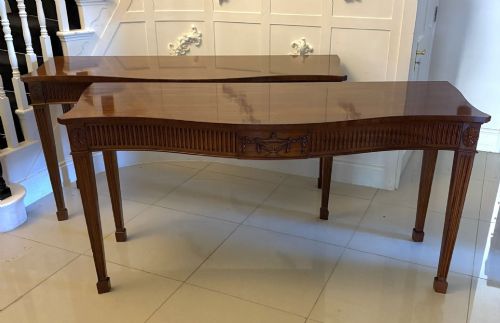
These neoclassical console table pair examples bring balanced symmetry and classical proportion to a hallway or drawing room.
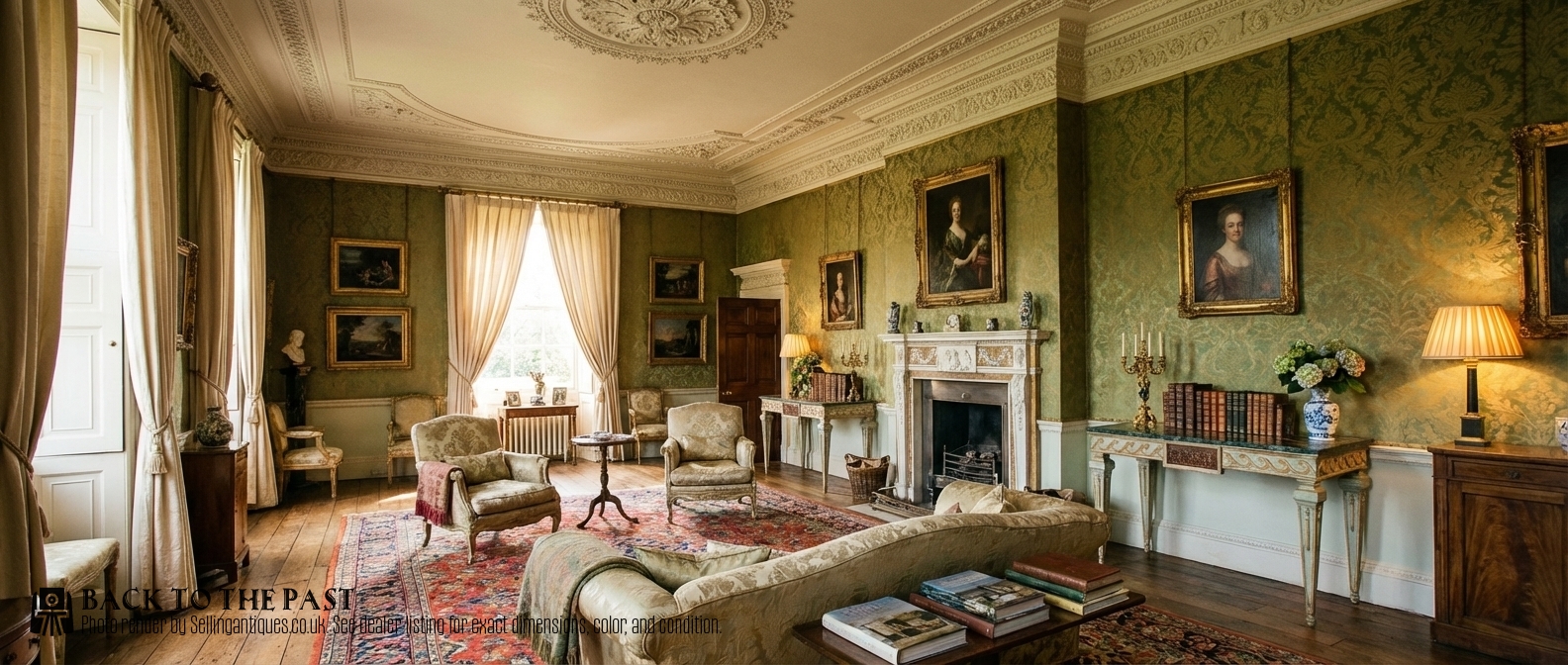
Neoclassical Console Table Pair
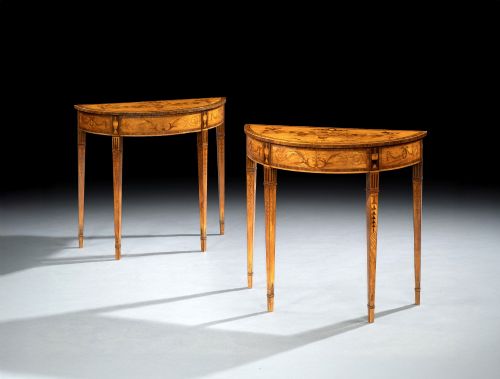
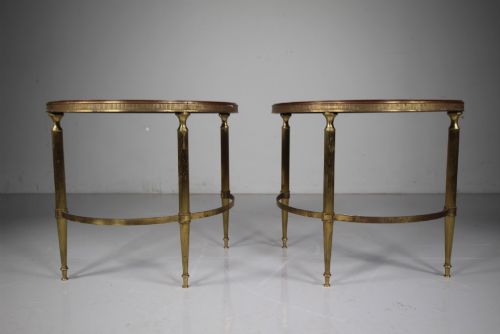
A neoclassical console table pair consists of matching side furniture designed to sit flat against a wall, frequently taking the semi-circular demi-lune or D-end form seen across the 18th century, 19th century, and early 20th century. Buyers seek these matching sets for their architectural symmetry, often placing them in grand entryways or flanking a fireplace.
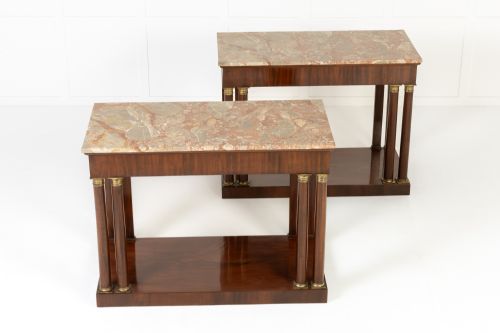
The selections span distinct stylistic revivals and periods, including George III, Italian Neoclassical, Empire, and Adam styles. Mahogany and satinwood predominate, alongside painted wood surfaces and occasional specimen marble tops.
Console tables frequently double as card tables or serving tables depending on their mechanism and depth, while smaller bedside variations also appear in the record.
Assessing quality
Distinctions in quality rest upon the crispness of the carving, the precision of the marquetry inlay, and the choice of timber figure. Pieces attributed to recorded makers or exhibition standards display superior joinery and more ambitious decorative programmes.
The integration of materials dictates the overall rank, where genuine specimen marble tops and finely preserved hand-painted surfaces elevate an object above standard production furniture of the period.
Jean Joseph Chapuis·Pietro Ferrario
The Neoclassical Console Table Pair Glossary
- Demi-lune
- Half-moon shape. This curve defines the front profile of many console and side tables designed to stand flat against a wall.
- Marquetry inlay
- Decorative patterns formed by fitting contrasting veneers into a prepared wood ground. Cabinet makers utilise this technique to create geometric or floral motifs.
- Specimen marble
- Multi-coloured marble fragments assembled into a decorative mosaic top. These stone surfaces appear on Italian neoclassical tables.
- D-end
- A rectangular table form with semi-circular ends. Pairs of these tables join together to form larger dining arrangements or separate for wall placement.
Neoclassical Console Table Pair: Frequently Asked Questions
How were console tables used historically?
These tables served primarily as ornamental side furniture in formal reception rooms and hallways. They held decorative objects, lighting, or refreshments during social gatherings.
Certain variations functioned specifically as card tables with folding leaves or as serving tables in dining spaces.
Where should I place a pair?
Matching pairs traditionally flank a central architectural feature such as a fireplace, doorway, or large mirror. This placement creates visual balance and symmetry within a room.
They also sit effectively on opposite walls of a long hallway to tie a decorative scheme together.
How do I identify George III pieces?
George III examples typically feature high-grade mahogany or satinwood construction with precise inlay and restrained classical carving. The proportions reflect the prevailing architectural tastes of late 18th-century Britain.
Details often include tapered legs, stringing, and subtle serpentine fronts without excessive ornamentation.
What is the difference between console and side tables?
Console tables are specifically designed to stand against a wall and traditionally require wall fixing or structural support from the back legs. Side tables are free-standing items of furniture with four fully finished legs.
In historical listings, however, makers and dealers frequently use the terms interchangeably for semi-circular wall furniture.