





Inlaid Marble Console Table
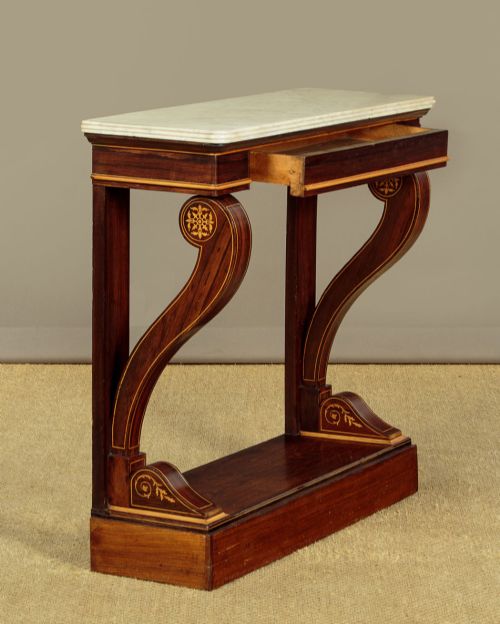
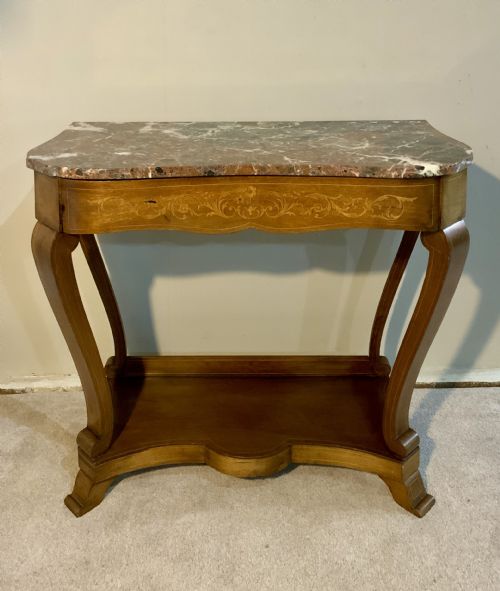
An inlaid marble console table anchors a hallway with crisp stone and fine timber.
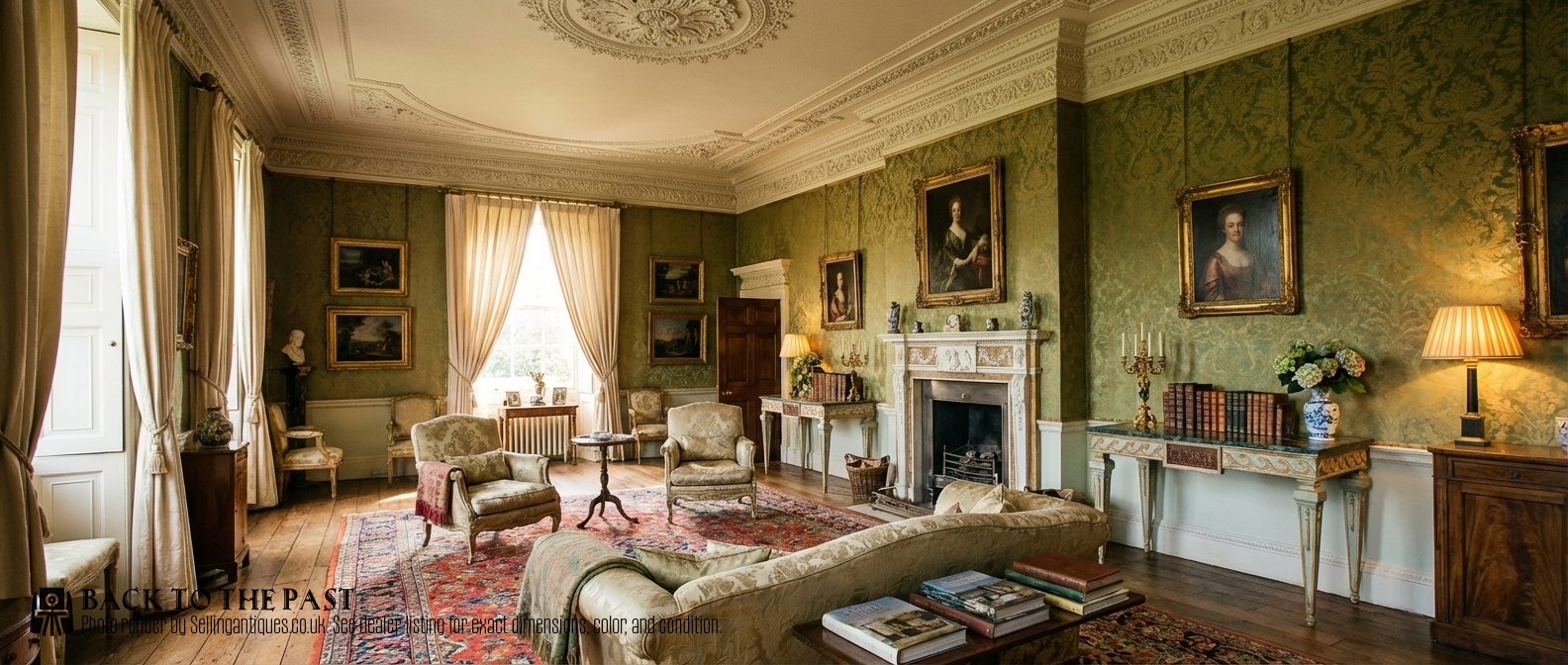
Inlaid Marble Console Table
An inlaid marble console table combines a durable stone surface with decorative timber framework, designed to stand against a wall in a reception room or hallway. These pieces serve as both decorative accents and functional ledges for lamps or ornaments, shaped in rectangular, demi-lune, or pier forms.
The versions met most frequently on this page date from the nineteenth century, encompassing Regency, Edwardian, and Victorian eras alongside continental revival styles. Makers utilise woods such as mahogany, walnut, and satinwood to frame heavy stone slabs, often incorporating intricate marquetry or brass detailing into the apron.
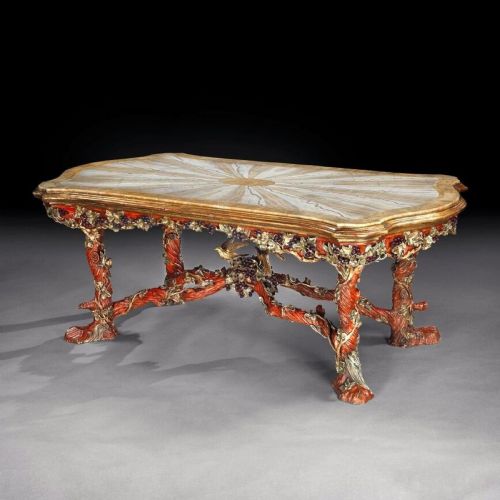
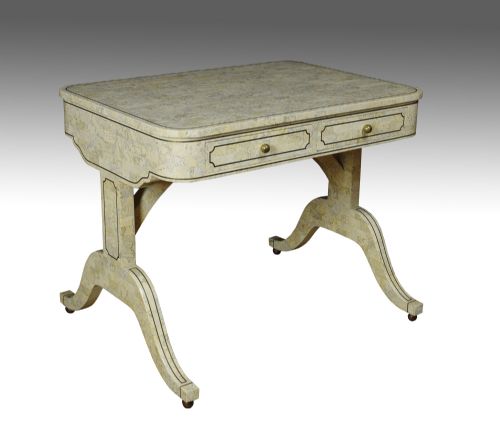
Originating from British, French, Italian, and Dutch workshops, these tables reflect diverse regional tastes in stone selection and cabinetmaking. Some examples feature specimen marble tops or polychrome carved wood, whilst others lean towards restrained Regency lines or ornate French chateau aesthetics.
Materials and construction
Cabinetmakers construct the main framework using dense hardwoods like mahogany, walnut, and satinwood, frequently applying contrasting wood inlay or parquetry to the frieze and legs. The timber is seasoned and joined to support the considerable weight of a solid stone slab without sagging.
The tabletops consist of polished marble, onyx, or tesselated stone, sometimes arranged as geometric specimen panels or surrounded by brass mounts. Workshops pair these heavy stone surfaces with hand-carved wooden bases, utilising traditional joinery methods appropriate to each specific period.
Inlaid Marble Console Table Retail Price Guide 2026
Typical asking prices for inlaid marble console table among the pieces listed under this phrase on Sellingantiques today, from the lower quarter to the upper quarter. They describe what is for sale here now, not the wider market.
Materials recorded on this page include marble, onyx, mahogany, satinwood, walnut, brass, and ebony.
Factors of quality
Quality depends upon the precision of the timber inlay and the richness of the marble top, where tight joints and varied stone specimens demonstrate superior craftsmanship. Finer examples display crisp carving on the wooden base and harmonious proportions between the heavy stone top and the supporting legs.
The choice of secondary timbers and the complexity of the marquetry patterns distinguish standard production from exceptional pieces. Tables featuring specialised materials like ebony or intricate parquetry alongside high-grade marble indicate a higher tier of workshop output.
Amleto Bertoni·Lamb of Manchester
The Inlaid Marble Console Table Glossary
- Console table
- A table designed to stand against a wall, traditionally secured with brackets or resting on front legs.
- Marquetry
- The art of applying pieces of veneer to a structure to form decorative patterns and pictures.
- Parquetry
- Geometric mosaic woodwork used for floors and tabletops, created with small veneer blocks.
- Specimen marble
- A polished stone top composed of numerous small, distinct marble varieties arranged in patterns.
- Demi-lune
- A half-moon shape, commonly describing tables designed to fit flush against a wall.
- Pier table
- A table designed to stand against the wall between two windows, often paired with a matching mirror.
Inlaid Marble Console Table: Frequently Asked Questions
How do I style a console table?
Place the table against a prominent wall in a hallway or reception room to establish a clear focal point. Balance the heavy stone surface with a table lamp or a carefully arranged selection of decorative objects.
Ensure the scale of the table matches the surrounding wall space and any hanging artwork above it. Avoid overcrowding the stone surface so the inlaid timber and marble patterns remain visible.
Were these tables used for dining?
These tables served primarily for display and decorative purposes rather than dining or heavy daily tasks. Their narrow depth and wall-dependent stability suited them for holding lamps, clocks, or decorative ceramics.
Some larger centre tables or serving tables accommodated dining preparations, but standard console variants remained decorative furniture pieces in formal rooms.
How do I identify the period?
Examine the timber species, leg profiles, and inlay motifs to determine the likely era of manufacture. Regency pieces often show classical restraint and rosewood or mahogany framing, whereas Edwardian examples frequently feature lighter satinwood and simpler geometric patterns.
Look at the underside of the table and the fitting of the marble top for clues regarding construction methods. Nineteenth-century pieces typically display hand-cut joinery and aged patina on the wood grain.
How do I care for the marble?
Clean the stone surface regularly with a soft, damp cloth and dry it completely to prevent water marks. Avoid using acidic household cleaners or abrasive scourers that can etch or dull the polished finish of the marble.
Protect the surface from direct contact with oils or coloured liquids by using coasters or mats. Period stone benefits from occasional specialist wax treatments designed to maintain its natural lustre.