


Neoclassical Ceramic Vase
A neoclassical ceramic vase brings classical restraint to a room, offering refined proportions and antique dignity drawn from Greek and Roman antiquity.
Neoclassical Ceramic Vase
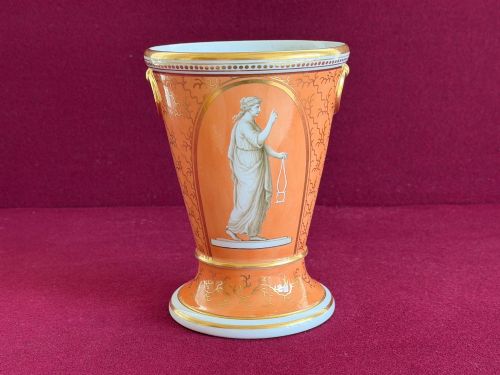
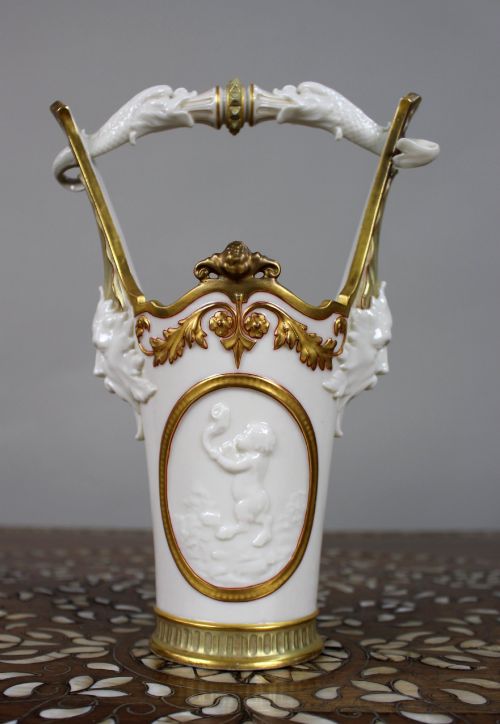
A neoclassical ceramic vase draws on the architectural vocabulary of antiquity, featuring symmetrical forms, handled campana profiles, and classical relief decoration. These pieces reflect the enduring European fascination with Greek and Roman design, adapted by major European kilns.
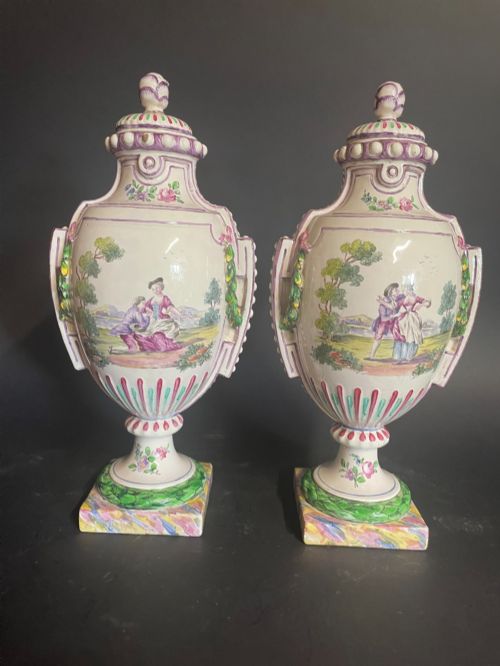
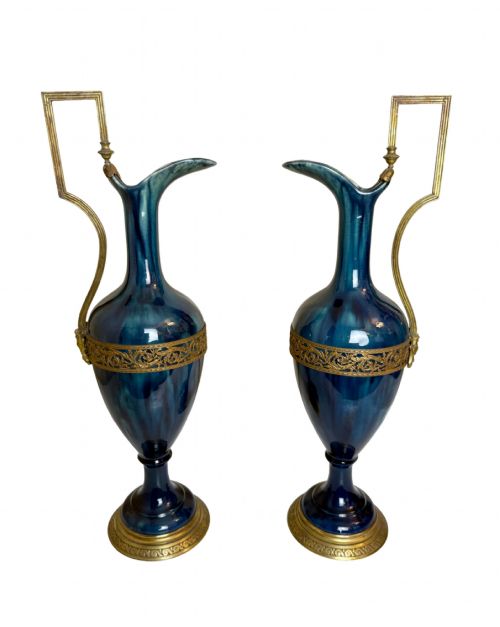
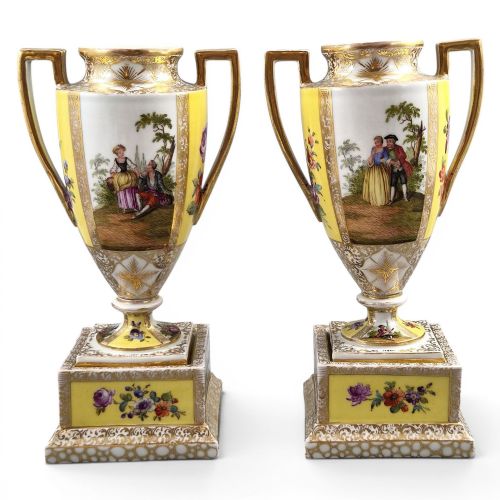
The version most commonly met on this page is the nineteenth-century porcelain urn, often decorated with hand-painted details or gilt bronze mounts. Pieces range from English jasperware to continental porcelain ewers and lidded garnitures.
Makers from Georgian England to late Victorian Europe interpreted the neoclassical canon through local ceramic traditions, producing everything from terracotta planters to delicate porcelain cabinet vases.
Materials and techniques
Potters utilised porcelain, stoneware, and faience, shaping them into balanced vessels through throwing, casting, or mould-pressing. Fine white porcelain provided a smooth ground for hand-painted scenes and enamel decoration.
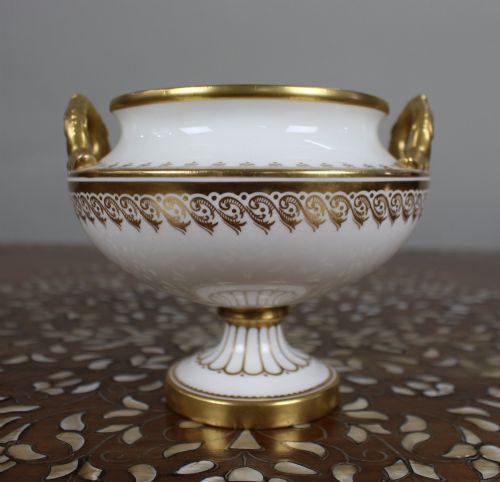
Gilding, gold leaf, and ormolu mounts added rich metallic contrast to the ceramic bodies, particularly on nineteenth-century French and Viennese production. Contrasting matte stoneware bodies were built up with applied white bas-reliefs, as seen in jasperware.
Listings feature porcelain, stoneware, and terracotta forms spanning the Georgian, Victorian, and late nineteenth-century periods.
Judging quality
Quality rests upon the crispness of the modelling, the delicacy of the hand-painting, and the harmony of the proportions. Superior pieces exhibit fine detail in applied reliefs and precise brushwork on painted panels.
The integration of metal mounts, such as gilt bronze trim on porcelain urns, distinguishes finer workshop output. Weight, balance, and the purity of the ceramic body elevate a piece from standard production to exhibition standard.
Flight & Barr Worcester·Royal Worcester·Helena Wolfsohn Dresden·P. Ipsens Enke·Wedgwood
The Neoclassical Ceramic Vase Glossary
- Campana urn
- A bell-shaped vessel with a flared lip and footed base, derived from classical antiquity. This form is standard for neoclassical decorative urns.
- Jasperware
- A type of fine stoneware developed by Josiah Wedgwood, characterised by a matte coloured body and contrasting white classical bas-reliefs.
- Ormolu
- Gilded bronze mounts applied to furniture and ceramic pieces to accent handles, bases, and rims. This technique is prominent on nineteenth-century French and Viennese decorative urns.
- Medici vase
- A large crater-shaped urn featuring a bell body supported on a slender stem and square plinth, decorated in relief with classical figures.
Neoclassical Ceramic Vase: Frequently Asked Questions
How do I date a neoclassical ceramic vase?
Dating relies on factory marks, the composition of the ceramic body, and the style of the gilding or hand-painted decoration. Nineteenth-century pieces often carry impressed or painted maker ciphers on the underside.
Changes in neoclassical revival tastes across the Georgian, Victorian, and later periods also help narrow the decade of manufacture.
Where were these vases displayed historically?
These vessels were placed on mantelpieces, pedestals, and console tables as formal decorative centrepieces during the nineteenth century. Grand Tour travellers brought similar classical pieces home to furnish drawing rooms.
They served primarily as ornamental urns rather than functional vessels for fresh flowers.
How do I care for antique porcelain and gilt surfaces?
Dust these pieces gently with a soft dry brush, avoiding harsh cleaning agents that can damage fragile enamel or rub away gold leaf and gilding. Metal mounts require simple dusting rather than chemical polish.
Keep them away from direct sunlight to preserve hand-painted pigments over time.