




Neoclassical Carved Tazza
A neoclassical carved tazza brings classical antiquity directly into the home, offering structured elegance through classical form and carved stone.
Neoclassical Carved Tazza
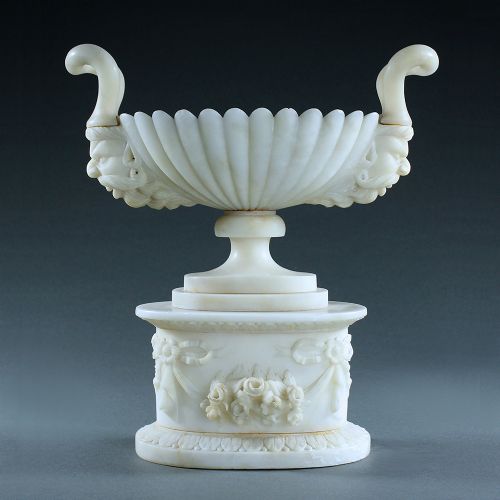
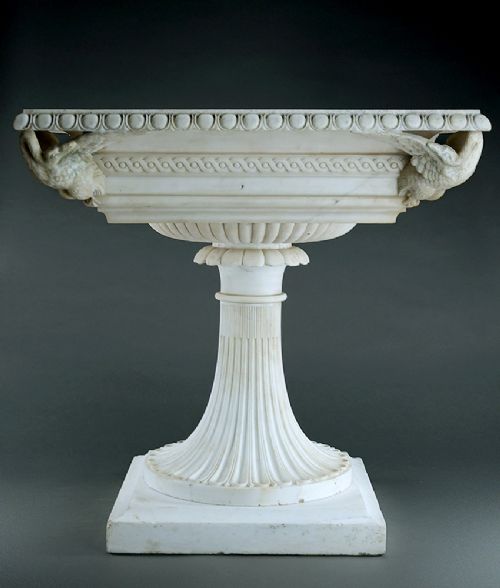
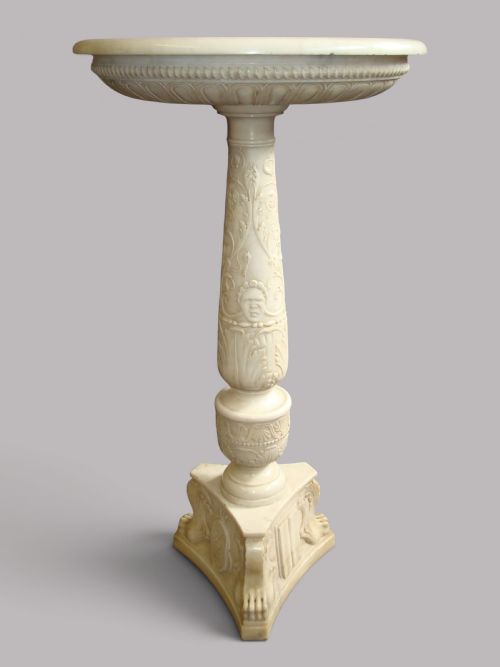
A neoclassical carved tazza takes the form of a shallow pedestal bowl rooted in classical antiquity. These decorative vessels appear frequently in marble, alabaster, and bronze, reflecting the aesthetic ideals of the Grand Tour.
Most examples found on this page date from the nineteenth century, including pieces attributed to workshops such as that of Benedetto Boschetti. They manifest as single presentation bowls, pairs of urns and tazzas, or pedestal forms designed for display.
How they were made
The manufacture of a neoclassical carved tazza relies on the careful turning and shaping of heavy stone, utilising materials such as marble, alabaster, and malachite. Artisans carved the bowls and pedestals by hand, achieving smooth, classical contours from dense mineral blocks.
Bronze examples were produced through traditional casting methods, often drawing inspiration directly from ancient prototypes discovered during Italian excavations. The combination of turned stone elements and detailed sculptural additions demonstrates sophisticated nineteenth-century craftsmanship.
Neoclassical Carved Tazza Retail Price Guide 2026
Typical asking prices for neoclassical carved tazza among the pieces listed under this phrase on Sellingantiques today, from the lower quarter to the upper quarter. They describe what is for sale here now, not the wider market.
Some nineteenth-century tourists brought home heavy marble bowls guarded by carved stone satyr heads, ensuring their parlour tables looked suspiciously like a Roman ruin.
What varies in quality
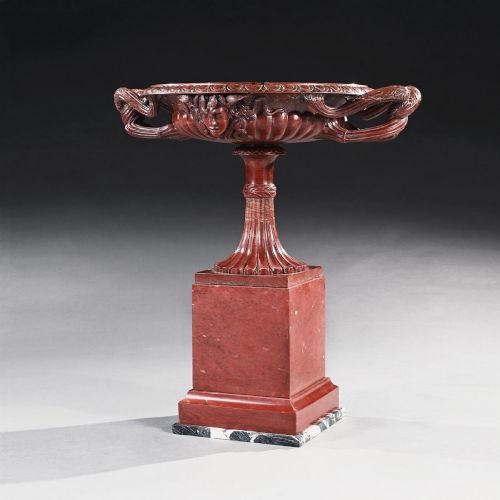
The distinction between standard nineteenth-century souvenirs and superior works lies in the choice of mineral and the precision of the carving. Richly coloured stones like Rosso Antico and Sienna marble elevate a piece beyond simple white marble iterations.
Attribution to prominent Grand Tour workshops, such as the circle of Benedetto Boschetti, marks the upper tier of quality. Finer examples display crisper surface detail, particularly around sculptural elements like satyr heads, and superior proportions in the pedestal.
Benedetto Boschetti
The Neoclassical Carved Tazza Glossary
- Tazza
- A shallow bowl resting on a pedestal foot, used historically for display or serving. In a neoclassical context, it serves purely as an ornamental object.
- Grand Tour
- A cultural journey undertaken by wealthy young Europeans through France and Italy to study classical art. Souvenirs from these travels included carved stone tazzas and bronzes.
- Rosso Antico
- A deep red antique marble prized by Italian stonemasons for its rich colour and association with ancient Roman statuary. It appears frequently in high-status nineteenth-century decorative pieces.
- Alabaster
- A fine-grained, translucent stone that is relatively soft to carve. It allows for delicate surface details and a warm, glowing quality under light.
Neoclassical Carved Tazza: Frequently Asked Questions
How were these bowls used?
These pieces functioned purely as decorative works of art rather than for practical dining use. Wealthy travellers displayed them on pedestals, tables, and mantelpieces to signal cultural education and refinement.
In contemporary settings, they serve a similar aesthetic purpose, adding sculptural weight and historical interest to a room. They require stable surfaces due to their considerable weight.
What materials are most common?
Marble dominates the available selection, appearing in white, Sienna, and the striking red Rosso Antico varieties. Alabaster and bronze also feature prominently in nineteenth-century interpretations.
More unusual pieces incorporate malachite or carved stone details such as satyr heads. Each material dictates the visual weight and colour palette of the individual tazza.
How can I date a marble tazza?
Dating relies on examining the tool marks, the choice of marble, and the specific stylistic nuances of the carving. Nineteenth-century Grand Tour pieces often exhibit the precise turning and finishing techniques characteristic of Italian workshops from that era.
Comparison with documented pieces by makers like Boschetti helps narrow down the period of production. Patina and wear on the stone provide further clues to an object's age.