



Classical Revival Ornament
Classical revival ornament takes the grandeur of antiquity and distils it into bronze, marble and glass for the nineteenth-century drawing room.
Classical Revival Ornament
Classical revival ornament encompasses sculptures, vases, tazza and decorative objects drawn from ancient Greek, Roman and Egyptian forms. When searching for classical revival ornament, buyers encounter works that reflect the nineteenth-century fascination with classical antiquity, often associated with the Grand Tour.
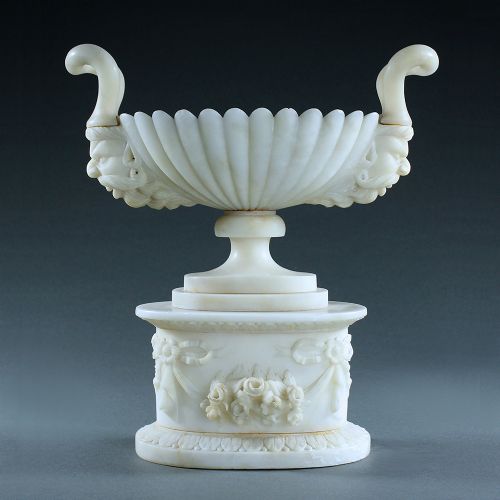
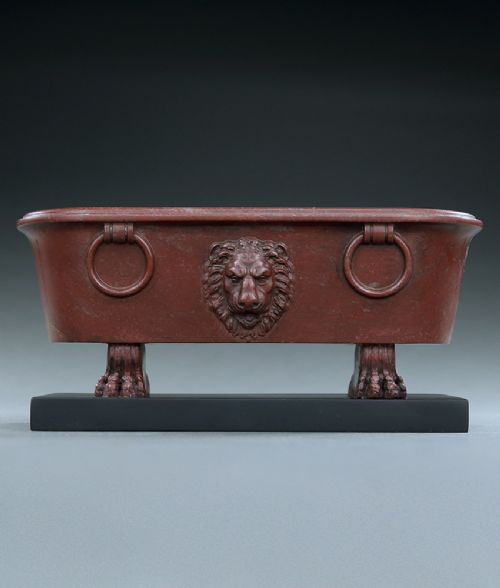
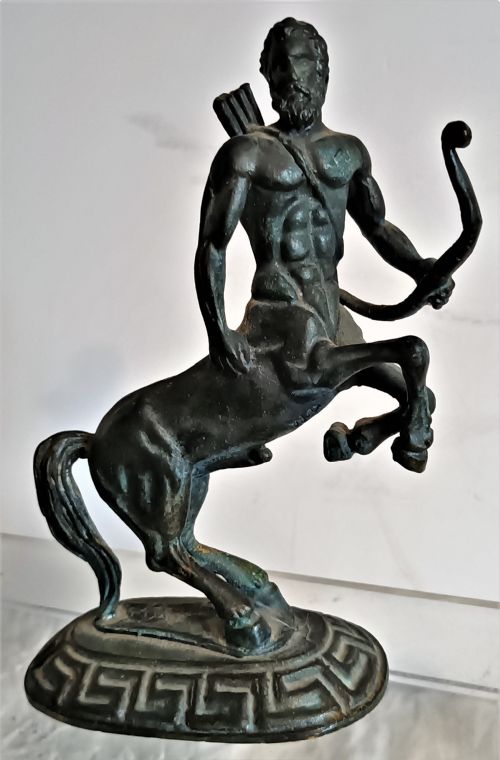
The pieces appearing on this page span the nineteenth century, including objects from around eighteen hundred through to nineteen hundred. Forms range from Grand Tour alabaster satyr head tazza and Marmo Rosso marble Roman baths to bronze centaur figurines and sphinxes.
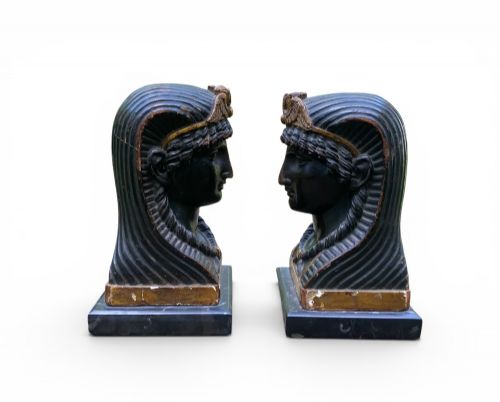
Originating across England, France, Italy and Germany, these decorative works capture the aesthetic of Regency, Victorian classical revival and Egyptian revival styles. Buyers are most likely to meet bronze figures, opaline glass vases and marble sculptures representing mythological subjects.
How they were made
Bronze casting forms the backbone of these pieces, utilising patinated bronze, gilding and detailed chasing to define figures such as Ajax the Great and Bacchus. Bronze ewers and figurines demonstrate the mastery of nineteenth-century foundry work.
Carved stone provides another primary medium, utilising white marble, alabaster and striking Marmo Rosso marble. These materials are shaped into architectural models like Roman baths and vessels such as satyr head tazza.
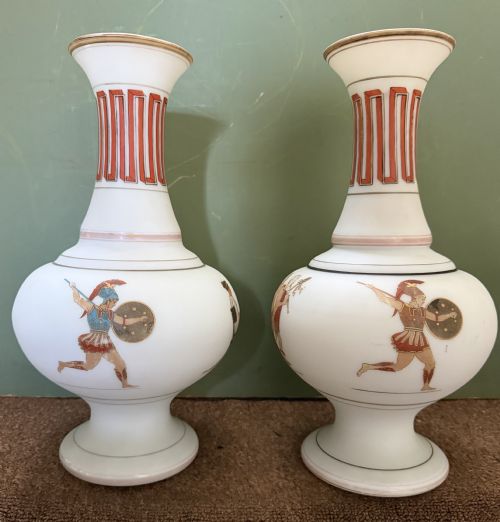
Glass and porcelain appear alongside metal and stone, represented by opaline glass vases featuring painted figural vignettes and allegorical porcelain figures from factories like Volkstedt. Enamel often adds colour and contrast to the finished decorative objects.
Classical Revival Ornament Retail Price Guide 2026
Typical asking prices for classical revival ornament among the pieces listed under this phrase on Sellingantiques today, from the lower quarter to the upper quarter. They describe what is for sale here now, not the wider market.
Even a mythical centaur needs a proper home on the nineteenth-century mantelpiece.
What varies in quality
The selection of materials significantly affects the overall character of the piece, from the depth of the bronze patina and the richness of the gilding to the distinct veining in Marmo Rosso marble. Hand-painted elements, such as figural vignettes on opaline glass, show varying degrees of draughtsmanship and artistic control.
The fidelity to historical sources and the sophistication of the composition distinguish exceptional Grand Tour souvenirs and Victorian classical pieces from more commercial factory productions.
Thomas Hope·Volkstedt
The Classical Revival Ornament Glossary
- Tazza
- A shallow cup or vase on a pedestal foot, often carved from stone or cast in metal. These classical vessels were frequently brought back as Grand Tour souvenirs.
- Grand Tour
- A traditional trip of Europe undertaken by upper-class young European men of means in the eighteenth and nineteenth centuries. Travellers collected antiquities and classical revival ornament such as bronze figures and marble models.
- Patinated bronze
- Bronze that has been treated chemically or naturally to produce a specific surface colour and finish. This process highlights sculptural details and protects the metal.
- Marmo Rosso
- A rich red marble quarried in Italy, prized for its dramatic colour and veining. It was frequently utilised for miniature architectural models and Roman baths.
- Opaline glass
- An opaque or translucent pale glass popular during the nineteenth century. It often served as a canvas for hand-painted figural vignettes and classical scenes.
- Sphinx
- A mythical creature with the body of a lion and a human or animal head, frequently adopted in Regency and Egyptian revival ornament. These figures were rendered in wood, bronze and stone.
Classical Revival Ornament: Frequently Asked Questions
What is a Grand Tour souvenir?
A Grand Tour souvenir is an object purchased by travellers touring the cultural sites of Europe, particularly Italy, during the eighteenth and nineteenth centuries. These items included miniature bronzes, carved marble architectural models and alabaster vessels.
They allowed collectors to bring the art and history of classical antiquity back to their British homes, displaying them in studies and drawing rooms.
How do I identify classical revival bronze?
Classical revival bronze objects are identified by their subject matter, which typically draws from Greek and Roman mythology, history or ancient architecture. Look for figures of deities and heroes, sphinxes, and classical ewers.
The quality of the casting, the depth of the patination and the presence of nineteenth-century foundry techniques help determine the age and origin of the bronze.
What are opaline glass vases?
Opaline glass vases are decorative vessels made from a translucent or opaque glass that has a distinctive milky appearance. During the nineteenth century, these vases were often hand-painted with figural vignettes or classical motifs.
They formed part of the broader Victorian interest in colourful and decorative glassware for domestic interiors.
Where were nineteenth-century bronze ewers displayed?
Nineteenth-century bronze ewers were primarily displayed as decorative objects on mantelpieces, sideboards and anfilades within formal rooms. Although styled after ancient vessels used for pouring liquids, these revival pieces served a purely ornamental purpose.
Their presence signalled the owner's classical education and refined taste.