





Antique Alabaster Urn
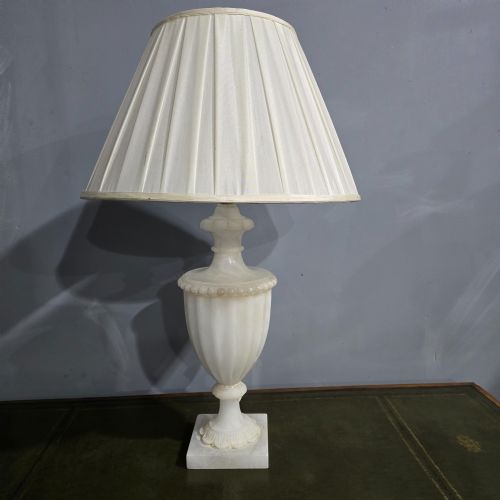
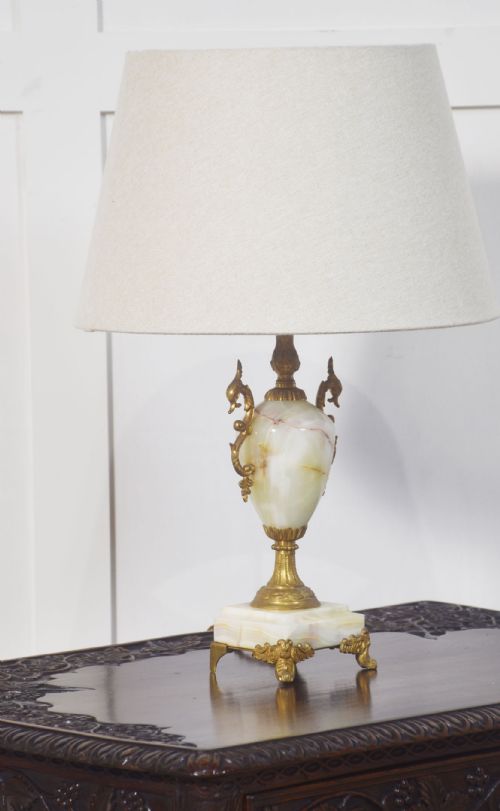
These antique alabaster urn pieces bring classical gravity and soft, translucent stone into a room.
Antique Alabaster Urn
When you search for an antique alabaster urn, you meet decorative vessels, table lamps, and clock garnitures carved from soft stone. The selection spans the nineteenth century and the early decades of the twentieth century, with strong representation from the Victorian era and Edwardian period.
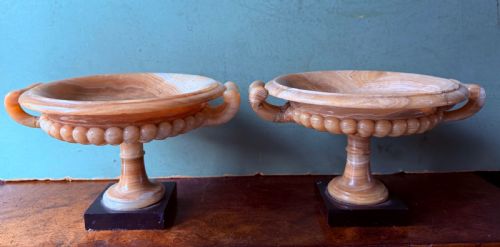
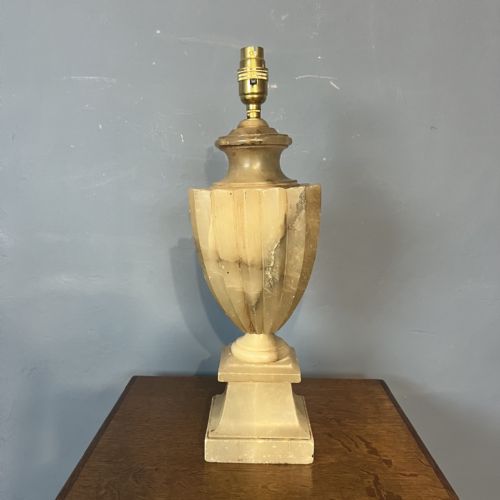
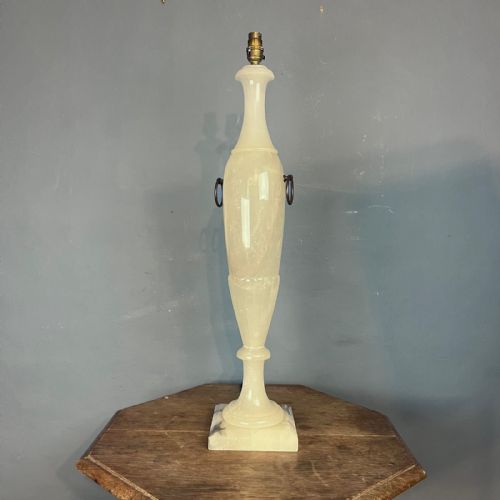
You are most likely to encounter smaller-scale souvenir tazze, classical design vases, and table lamps shaped from white or figured alabaster. Many of these pieces arrive from Italy as Grand Tour souvenirs, echoing classical antiquity in domestic interiors.
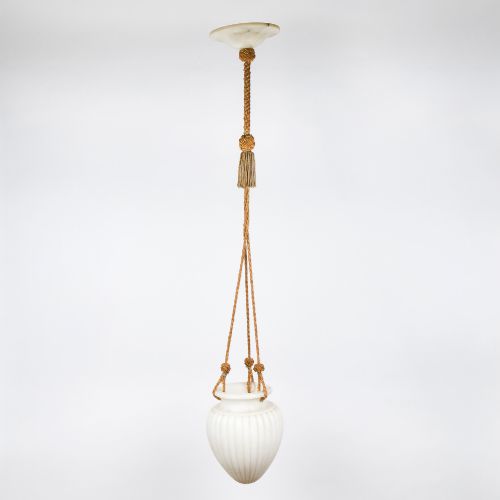
Beyond standalone vases, the form extends to decorative urns paired with clock sets and hanging lights. The material ranges from pure white alabaster to darker alabastro egiziano, often mounted on brass, gilt bronze, or black marble block bases.
What varies in quality
The degree of natural figuring and translucency in the stone sets the visual standard across these pieces. Highly-figured alabaster and clean white stone show superior material selection compared to opaque or heavily repaired surfaces.
The finesse of the carving on classical details, such as handles, fluting, and mounted bases, separates standard souvenir pieces from finer studio work. Integration with metal mounts and original clock movements also influences the overall integrity of the object.
The listings span periods from the eighteenth-century maker James Ritchie and Son through Victorian clock garnitures to 1930s Art Deco lamps.
James Ritchie And Son
The Antique Alabaster Urn Glossary
- Alabaster
- A fine-grained, translucent stone used for carving decorative vessels and lamp bodies. Its softness permits intricate detailing while diffusing light.
- Grand Tour
- A nineteenth-century travel tradition where wealthy travellers acquired classical souvenirs in Italy. These objects frequently include alabaster urns and tazze modelled on ancient forms.
- Tazza
- A shallow bowl or cup raised on a stem and foot. Alabaster examples often rest on contrasting marble bases.
- Gilt bronze
- Copper alloy treated with a gold layer, frequently termed ormolu. It appears in mounts and clock garniture details alongside stone elements.
- Clock garniture
- A set comprising a mantel clock flanked by matching decorative objects such as urns or vases. These arrangements often combine marble, brass, and alabaster.
Antique Alabaster Urn: Frequently Asked Questions
How do I clean alabaster safely?
Alabaster is a soft, water-soluble stone that absorbs moisture easily. Dust the surface gently with a dry, soft cloth and avoid water or liquid cleaning products entirely.
Harsh chemicals will permanently pit and dull the polished finish. If stubborn dust settles in carved recesses, use a soft artist brush without any liquid.
Are these lamps originally electric?
Table lamps from the nineteenth and early twentieth centuries were adapted from oil or gas fittings, or manufactured as early electrical pieces. Many surviving alabaster lamps have modern wiring installed for safe daily use.
Checking the internal cord path and bulb holder reveals whether the fitting is a later conversion. The stone body itself generally retains its original carved form regardless of the electrical updates.
What is the difference between alabaster and marble?
Alabaster is significantly softer than marble and allows light to pass through its surface in a characteristic glow. Marble is a harder metamorphic rock with distinct veining and greater weight.
Sculptors favoured alabaster for its ease of hand-carving and translucency. You can often test the softness by noting if the stone scratches easily under minor pressure.
Where were Grand Tour souvenirs made?
Grand Tour pieces were produced primarily in Italian workshops catering to foreign travellers during the nineteenth century. Florence and Rome served as major centres for alabaster carving and sculpture.
Local artisans copied classical antiquities found in Italian museums and archaeological sites. These souvenirs allowed travellers to bring neoclassical taste back to British and European homes.