

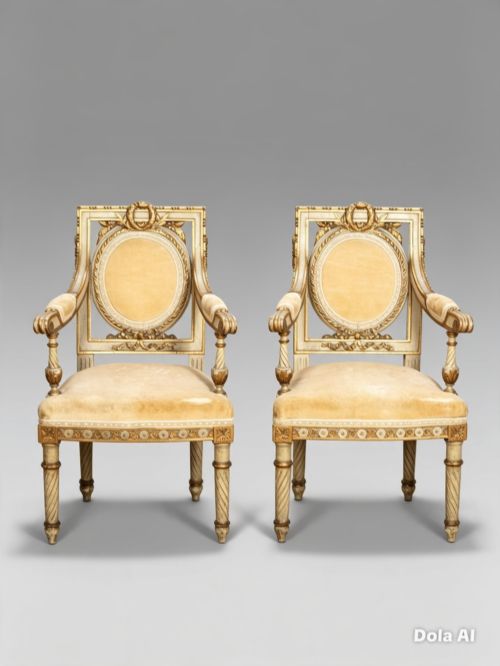


Neoclassical Carved Painted Chairs
Neoclassical carved painted chairs bring formal classical proportion and muted painted surfaces into domestic rooms.
Neoclassical Carved Painted Chairs
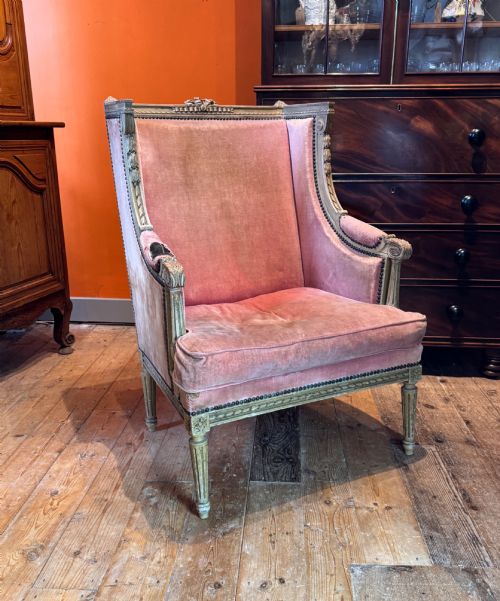
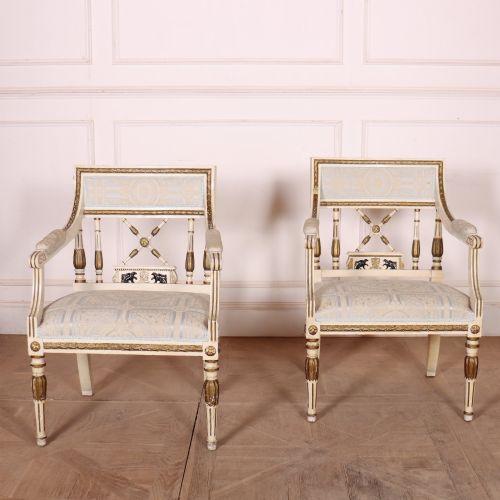
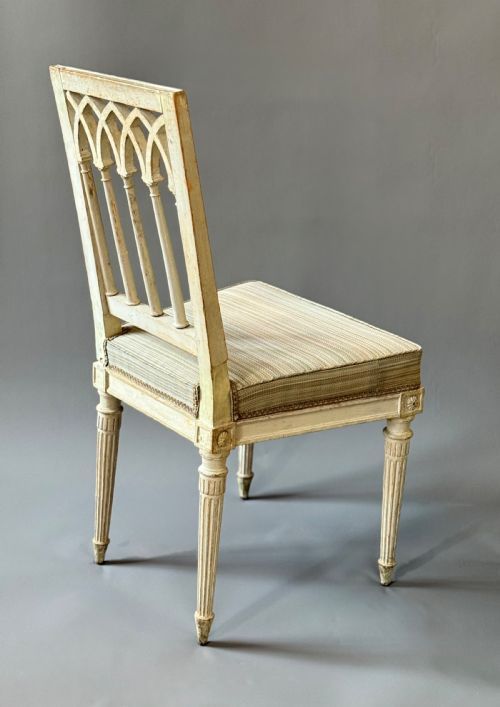
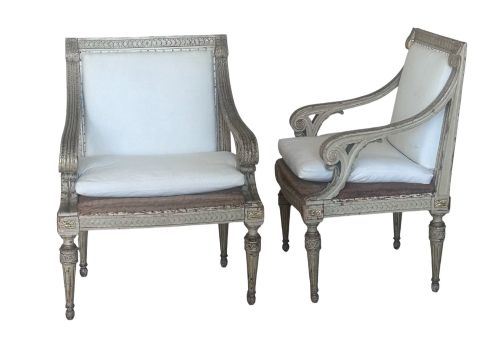
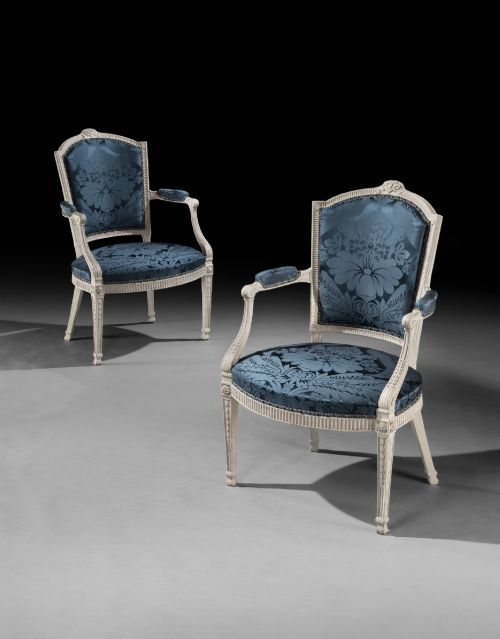
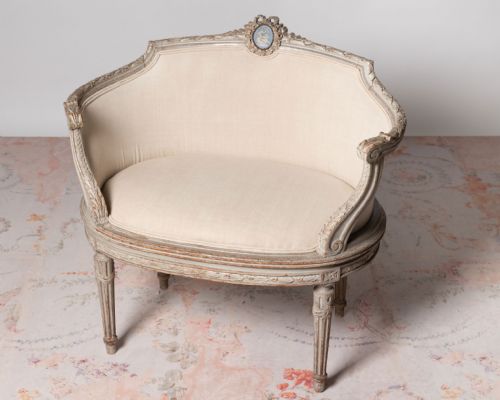
When searching for neoclassical carved painted chairs, buyers encounter seating shaped by eighteenth and nineteenth-century design vocabulary, spanning armchairs, side chairs, dining chairs, and occasional sofas.
The selections on this page are dominated by French Louis XVI, George III, and Swedish Empire examples, alongside later revival pieces produced across the nineteenth and early twentieth centuries.
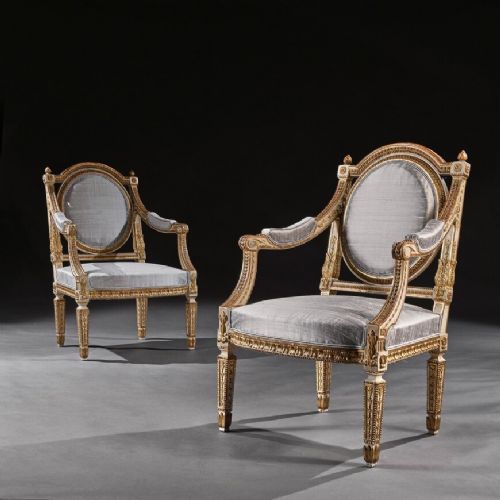
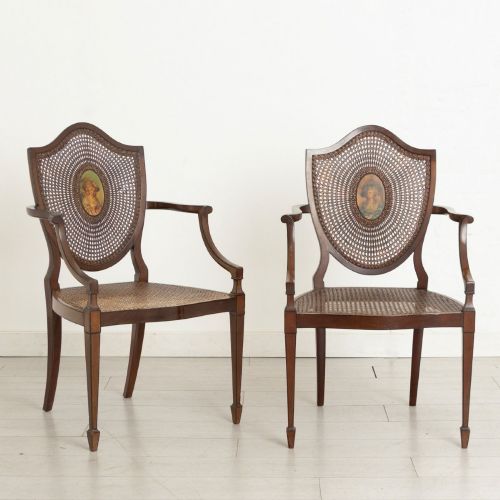
Most pieces combine carved wooden frames with painted or parcel-gilt finishes, upholstered in various textiles, fabrics, velvet, or fitted with traditional cane work.
Materials and construction
Frames are constructed from timbers such as beech and mahogany, shaped through manual carving to produce classical motifs like fluting, rosettes, and medallions.
Surfaces receive layers of paint, often applied as original or historic schemes, sometimes accented with parcel gilding to highlight the carved details.
Upholstery relies on traditional textiles, velvet, tapestry panels, or woven cane seats supported by internal webbing and stuffing.
Listings feature beech and mahogany frames decorated with painted, ebonised, and parcel-gilt finishes alongside upholstered and caned seats.
Quality variations
The distinction between ordinary and superior pieces rests on the crispness of the hand carving and the integrity of the painted surface.
Chairs retaining original paint layers and coherent structural joinery command greater attention than those with compromised frames or heavily stripped surfaces.
The Neoclassical Carved Painted Chairs Glossary
- Fauteuil
- An open-arm armchair with upholstered back and seat, typically featuring exposed wood framing. These form a staple of French seating design.
- Medallion chair
- A chair characterised by an oval or circular upholstered backrest framed in carved wood. This form is closely associated with Louis XVI styles.
- Parcel gilt
- A surface decoration technique where specific carved details are highlighted with thin layers of gold leaf over a painted base. It accentuates the underlying woodwork.
- Gustavian
- A Swedish adaptation of French neoclassical style, known for restrained ornamentation and pale painted finishes. These chairs often feature simplified fluting and channels.
- Caning
- A seating technique utilising woven rattan strips to form a grid pattern across the seat or back frame. It provides a lightweight and flexible support.
Neoclassical Carved Painted Chairs: Frequently Asked Questions
How do I identify a true period piece?
Authenticating a period piece involves examining the joinery methods, tool marks on the timber, and the ageing characteristics of the paint layers.
Later revival pieces from the nineteenth and twentieth centuries often display machine-assisted cuts or uniform surface wear that differs from eighteenth-century work.
Can these chairs be used daily?
Most antique chairs tolerate normal daily use provided the frame joints remain tight and the upholstery support is sound.
Chairs designated for restoration or those with delicate cane panels require careful handling to prevent structural damage.
What is the difference between Louis XVI and Empire styles?
Louis XVI chairs feature straight tapered legs, rectilinear or oval backs, and classical carving motifs like ribbons and flutes.
Swedish Empire and later nineteenth-century interpretations introduce heavier proportions, bolder classical references, and simpler surface decorations.
How should I care for original paint?
Original painted surfaces require gentle dusting with a dry, soft cloth and protection from direct sunlight and moisture.
Avoid chemical cleaning agents or abrasive materials that can lift historic paint layers from the wood substrate.