

Neoclassical Bronze Sconces
Neoclassical bronze sconces bring classical symmetry and heavy cast metalwork to a room, offering enduring wall lighting rooted in 19th and early 20th century design.
Neoclassical Bronze Sconces
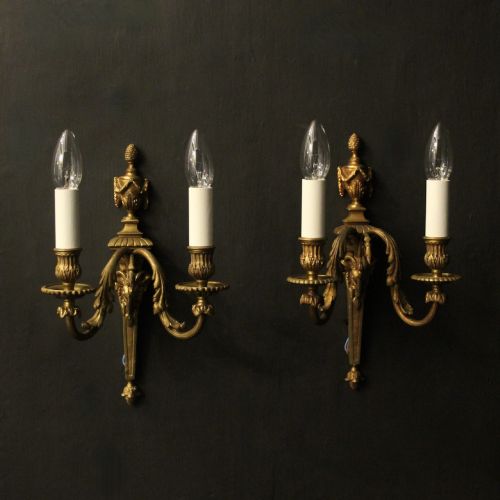
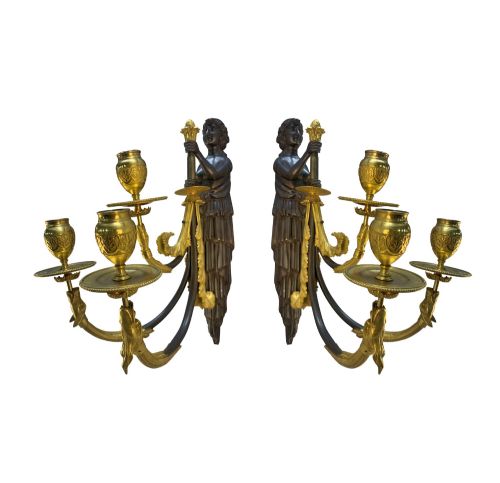
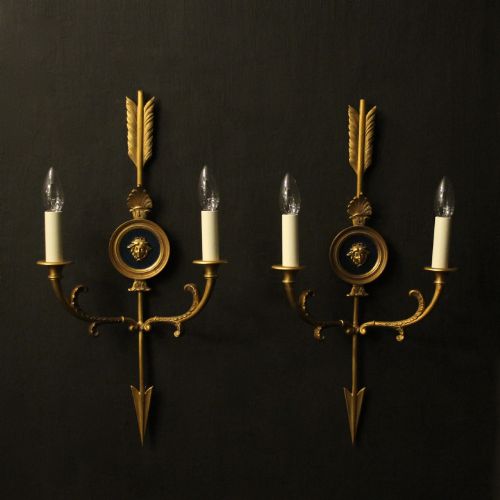
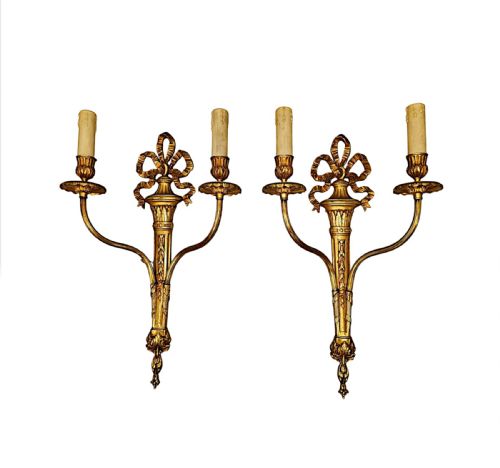
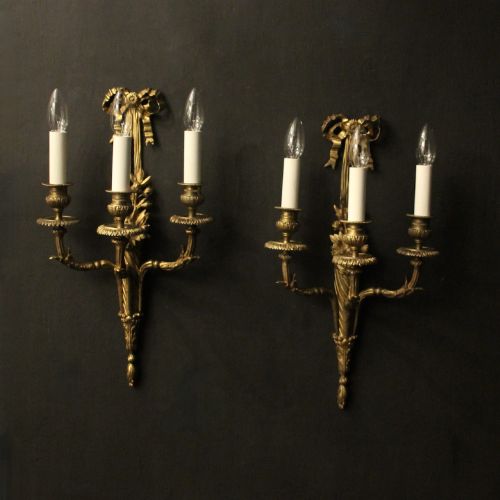
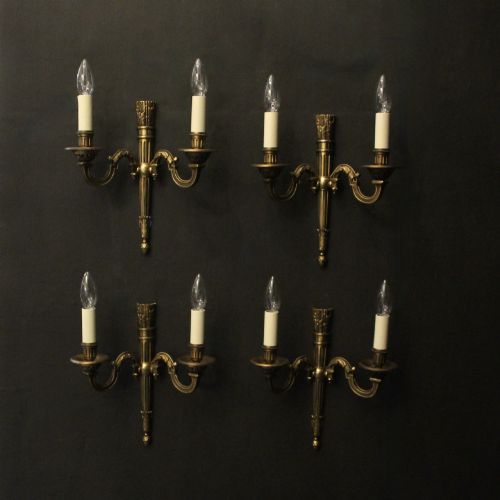
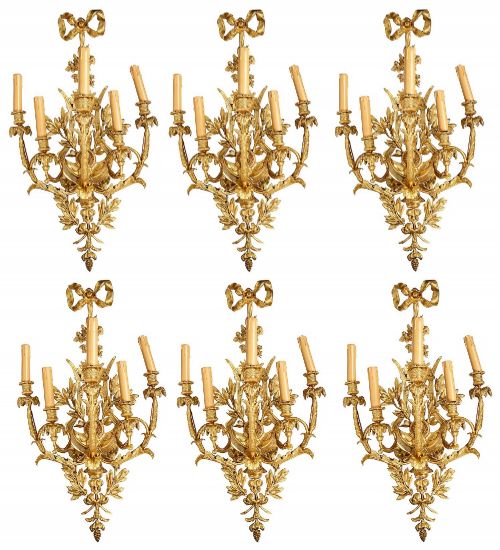
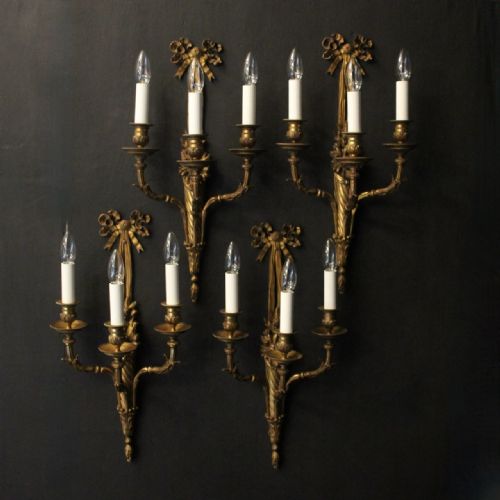
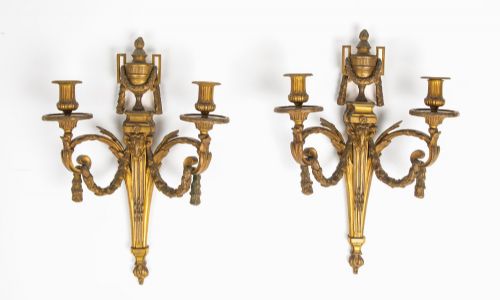
When searching for neoclassical bronze sconces, buyers encounter wall lights and appliques drawn predominantly from 19th-century French production, alongside examples from the 1920s and 1930s. The most frequent configurations on this page are pairs and sets of four, shaped with multi-arm branches and backplates.
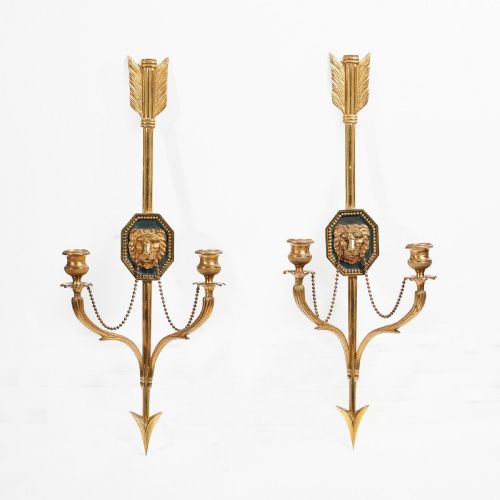
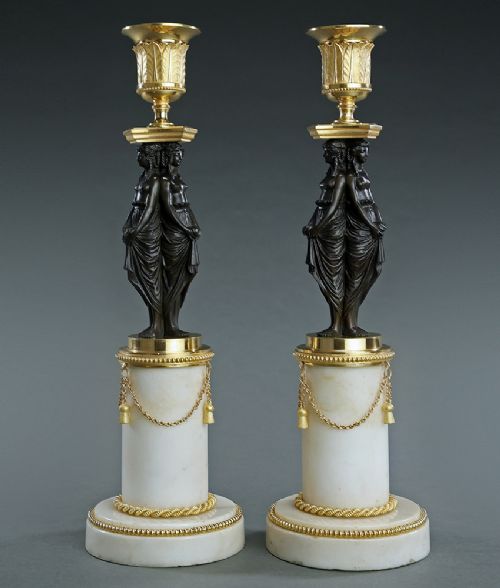
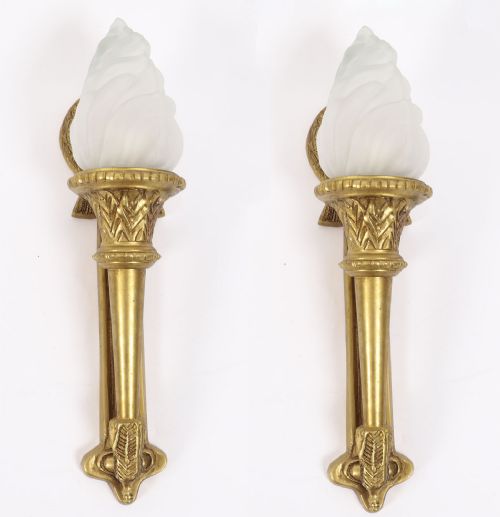
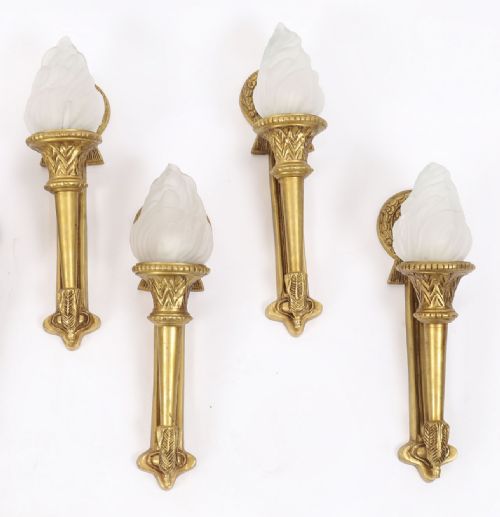
The aesthetic draws heavily on French Empire, Louis XVI, and Adam Revival styles, incorporating architectural motifs such as caryatids, ram's head masks, and flaming torches. Many pieces originate from French workshops, though Italian and English examples also appear.
Materials and technique
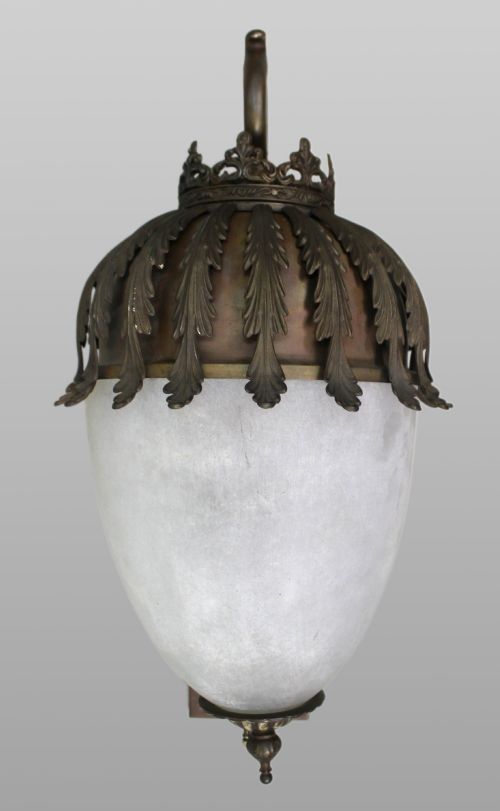
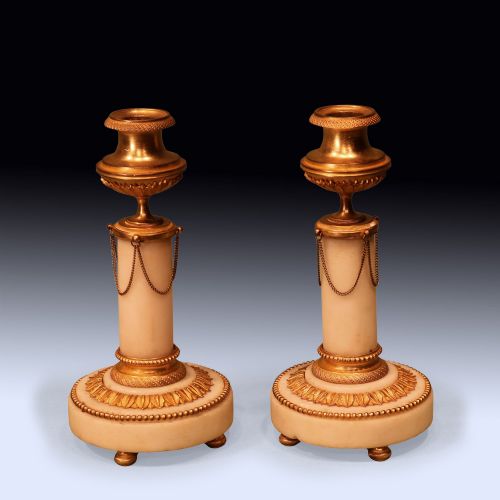
Foundry work relied on casting bronze, brass, and ormolu, often paired with elements of frosted glass, white marble, and silvered bronze. Surfaces received gilding or patination to achieve varied metallic finishes across the backplates and arms.
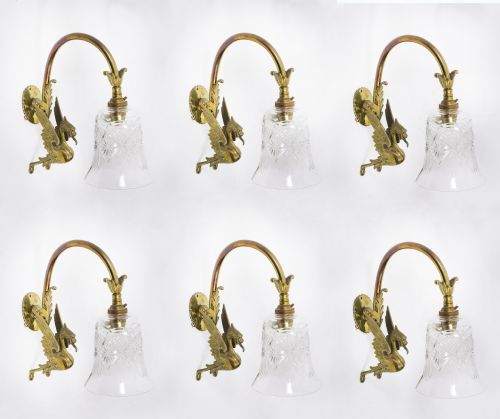
Detailing was achieved through chiselling and chasing the cast metal after removal from the mould, particularly on decorative mounts featuring griffins, torches, and neoclassical foliage.
Neoclassical Bronze Sconces Retail Price Guide 2026
Typical asking prices for neoclassical bronze sconces among the pieces listed under this phrase on Sellingantiques today, from the lower quarter to the upper quarter. They describe what is for sale here now, not the wider market.
Several sconces incorporate fierce mythical beasts and flaming torches into domestic hallways, reminding guests that 19th-century dining rooms doubled as Roman temples.
Quality and craftsmanship
Construction methods also separate standard production from superior workshops, visible in the rigidity of the multi-arm joints and the clean assembly of ormolu mounts fixed to the backplate.
Henri Vian·Maison Baguès
The Neoclassical Bronze Sconces Glossary
- Ormolu
- A gold-coloured bronze alloy, mercury gilded and finished by hand. It provides a bright, durable surface frequently used in French Empire and Louis XVI lighting.
- Caryatid
- A sculpted female figure serving as an architectural support. These appear on the shafts of candlesticks and backplates within neoclassical lighting.
- Applique
- A wall-mounted lighting fixture attached directly to the surface. The term is often used interchangeably with wall sconce.
- Bobeche
- A small collar or drip pan catch fitted below the candle nozzle. It collects melted wax and contributes to the overall silhouette of the sconce arm.
Neoclassical Bronze Sconces: Frequently Asked Questions
How do I wire old wall sconces?
Most antique sconces were originally designed for candles and require professional conversion to electricity. A restorer can run internal wiring through the hollow arms without altering the exterior bronze or ormolu.
Qualified electricians should mount the fixtures securely to wall studs to support the substantial weight of cast bronze components.
What is the difference between ormolu and bronze?
Bronze is an alloy of copper and tin, valued for its structural strength and dark patination potential. Ormolu refers specifically to bronze that has been gilded with a gold-mercury amalgam.
In neoclassical pieces, raw bronze often provides contrast against bright gilded ormolu mounts to accentuate architectural details.
How do I date these wall lights?
Dating relies on stylistic markers tied to specific revivals, such as Louis XVI caryatids from the 19th century or simpler geometric forms typical of the 1920s and 1930s. Maker stamps, screw thread types, and casting methods also offer clues to age.
Comparing backplate construction and decorative motifs against documented periods helps establish a reliable timeline.
How should I clean gilded bronze sconces?
Dusting with a soft, dry brush prevents dirt accumulation in the recessed chasings of the metal. Chemical cleaners must be avoided, as they strip the original ormolu surface.
Conservators recommend using only a damp microfibre cloth for occasional marks, followed by immediate drying.