

Neoclassical Brass Wall Light
A neoclassical brass wall light brings rigorous architectural proportion and warm metallic lustre to an interior, channelling antique symmetry.
Neoclassical Brass Wall Light
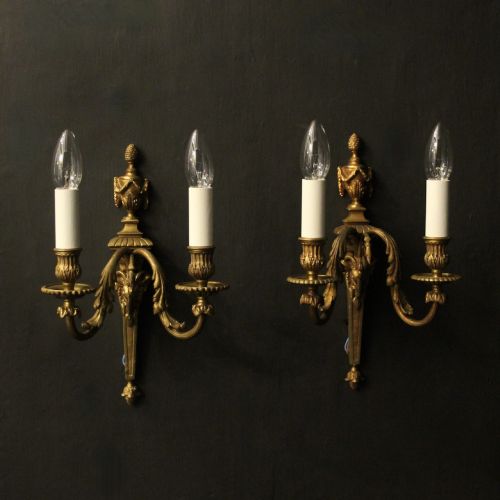
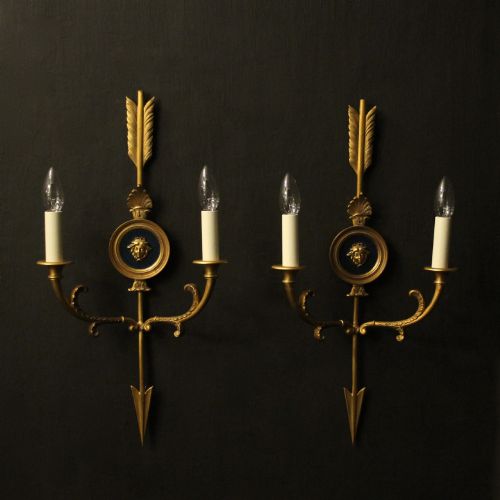
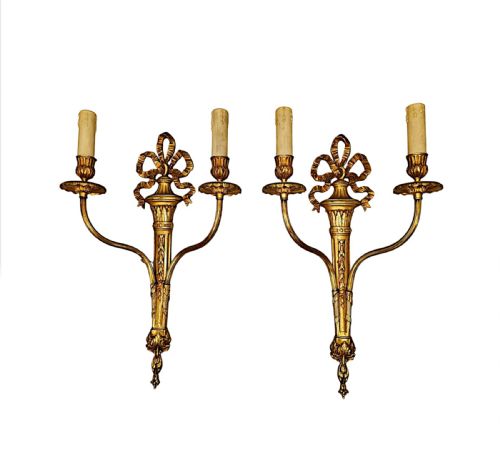
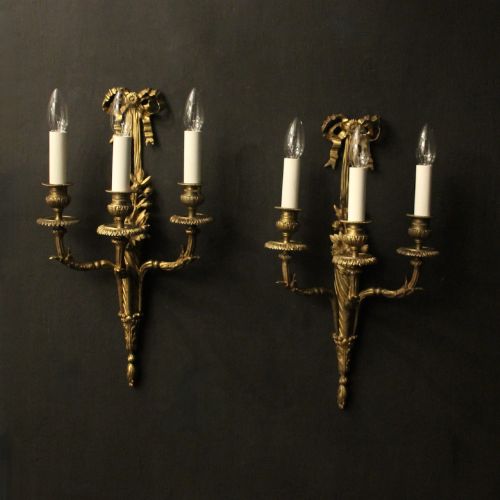
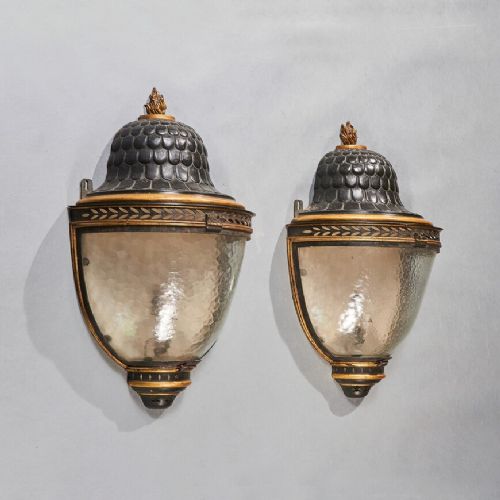
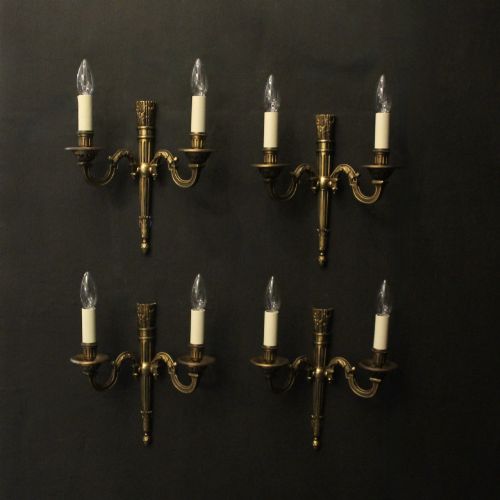
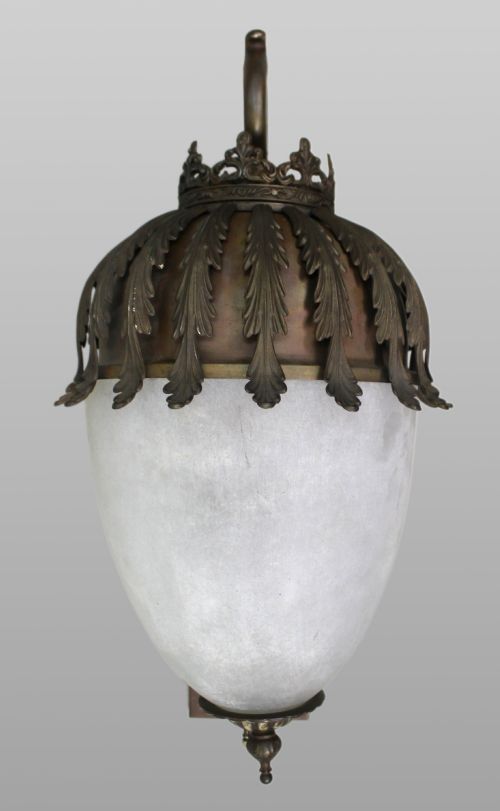
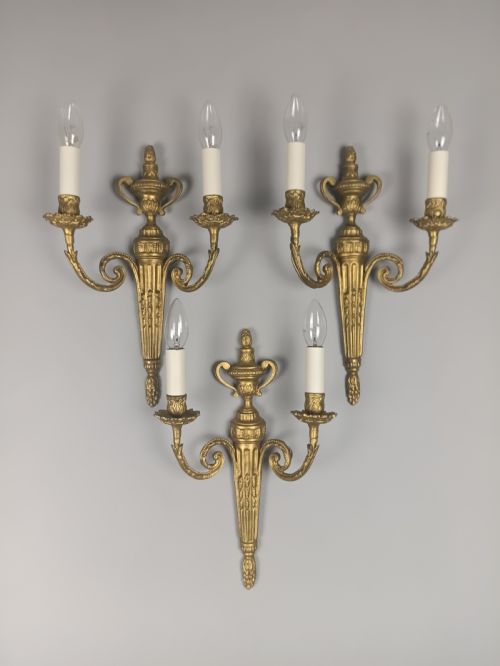
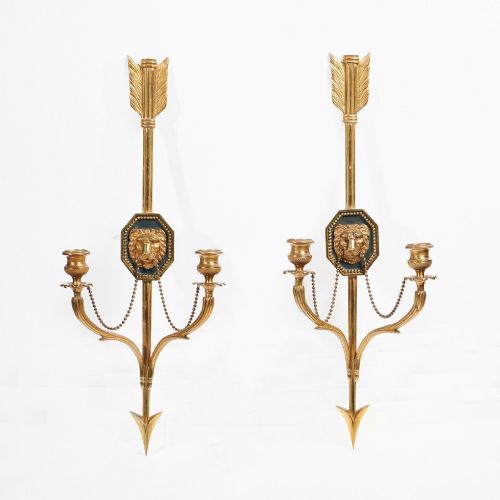
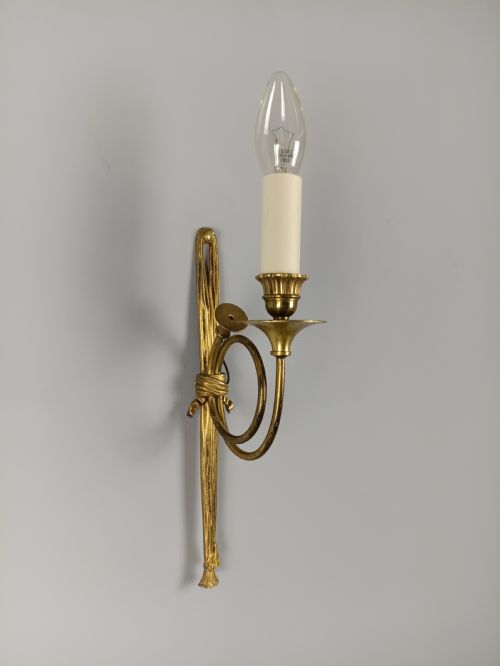
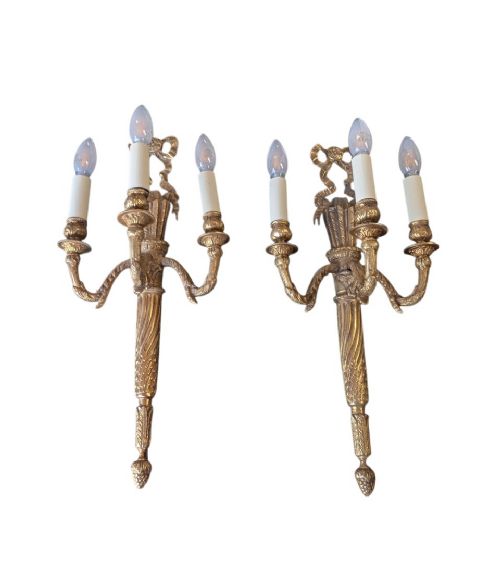
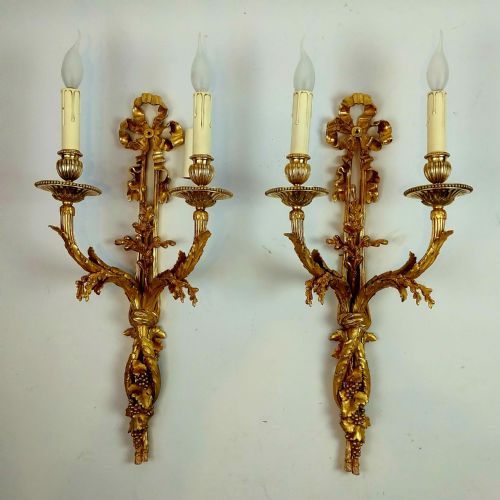
A neoclassical brass wall light combines classical architectural motifs with functional interior illumination. These fixtures appear primarily as wall sconces, wall lanterns, and candle sconces designed to mount directly onto panelled or plastered surfaces.
The pieces on this page span from the Georgian and Victorian eras through the early decades of the twentieth century. French interpretations dominate the selection, frequently channelling Louis XVI and Empire aesthetics alongside English Adam revival designs.
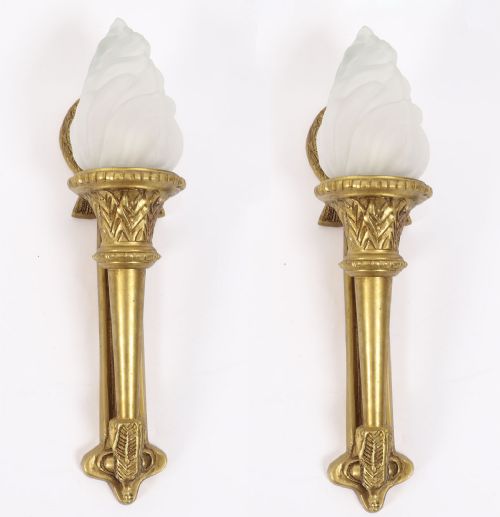
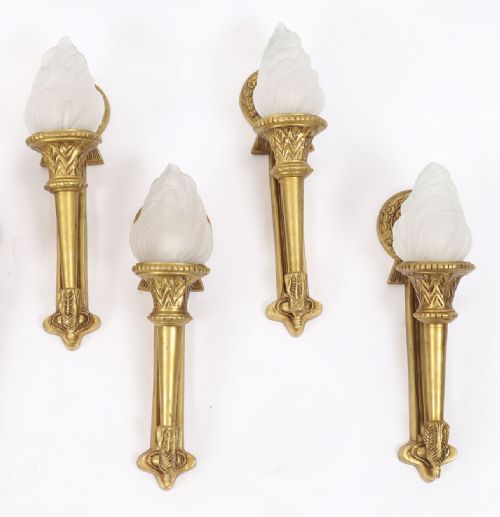
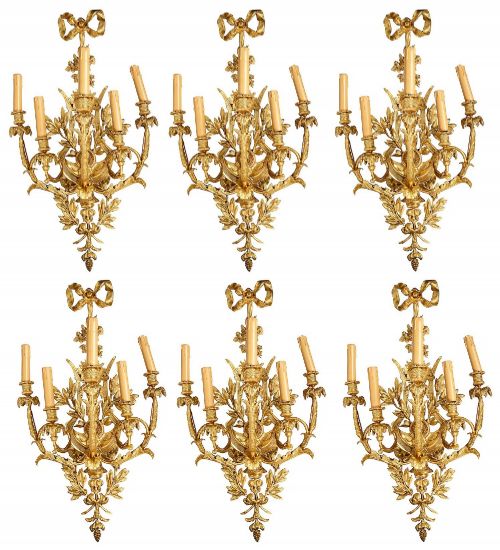
Buyers encounter single-arm variants alongside substantial pairs, sets of four, and larger configurations intended for symmetrical placement flanking mirrors or doorways. Many examples incorporate mirror backs or incorporate glass elements to amplify the spread of light.
Materials and construction methods
Brass, gilt bronze, and ormolu form the primary structural vocabulary of these wall lights, often cast in heavy sections before receiving hand-chiselled detailing and fire-gilding. Metal alloys are manipulated to create crisp acanthus leaves, flaming torch motifs, and classical urns.
Complementary materials such as frosted glass, tole peinte, and silvered brass introduce textural variety to the assemblies. Cast brass components are joined with threaded fixings, while mirrors are bevelled and set into matching metal frames.
Listings feature brass, gilt bronze, and ormolu across 19th-century and early 20th-century periods.
Markers of distinction in manufacture
Quality rests in the crispness of the metal chasing and the depth of the casting, where sharper relief and clean undercutting separate superior work from softer, mass-produced commercial output. The weight of the bronze or brass chassis dictates how firmly the sconce hangs against the wall.
Finishing treatments reveal the workshop standard, from the durability of the original fire-gilding and ormolu surfaces to the integration of cast decorative elements like ram's head masks and griffin mounts. Pierced backplates and securely riveted arm joints denote higher execution.
Maison Baguès
The Neoclassical Brass Wall Light Glossary
- Ormolu
- A finely ground high-zinc brass alloy finished with a mercury gilding process to resemble gold. This technique imparts a distinct warm luminescence to period mounts.
- Applique
- A wall-mounted light fixture designed to hold candles or electric lamps close to the surface. The term is frequently used interchangeably with wall sconce in French lighting.
- Tole peinte
- Painted sheet metal utilised for decorative shades or body components on specific wall lanterns. This technique introduces coloured contrast to otherwise metallic assemblies.
- Adam revival
- An eighteenth-century neoclassical style revived in later periods, characterised by strict symmetry, urn motifs, and delicate swags. It draws directly upon ancient Roman excavations.
- Gilt bronze
- An alloy of copper and tin coated with a layer of gold. It provides structural rigidity alongside a decorative metallic surface.
Neoclassical Brass Wall Light: Frequently Asked Questions
How do I wire old wall lights?
Period sconces generally require rewiring by a qualified electrician to meet modern safety standards. Contemporary wiring is carefully channelled through the existing structural hollows of the cast arms to preserve the exterior finish.
Original candle tubes or drip pans are often adapted to conceal modern lamp holders without altering the visual silhouette of the fixture.
Are these lights handed in pairs?
Many pairs of wall sconces are manufactured with symmetrical casting, meaning the decorative elements mirror one another for left and right placement. This symmetry is particularly important when hanging fixtures on either side of a fireplace or central mirror.
Single lights or sets of four may require more careful spatial planning to ensure balanced visual weight across a room.
How should I clean polished brass?
Dusting with a dry, soft cloth is sufficient for routine maintenance of gilt and ormolu surfaces. Harsh metal polishes must be avoided, as abrasive compounds will strip away thin layers of historical gilding.
Specialist conservation waxes can be applied sparingly to protect exposed brass from tarnishing in humid environments.
What defines the French Empire style?
The French Empire style draws heavily on military and classical Roman symbols, including laurel wreaths, sphinxes, and winged figures. These pieces are typically heavier in cast brass and feature deep, saturated gilt finishes.
Such lighting was designed to project authority and grandeur during the Napoleonic era and later revivals.