

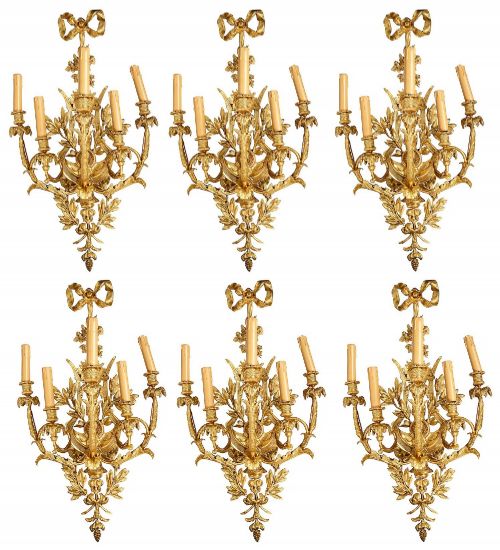
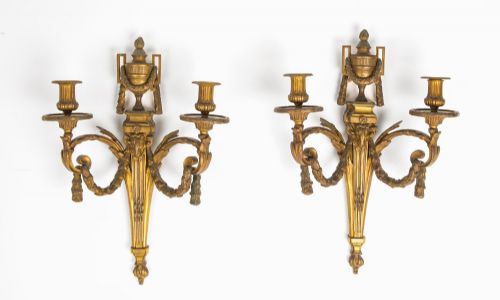


Louis XVI Brass Applique
Louis xvi brass applique pieces are decorative wall lights and sconces offering classic French neoclassical design for period interiors.
Louis XVI Brass Applique
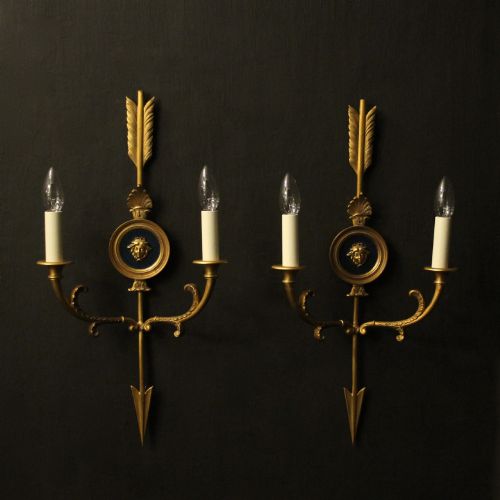
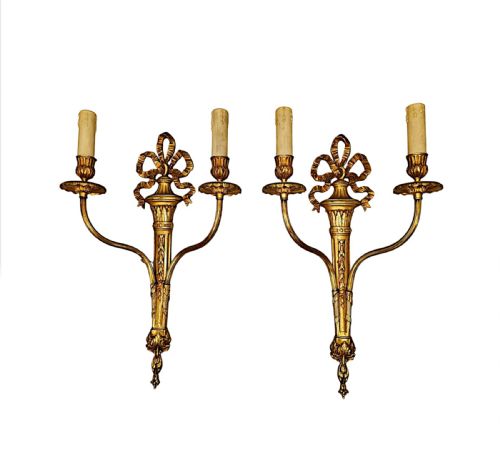
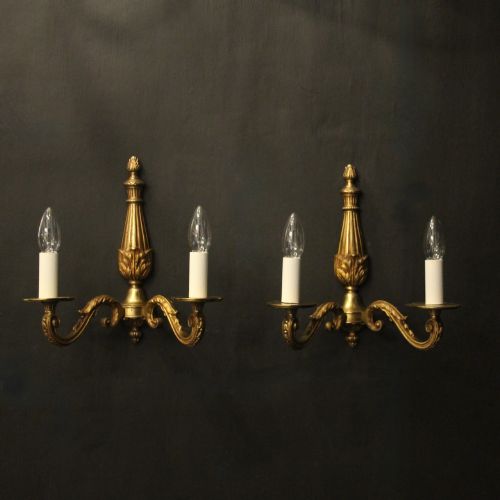
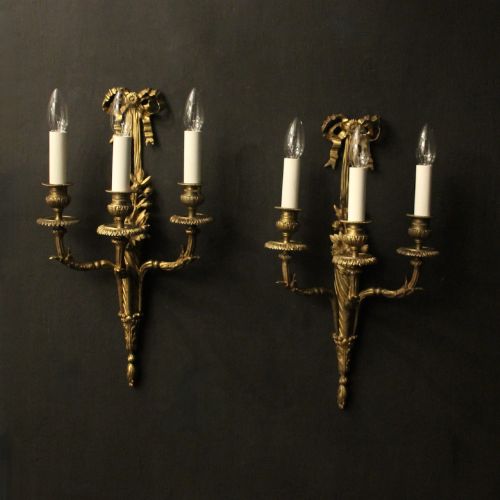
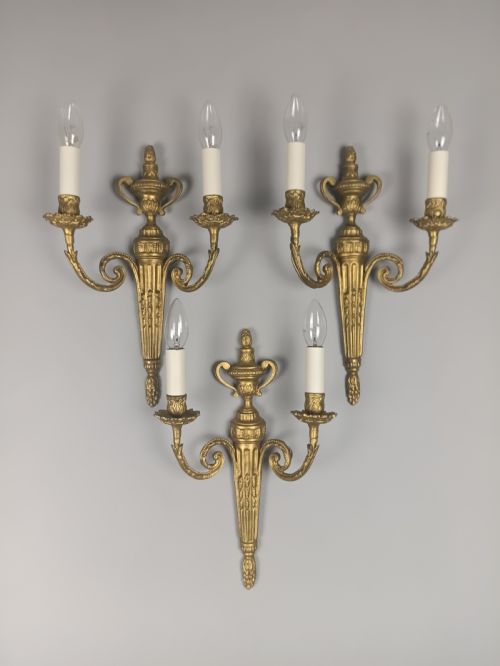
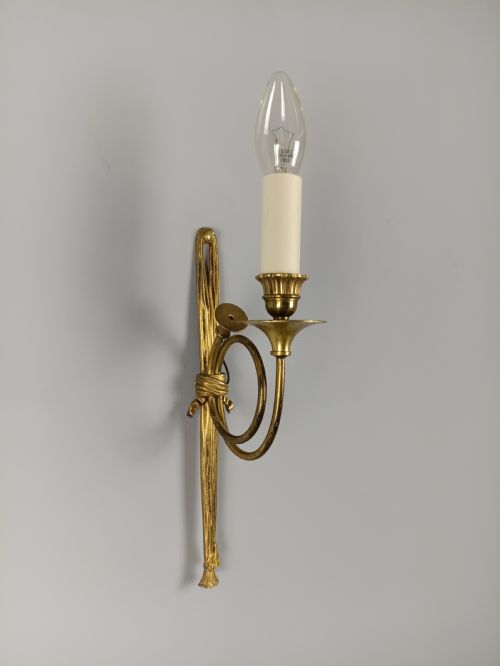
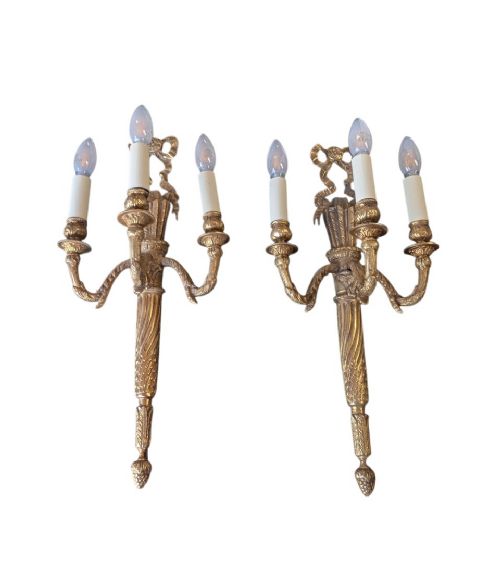
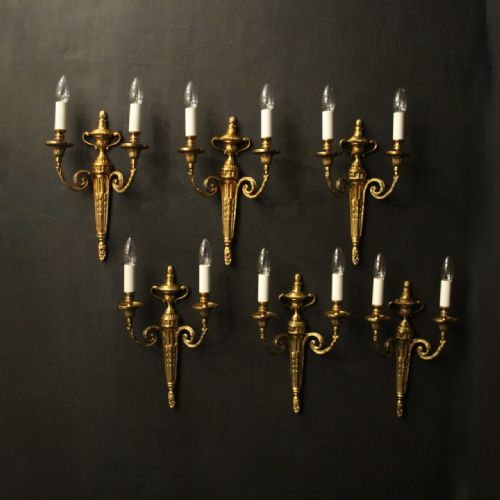
When you search for louis xvi brass applique, you encounter wall lights, wall sconces, and twin arm or triple arm fixtures designed to mount directly onto interior walls. These items trace their design lineage back to French neoclassical and Louis XVI styles, incorporating architectural symmetry and classical motifs.
The pieces appearing on this page span the nineteenth century through the early twentieth century, including revival periods such as the nineteen-twenties and nineteen-thirties. You meet French chateau lighting alongside English and French interpretations, frequently configured in matched pairs or larger sets.
Materials and construction
The listings record construction primarily in brass, bronze, cast brass, and metal, paired with surface treatments including gilding, silver gilding, and ormolu. Makers utilised metal casting techniques to form structural arms and backplates, applying gold leaf or mercurial mercury gilding to achieve the characteristic rich surface sheen.
Decorative elements such as ram's head masks and ribbon details require skilled chasing and hand-finishing after the casting process. The combination of heavy bronze or brass with durable gilt layers ensures the structural integrity and lasting appearance of these wall fixtures.
Materials recorded across the inventory include gilt bronze, brass, ormolu, gilded bronze, and silver gilded brass.
Factors in quality
Quality separates through the crispness of the cast ornamentation and the depth of the metal finishing. Superior examples display sharply rendered motifs, clean casting lines, and substantial weight in the brass or bronze body.
The preservation of the original gilding or ormolu surface dictates the visual standard of each piece. Faded or worn finishes contrast with well-maintained gilded surfaces that retain their intended luminescence.
Maison Baguès
The Louis XVI Brass Applique Glossary
- Applique
- A wall-mounted lighting fixture or decorative bracket fixed directly to a vertical surface. In historical lighting, this term frequently describes wall sconces and lights.
- Ormolu
- Finely ground high-carat gold applied to a bronze base metal object using a mercury amalgamation technique. This historic method yields a deep, warm golden lustre.
- Neoclassical
- A Western cultural movement drawing inspiration from the classical art and culture of ancient Greece and Rome. This aesthetic governs the symmetry, columns, and urns seen in Louis XVI design.
- Gilt Bronze
- Bronze metal coated with a thin layer of gold through leaf application or chemical gilding. It provides the durability of bronze with the appearance of solid gold.
- Twin Arm
- A wall light configuration featuring two distinct branching arms for candles or electric bulbs. This symmetric layout balances illumination across the wall space.
Louis XVI Brass Applique: Frequently Asked Questions
What is a louis xvi brass applique?
A louis xvi brass applique is a wall-mounted light fixture inspired by the eighteenth-century French neoclassical aesthetic. These items typically feature cast metal construction with classical ornamentation.
They serve both decorative and functional roles in historic and traditional interior schemes.
How were these wall lights used?
Historically, these fixtures held candles to illuminate hallways, drawing rooms, and chateau salons. The reflective gilt surfaces helped maximise the available light.
Today, many have been adapted for electricity while retaining their original aesthetic purpose on interior walls.
How do I style them at home?
These wall lights mount directly onto plaster or panelled walls, often flanking mirrors, doorways, or fireplaces. Pairs create balanced symmetry suited to formal reception rooms.
Selecting appropriate candle-style bulbs maintains the historical appearance of the fixture.
How do I tell nineteenth century from later revival pieces?
Nineteenth-century examples display hand-chased metalwork and traditional construction methods specific to period workshops. Revival pieces from later decades often replicate these neoclassical forms using period-accurate casting techniques.
Examining the backplate fixings and the wear patterns on the gilding helps clarify the manufacturing era.